
Micah Meadowcroft at The New Atlantis:
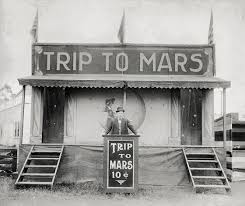 Hannah Arendt reflected on the significance of humanity’s desire for the stars in her 1963 essay “The Conquest of Space and the Stature of Man.” Man, she said, has not found a new place for himself after his self-displacement in modernity’s rejection of old orders. We stand alienated from ourselves and nature. And as we see deeper into the firmament, and account for more of nature, we only better know the scale of our disorientation, the smallness of our vision. Science cannot bound the cosmos into a comfortable domain, for “this observed universe, the infinitely small no less than the infinitely large, escapes not only the coarseness of human sense perception but even the enormously ingenious instruments that have been built for its refinement.” But neither does modern science really wish to find a place for man in all this space, for the questions that would require would produce answers for man that act “as definitions and hence as limitations of his efforts.”
This alienation calls for some kind of transcendence — a need to find ourselves and discover where we are.
more here.
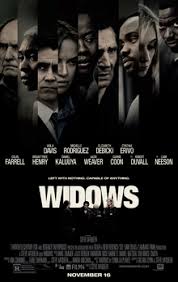 It occurred to me, when thinking about Ronnie’s bathroom scene, that this is not McQueen’s first time depicting the repressed, deep-seated trauma of a wealthy but unhappy individual on film: that Shame, whose central character appeared to have developed sex-addiction in the wake of some unspecified, formative trauma—maybe psychic, maybe physical—addressed a similar, if not entirely symmetrical, ache. The sex addict, Brandon, as played in the key of Patrick Bateman by the Irish actor Michael Fassbender, also contained his introspection and his self-injurious anger within the confines of the bathroom. Often, his releases there were masturbatory. So, on some level, was the movie; lacking detailed and elucidating background information, Brandon’s tragedy became the tragedy of a successful, very handsome white man tortured by the need to regularly have sex with one or more women who resemble fashion models. (Brandon’s kookily sad sister, Sissy, is so white that she is played by Carey Mulligan, and is called Sissy. His apartment, in what might be seen as a reflection of his inner turmoil, is white and expensive, but lit so that above all else, it looks blue.)
 If we were to stop and ask ourselves how our lives might be improved, one likely answer that might occur to us is that we should spend less time at work. At least that is what the statistics suggest.
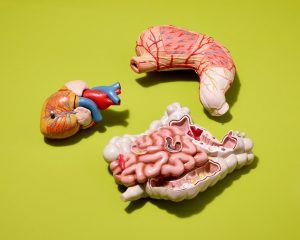 Cancer has an insidious talent for evading the natural defenses that should destroy it. What if we could find ways to help the immune system fight back? It has begun to happen. The growing field of immunotherapy is profoundly changing cancer treatment and has rescued many people with advanced malignancies that not long ago would have been a death sentence. “Patients with advanced cancer are increasingly living for years not months,” a
 “Beware of literature!” This warning occurs in Jean-Paul Sartre’s 1938 novel Nausea as an entry in the diary of the narrator, Antoine Roquentin. In context, it concerns the way that literary narratives falsify our experience of events by investing them with an organization and structure that our experiences in themselves, as we live them, do not have. When Bilbo Baggins finds the ring in The Hobbit, Tolkein tells us that although Bilbo didn’t realize it at the time, this would turn out to be a turning point in his life. When married couples recall their first meeting, their account inevitably packages the event as a “beginning,” even though they may have had no inkling of this at the time.
 Do you find this prospect upsetting? Perhaps you think it is unfair for someone to get a job without a good reason for why they deserve it rather than anyone else. Perhaps you think such a system would decrease your chances of getting the job you want. If so then you may be under the influence of the cult of excellence.
 When the father of your child is in jail, pray even if you don’t believe in God. Pray even though in your head of heads you know it won’t do shit. Stop staring at the walls, at the clock, at the phone. At your baby, now eight, sleeping next to you, his sneakers, caked with mud, still tied to his feet. Pray because it will distract you from what’s coming, from a conversation millions of mothers have already had with their sons. You are not different, not an exception to some rule. Start praying instead of feeling sorry for yourself. Buck the fuck up because he will need you.
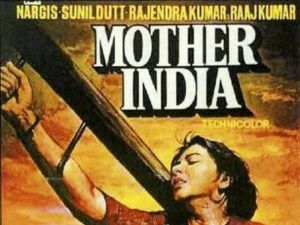 Actors come to each role in a new film bearing the stamp of their old ones so they are richer and more interesting in the new incarnation—the whole more than the sum of the parts. Just last week one saw Nargis as the innocent and naive mountain girl pining away for the love of the ‘shehri babu’, and today she is the femme fatale, all hell and brimstone, plotting the downfall of her rival. Or, as Mother India, upholding principles of honesty and justice, shooting her favorite son dead for raping a village girl.
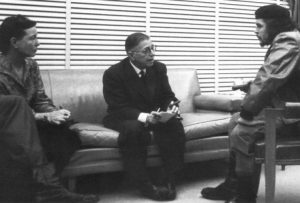 Nearly forty years after his death in 1980, the French philosopher Jean-Paul Sartre is best remembered as the father of existentialism. We are most familiar with him as the theorist of freedom, authenticity, and bad faith in philosophical treatises such as Being and Nothingness (1943) and literary works such as Nausea (1938) and No Exit (1944). But eclipsed in this popular image is an appreciation of the staggering range of his dozens of volumes of published work, especially the fruit of his political activity from the end of World War II until his death—a period marked most notably by a rich and sustained engagement with Marxism.
 History records many examples of some person, tribe or nation taking an advantage based on better information than their rivals. Whether it is war, economic activity, love and romance or career the competitive edge leading to victory is enjoyed by those who possess the ability to extract and use information to increase the probability of their predicted outcomes. Use the word probability, forecasting, and prediction and thoughts start to wander, your mind has trouble gaining traction. Why is that?
 In November 2018, the world’s measurement experts are expected to revise the SI, this time approving a system that does not depend on physical objects. Instead, it’ll be based entirely on the speed of light and other “constants” of physical science, resulting in a measurement system that might truly and finally be for all times and for all people.
 Imagine a case involving the most sensitive issues of national security possible. Imagine that Pakistan wins a conclusive victory in that case. Now imagine that Pakistan wastes that victory and spends 5 years blundering about in a dead end. Kishanganga is that case.
 Debates over the extent to which racial attitudes and economic distress explain voting behavior in the 2016 election have tended to be limited in scope, focusing on the extent to which each factor explains white voters’ two-party vote choice. This limited scope obscures important ways in which these factors could have been related to voting behavior among other racial sub-groups of the electorate, as well as participation in the two-party contest in the first place. Using the vote-validated 2016 Cooperative Congressional Election Survey, merged with economic data at the ZIP code and county levels, we find that racial attitudes strongly explain two-party vote choice among white voters—in line with a growing body of literature. However, we also find that local economic distress was strongly associated with non-voting among people of color, complicating direct comparisons between racial and economic explanations of the 2016 election and cautioning against generalizations regarding causal emphasis.