
Eric Levitz in New York Magazine:
 The GOP understands how important labor unions are to the Democratic Party. The Democratic Party, historically, has not. If you want a two-sentence explanation for why the Midwest is turning red (and thus, why Donald Trump is president), you could do worse than that.
With its financial contributions and grassroots organizing, the labor movement helped give Democrats full control of the federal government three times in the last four decades. And all three of those times — under Jimmy Carter, Bill Clinton, and Barack Obama — Democrats failed to passlabor law reforms that would to bolster the union cause. In hindsight, it’s clear that the Democratic Party didn’t merely betray organized labor with these failures, but also, itself.
Between 1978 and 2017, the union membership rate in the United States fell by more than half — from 26 to 10.7 percent. Some of this decline probably couldn’t have been averted — or, at least, not by changes in labor law alone. The combination of resurgent economies in Europe and Japan, the United States’ decidedly non-protectionist trade policies, and technological advances in shipping was bound to do a number on American unions.
More here.
 There’s a verbal tic particular to a certain kind of response to a certain kind of story about the thinness and desperation of American society; about the person who died of preventable illness or the Kickstarter campaign to help another who can’t afford cancer treatment even with “good” insurance; about the plight of the homeless or the lack of resources for the rural poor; about underpaid teachers spending thousands of dollars of their own money for the most basic classroom supplies; about train derailments, the ruination of the New York subway system and the decrepit states of our airports and ports of entry.
 If anyone is entitled to misgivings about the pernicious world of publishing, it’s Helen DeWitt, the long-suffering veteran of a by-now-well-known bevy of artistic successes and commercial failures. The Last Samurai, an exuberantly experimental novel about a child prodigy and his brilliant but depressive mother, made a triumphant debut at the Frankfurt Book Fair in 1999, but its publication was fraught. DeWitt fought to retain her idiosyncratic typesetting, faced off with a belligerent copy editor, and saw few profits in the wake of financial disputes with her publisher. Worse still, the imprint responsible for The Last Samurai folded in 2005. Though the book commanded a dedicated cult following, it went out of print until New Directions reissued it 11 years later.
 Ask medieval historian Michael McCormick what year was the worst to be alive, and he’s got an answer: “536.” Not 1349, when the Black Death wiped out half of Europe. Not 1918, when the flu killed 50 million to 100 million people, mostly young adults. But 536. In Europe, “It was the beginning of one of the worst periods to be alive, if not the worst year,” says McCormick, a historian and archaeologist who chairs the Harvard University Initiative for the Science of the Human Past.
 I’ve never cried to “We Are The Champions.”
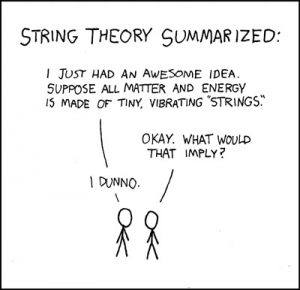 Way back in 1996 science writer John Horgan published The End of Science, in which he made the argument that various fields of science were running up against obstacles to any further progress of the magnitude they had previously experienced. One can argue about other fields (please don’t do it here…), but for the field of theoretical high energy physics, Horgan had a good case then, one that has become stronger and stronger as time goes on.
 Among the string of resignations triggered by the draft Brexit agreement with the European Union (EU), one stood out. In a double whammy for an embattled Prime Minister, Rehman Chishti the MP for Gillingham and Rainham resigned as both Vice Chairman of the Conservative Party as well as the PM’s Trade Envoy to Pakistan. Aside from citing Theresa May’s shambolic handling of Brexit negotiations,
  In 2015, General Mills reformulated Trix with “natural” colors. Customers complained that the bright hues of their childhood cereal were now dull yellows and purples. Two years later, the company released Classic Trix to stand on store shelves alongside so-called No, No, No Trix, the natural version. This nickname, promising “no tricks,” sounds abstemious; the virtuous customer says no to technicolor temptation. But Trix customers wanted their colors back. As one Tweet put it: “I mean, I get that artificial flavors are bad and all that shiz, but man I miss neon colored Trix.”
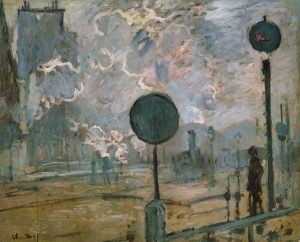 The line of French painting that stretches from Eugène Delacroix’s Liberty Leading the People to Pablo Picasso’s Demoiselles d’Avignon (or from Camille Corot early in the 1820s to Henri Matisse on the eve of the First World War) is a unique episode in recent history. It has established itself as “world-historical,” to borrow a term from G. W. F. Hegel. That is, it continues to speak to aspects—distinctive features—of the modern condition which succeeding ages seem unable to bring into focus, or go on valuing and properly criticizing, without its aid. The tradition’s only rival, if this is the standard, may be German music from Johann Sebastian Bach to Richard Wagner.
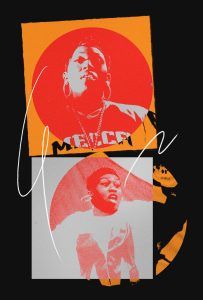 Timbaland and Elliott developed a grammar, collecting extra-musical noises—sighs, women giggling, coughs, babies gurgling—and stacking them so that they became instruments in and of themselves. They weren’t afraid to experiment with sounds that were nearer to the grotesque than the beautiful. One of the most well known is the
 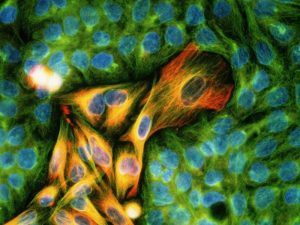 The stunning failure of a once-promising cancer drug has got some researchers arguing that the field has moved too fast in its embrace of therapies that unleash the immune system. The drug, epacadostat,
 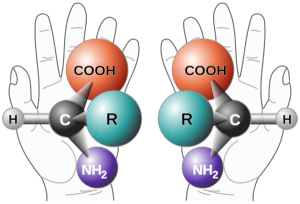 Let’s talk about mirror humans: “Oh, you haven’t heard of mirror humans? Let’s back up a moment.
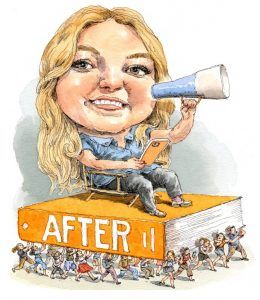 One afternoon in
  Elliptic curves seem to admit infinite variety, but they really only come in two flavors. That is the upshot of a new proof from a graduate student at Harvard University.
 New York’s governor, Andrew Cuomo, just announced a bail-reform program. Details were not yet available at press time, but it’s clear that Cuomo intends to release thousands of arrested persons, even suspected felons, without bail.