
by Liam Heneghan
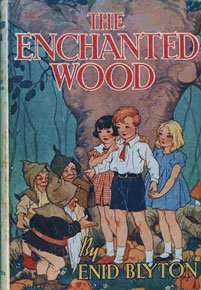
No one warned me that after my children finally left home when I secured the doors at night I would, in effect, be locking them out.
People deal with the mild trauma of being an “empty nester” in different ways, I suppose. Some handle it with quiet grace, some move cocktail hour to the early afternoon, some repurpose the bedrooms into a karaoke lounge, a discotheque and so on. I took the quieter route and reread all their childhood books—from nursery rhymes to the Hunger Games series and other novels for young adults.
I was first struck by the prevalence of animals themes in these books. For example, in Eric Kincaid’s superb collection of Nursery Rhymes (1990)—a favourite of our two boys—over forty percent of rhymes concern animals. However, a word search of a book I subsequently wrote on the topic of nature in children’s books called Beasts at Bedtime (2018) showed that I might just as well have called it “Trees at Bedtime.” In addition to the innumerable references to “beasts”, there are almost 200 references to trees in the book.
Trees are represented in these stories in all their remarkable forms: magical trees in fairy tales to trees like JK Rowling’s compellingly violent Whomping Willow at Hogwarts.
It is clear that many writers of children’s stories—especially the so-called classic writers—did not accidentally stumble onto such themes. Beatrix Potter, JRR Tolkien, Ursula LeGuin and many others, had a keen eye for nature, and often had an acute awareness of its devastation. The destruction of trees was a point of moderate obsession for Tolkien who famously wrote, “I take the part of trees as against all their enemies.”
What, I wonder, should we make of this veritable forest of arboreal allusions in children’s stories? Read more »

 In the Municipal building on Livingston Street, two floors are reserved for Housing cases. In each court, dozens of people work and wait, a Bosch tableau with an international cast. HPD lawyers work the perimeter. They bring Respondents to the bench, confer with them in the hallway and negotiate with Petitioners on their behalf. HPD attorneys also lunch with landlord’s counsel. There is little ethical or proximate difference between Officers of the Court, save who signs their checks and the pay scales. To a person, they distribute a crushing weight, balancing malfeasance and negligence, plunder and systemic rot. The lasting effect of a day in Housing court isn’t the stipulation Management makes for repairs, nor the tenant’s payment (sometimes, less an abatement), it is feeling that force haul you down and watching others already borne off by it.
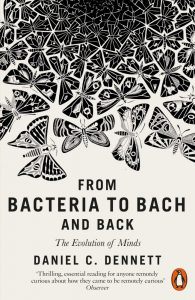 Despite Dennett’s training in philosophy (at Oxford, no less, under Ryle), his appointment in a well-regarded philosophy department, and his continued self-identification as a philosopher (“Philosophers, like me” (407)), I suspect that many professional philosophers find Dennett’s From Bacteria to Bach and Back, if they read it all with any care, barely philosophy. Dennett offers few structured arguments (with carefully numbered premises), no clear dilemmas/trillemas (etc.) nor the apparent paradoxes that are the staple of our profession nor does he deploy the conceptual distinctions
  Placards are being prepared. Photo-opportunities are being organised. A list of demands is being
  Samuel Moyn reviews A Foreign Policy for the Left by Michael Walzer in Modern Age:
 Before he died, Senator John McCain wrote a loving
 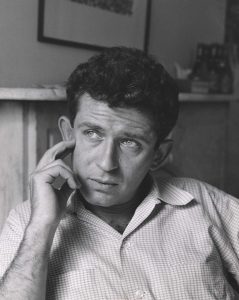 Sometimes I think my work may be seen eventually as some literary equivalent (obviously much reduced in scale) to Picasso. My vice, my strength, is beginnings. Usually I begin well—it is just that I seem to have little interest in finishing. It seems adequate to start a piece, go far enough to glimpse what the possibilities and limitations might be, and then move on. Which for that matter is close to the discrete temper of our time.
 John Horgan in Scientific American:
 Chris Mackin in TNR:
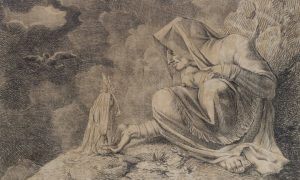 But rationalism doesn’t make the magical universe go away. Possibly because I earn my living as a writer of fiction, and possibly because it’s just the sensible thing to do, I like to pay attention to everything I come across, including things that evoke the uncanny or the mysterious. Homo sum, humani nihil a me alienum puto (I am human, I consider nothing human alien to me). My attitude to magical things is very much like that attributed to the great physicist Niels Bohr. Asked about the horseshoe that used to hang over the door to his laboratory, he’s claimed to have said that he didn’t believe it worked but he’d been told that it worked whether he believed in it or not. When it comes to belief in lucky charms, or rings engraved with the names of angels, or talismans with magic squares, it’s impossible to defend it and absurd to attack it on rational grounds because it’s not the kind of material on which reason operates. Reason is the wrong tool. Trying to understand superstition rationally is like trying to pick up something made of wood by using a magnet.
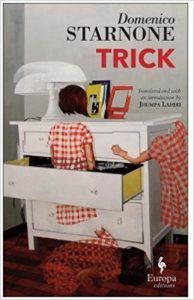 Perhaps it is Starnone’s newness in the English-speaking world that explains why reviewers have tended to jump over his proven track record and speculate about his connections to the mysterious and pseudonymous Italian author Elena Ferrante. Their rumored personal relationship is beside the point, but their books are similarly staggering—and the resemblances between their styles and subjects is hard to ignore.
 The incredible temple of pity and terror, mirth and amazement, which is popularly known as Coney Island, really constitutes a perfectly unprecedented fusion of the circus and the theatre. It resembles the theatre, in that it fosters every known species of illusion. It suggests the circus, in that it puts us in touch with whatever is hair-raising, breath-taking and pore-opening. But Coney has a distinct drop on both theatre and circus. Whereas at the theatre we merely are deceived, at Coney we deceive ourselves. Whereas at the circus we are merely spectators of the impossible, at Coney we ourselves perform impossible feats—we turn all the heavenly somersaults imaginable and dare all the delirious dangers conceivable; and when, rushing at horrid velocity over irrevocable precipices, we beard the force of gravity in his lair, no acrobat, no lion tamer, can compete with us.
 After World War II, tiny Albania became a hermit state, rigidly controlled by a Stalinist dictator,
  In April 2015, after a long and very public career, first as a male decathlete, then as a reality TV star,
 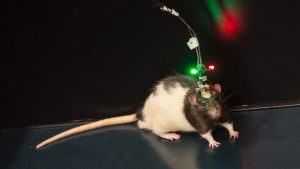 How the brain fixes the timing of the events we experience depends on episodic memory. Whenever you remember key events from your past, you are tapping into episodic memory, which encodes what happened, where it happened, and when it happened, doing so for all our remembered experiences. Neuroscientists know the brain must have a kind of internal clock or pacemaker to help it track those experiences and record them as memories.