
Matthew Goodwin and Eric Kaufmann in Quillette:
 Immigration and diversity politics dominate our political and public debates. Disagreements about these issues lie behind the rise of populist politics on the left and the right, as well as the growing polarization of our societies more widely. Unless we find a way of side-stepping the extremes and debating these issues in an evidence-led, analytical way then the moderate, pluralistic middle will buckle and give way.
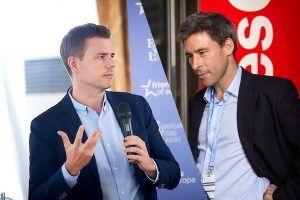
This is why, as two university professors who work on these issues, we decided to help organize and join a public debate about immigration and ethnic change. The debate, held in London on December 6, was a great success, featuring a nuanced and evidence-based discussion attended by 400 people. It was initially titled, “Is Rising Ethnic Diversity a Threat to the West?” This was certainly a provocative title, designed to draw in a large audience who might hold strong views on the topic but who would nonetheless be exposed to a moderated and evidence-led debate. Though we would later change the title, we couldn’t escape its powerful logic: On the night itself, we repeatedly returned to this phrasing because it is the clearest way of distinguishing competing positions.
Aside from ourselves, two university professors who between us have researched the issue for decades, the panel included Trevor Philips, the former Head of the Equality and Human Rights Commission (who is of African-Caribbean heritage), and David Aaronovitch, a liberal columnist at The Times. The debate was chaired by Claire Fox and co-sponsored by the Academy of Ideas, founded to provide a “forum committed to open and robust public debate in which ideas can be interrogated,” and the online magazine UnHerd, which aims to draw attention to stories and ideas that do not usually get covered in the mainstream media.
As soon as the title of the event was published it provoked a strong backlash. Rather than a genuine debate, it was interpreted as an open attack on immigrants and minorities.
More here.
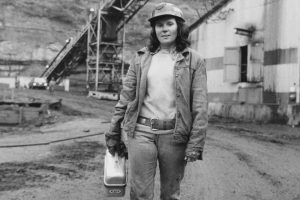 By the time Eisenberg started as an apprentice, several events suggested that the gender barrier in construction, and in other industries, could finally be cracked. It had been 15 years since the passage of the Equal Pay Act, which prohibited wage differentials based on sex, and 14 years since the Civil Rights Act, which outlawed discrimination based on race, color, religion, national origin, and—at the eleventh hour—sex. (Labor unions strongly opposed the latter.) Almost a decade earlier, Gloria Steinem’s article “After Black Power, Women’s Liberation,” published in New York magazine, created small seismic shifts in homes and workplaces across America. The Equal Rights Amendment had finally passed, nearly a half-century after it was introduced, and was awaiting state ratification. (The ERA remains in constitutional limbo to this day. A faction of conservative women thwarted its passage, arguing that it would lead to the draft and eventually to unisex bathrooms.)
 Palestine’s colonization doesn’t just take the form of checkpoints, walls, eradicated villages, testimonies from families with concrete barriers through their homes; it takes the form of an opulent city whose residents are convinced they live in the greatest city in the world. It was here, at this moment, when I began to realize the weight of what we lost, when I realized my memory of Palestine was a misappropriation of my displaced family’s lived experience, and no matter how much learning and unlearning I did, nothing would restore that original memory. Nothing would reconcile my experience of Palestine with my family’s collective memory. Nothing would resurrect the country this once was.
 In 1905, defeated by Japan and facing insurrection in the major cities and financial catastrophe, Russia’s tsar and his government were forced to retreat from autocracy and create a parliament (the Duma). Censorship, already weak and inconsistent, virtually collapsed. By then, there were plenty of printing presses, legal and illegal, along with cheap paper and card and, most surprisingly, an efficient postal system of a kind that modern Russians can only dream of. Moscow and St Petersburg had six collections a day; a letter sent from the Crimea to France took just four days to arrive. By 1913 Moscow alone handled thirteen million letters a year. Postcards, first introduced in 1872, were the cheapest form of communication – a mere three-kopeck stamp took a card anywhere in the empire. It was some time before cards could be illustrated, and it was later still that it became no longer obligatory to confine the message to a line or two scrawled over the illustration. Regulations eventually relaxed so much that giant postcards much larger than the standard 9 x 14 cm were accepted.
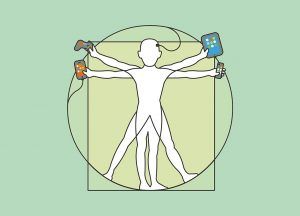 In his 1909 short story The Machine Stops, E. M. Forster imagined a future in which people live in isolation underground, their needs serviced by an all-powerful ‘machine’. Human activity consists mainly of remote communication — face-to-face interaction is frowned upon. Ultimately, the title of the story plays out: the machine stops, civilization collapses, and the future of humanity is left to the surface-dwellers who avoided dependency. The story has been lauded not only for its prescient imagining of something like our hyperconnected Internet age, but also for its insights into the human impact of an all-powerful technology. We are now starting to grapple with similar questions. What do we lose when we cede autonomy to technology? Are we becoming dependent on it? And what is digital technology doing to our minds?
 A thought experiment: If hangovers didn’t exist, what percentage of your life would you spend drunk? It’s unexpectedly hard to predict. Part of the thrill of getting wasted, after all, is knowing that you’re sacrificing your future self for your present self’s fun. That’s the point of bad behavior.
 Everywhere around us are things that serve functions. We live in houses, sit on chairs, drive in cars. But these things don’t only serve functions, they also come in particular forms, which may be emotionally or aesthetically pleasing as well as functional. The study of how form and function come together in things is what we call “Design.” Today’s guest, Ge Wang, is a computer scientist and electronic musician with a new book called Artful Design: Technology in Search of the Sublime. It’s incredibly creative in both substance and style, featuring a unique photo-comic layout and many thoughtful ideas about the nature of design, both practical and idealistic. We talk about what design is, how it can be artful, and in what sense it points us toward the sublime.
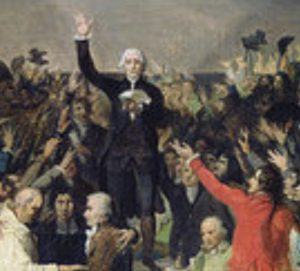 If there were a tagline for today’s populist moment, it would probably be something like “It’s not the economy, stupid.” Economic factors matter, but they are far from decisive in understanding why populists, especially right-wing populists, have solidified their position as the second largest or even largest parties in many Western democracies.
 W
W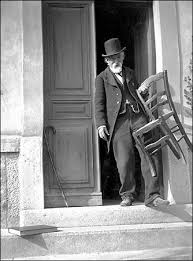 Cézanne’s kind of painting—the digital kind, composed of discrete marks—is so far removed from the analog illusions of photography that its engagement with cultural issues is of a divergent sort. By rendering its technique explicit, it revealed its liaison with living sensation, eye-to-hand. Artist-theorist André Lhote wrote in 1920: “A large part of the emotive power of Cézanne’s canvases derives from the fact that the painter, rather than hide them, shows his means.”
 On a recent afternoon, Ivan Novak, a member of the Slovenian rock group Laibach, went for a walk in the hills overlooking the country’s capital, Ljubljana. In between stops to pet passing dogs, he explained what it was like when Laibach became the first Western band to perform in North Korea.
 It says something about Lin-Manuel Miranda’s genius that he even managed to make fiscal integration catchy. In his musical Hamilton, the eponymous treasury secretary raps:
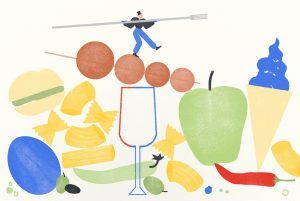 You’d think that scientists at an international conference on obesity would know by now which diet is best, and why. As it turns out, even the experts still have widely divergent opinions. At a recent meeting of the Obesity Society, organizers held a
  The day before Thanksgiving I got this wonderfully understated text from a close friend:

 Our uniform was a shirt tucked into jeans. Sandi stretched the smallest size over well-proportioned breasts, her black bra peeking through a run of buttons. Mine hung long in the sleeves and fell over my waist.