
 Jeffrey J. Williams interviews Bruce Robbins over at the LA Review of Books:
JEFFREY J. WILLIAMS: Your new book, The Beneficiary, looks at an uncomfortable side of cosmopolitanism, underscoring that though we might criticize capitalism, we’re beneficiaries of it too. It’s a bookend to your last book,Perpetual War, which looks at globalization from the standpoint of the victims, instead of looking from the standpoint of those who benefit. Can you talk about that more?
BRUCE ROBBINS: As cosmopolitanism has caught on, a lot of people have decided that it is a banner they can march behind. I’ve of course been pleased, but also a little uneasy because the version of cosmopolitanism is sometimes not strenuous enough. It’s something that people can claim on the cheap. I have always been haunted by the ancient Greek normative sense that your cosmopolitan commitment has to prove itself in difficult moments, when the power of your community is being usurped and you’re being asked to go along with it, so it’s not always so easy or convenient.
Perpetual War was a moment when I said, if you’re not willing to detach yourself from your nation when it is making a war that you consider unjust, then you really can’t use the word cosmopolitanism appropriately. It’s not going to be comfortable to say I am detaching myself from my community when that community is sending men and women into harm’s way in a foreign place. People may spit on you, or worse. We don’t want to forget the more strenuous version of cosmopolitanism that involves detachment from military adventurism or war.
But at some point I realized it’s not just military entanglement that would define that more strenuous version of cosmopolitanism; it’s also the question of the economic well-being of people who are far away from you and belong to other countries.
More here.

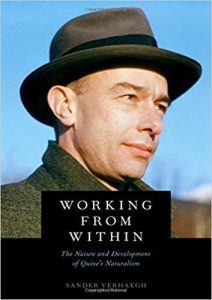 Richard Marshall interviews Sander Verhaegh in 3:AM Magazine:
 Dylan Riler in the New Left Review:
 Everything is formed by habit. The crow’s feet that come from squinting or laughter, the crease in a treasured and oft-opened letter, the ruts worn in a path frequently traveled—all are created by repeatedly performing the same action. Even neurons are formed by habit. When continuously exposed to a fixed stimulus, neurons become steadily less sensitive to that stimulus—until they eventually stop responding to it altogether. Anything that’s habitually encountered—the landscape of a daily commute, storefronts passed on a walk to the bus stop, photographs arranged on a mantelpiece—tends toward invisibility. The more we see a thing, the less we see it. Familiarity breeds neglect. Once perception settles into a comfortable pattern, we fall asleep to it. Only when the pattern is broken do we notice there is a pattern at all. The chains of mental habit are too weak to be felt until they are too strong to be broken, to paraphrase Samuel Johnson. Wit, whether visual or verbal, can make the commonplace uncommon again by breaking the habits that render perception routine. We tend to define the quality of wit as merely being deft with a clever comeback. But true wit is richer, cannier, more riddling. And the best of it is often based on a biological phenomenon called supernormal stimuli.
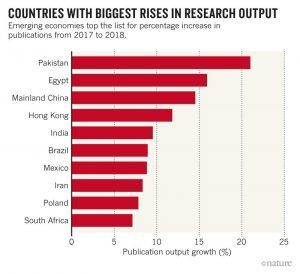 Emerging economies showed some of the largest increases in research output in 2018, according to estimates from the publishing-services company Clarivate Analytics. Egypt and Pakistan topped the list in percentage terms, with rises of 21% and 15.9%, respectively. China’s publications rose by about 15%, and India, Brazil, Mexico and Iran all saw their output grow by more than 8% compared with 2017 (See ‘Countries with biggest rises in research output’). Globally, research output rose by around 5% in 2018, to an estimated 1,620,731 papers listed in a vast science-citation database Web of Science, the highest ever (see ‘Research output rose again in 2018’). This diversification of players in science is a phenomenal success, says Caroline Wagner, a science and technology policy analyst at Ohio State University, and a former adviser to the US government. “In 1980, only 5 countries did 90% of all science — the United States, the United Kingdom, France, Germany and Japan,” she says. “Now there are 20 countries within the top producing group.”
 Pablo Calvi in The Believer:
 Fara Dabhoiwala in The Guardian:
 An interview with Adam Tooze in Jacobin:
 Sheri Berman in Dissent:
 His book is a lie, a black, infernal creation of a twisted, distorted mind.” It was a Democratic representative from Oklahoma who gave this verdict of The Grapes of Wrath, John Steinbeck’s chronicle of migrants leaving the Dust Bowl for California. Disdained by the political elite and much of the literary set, it was nonetheless the best-selling book of 1939. Today’s parallels with the 1930s give Steinbeck’s work renewed urgency. He writes about farm labourers, shopkeepers and the denizens of village taverns – the kinds of people who, before the enormous political upheaval of 2016, the chattering classes barely remembered. In the age of Trump, mass-migration and the phenomenon of the ‘left behind’, Steinbeck’s work is just as relevant as when he wrote it. But more than that: reading Steinbeck fifty years after his death is the perfect antidote to the culture war that has gripped America.
 Jan Mattlin was having what counts as a bad day in Kauniainen. He had driven to the town’s train station and found nowhere to park. Mildly piqued, he called the local newspaper to suggest a small article about the lack of parking spots. To Mr. Mattlin’s surprise, the editor put the story on the front page. “We have very few problems here,” recalled Mr. Mattlin, a partner at a private equity firm. “Maybe they didn’t have any other news available.” Such is the charmed life in Kauniainen (pronounced: COW-nee-AY-nen), a small and wealthy Finnish town that can lay claim to being the happiest place on the planet. Finland was
 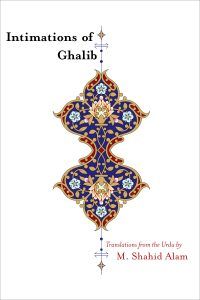 In reviewing “Intimations of Ghalib”, a new translation of selected ghazals of the Urdu poet Ghalib by M. Shahid Alam, let it be said at the outset that translating classical Urdu ghazal into any language – possibly excepting Persian – is an almost impossible task, and translating Ghalib’s ghazals even more so. The use of symbolism, the aphoristic aspect of each couplet, the frequent play on words, and the packing of multiple meanings into a single verse are all too easy to lose in translation. And no Urdu poet used all these devices more pervasively and subtly than Ghalib, and even learned scholars can disagree strongly on the “correct” meaning of particular verses. As such, Alam set himself an impossible task, and the result is, among other things, a demonstration of this.
 In 2018, Earth picked up about 40,000 metric tons of interplanetary material, mostly dust, much of it from comets. Earth lost around 96,250 metric tons of hydrogen and helium, the lightest elements, which escaped to outer space. Roughly 505,000 cubic kilometers of water fell on Earth’s surface as rain, snow, or other types of precipitation. Bristlecone pines, which can live for millennia, each gained perhaps a hundredth of an inch in diameter. Countless mayflies came and went. As of this writing, more than one hundred thirty-six million people were born in 2018, and more than fifty-seven million died.
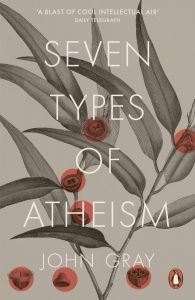 It is simultaneously awkward and exciting to read about your own consciously and responsibly adopted beliefs as something to be anatomized. It is also something atheists are not always much disposed to. On the contrary, perhaps: many forms of atheism present themselves as a consequence of free thought, of emancipation from tradition. The internal logic of their arguments prescribes that while religious beliefs, being non-rational, are in need of cultural or psychological explanation, atheism is really just what you will gravitate towards once you finally start thinking. One question here will be whether this is necessarily the case.