
Jeremy Lent in Open Democracy:
 Having read his book carefully, I believe it’s crucially important to take Pinker to task for some dangerously erroneous arguments he makes. Pinker is, after all, an intellectual darling of the most powerful echelons of global society. He spoke to the world’s elite this year at the World’s Economic Forum in Davos on the perils of what he calls “political correctness,” and has been named one of Time magazine’s “100 Most Influential People in the World Today.” Since his work offers an intellectual rationale for many in the elite to continue practices that imperil humanity, it needs to be met with a detailed and rigorous response.
Besides, I agree with much of what Pinker has to say. His book is stocked with seventy-five charts and graphs that provide incontrovertible evidence for centuries of progress on many fronts that should matter to all of us: an inexorable decline in violence of all sorts along with equally impressive increases in health, longevity, education, and human rights. It’s precisely because of the validity of much of Pinker’s narrative that the flaws in his argument are so dangerous. They’re concealed under such a smooth layer of data and eloquence that they need to be carefully unraveled. That’s why my response to Pinker is to meet him on his own turf: in each section, like him, I rest my case on hard data exemplified in a graph.
More here.
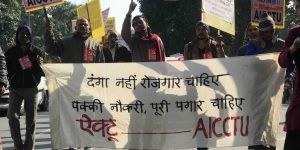 Issuing a clarion call against the Modi government, an estimated 200 million workers across various sectors successfully carried out a
 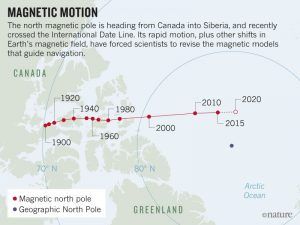 Something strange is going on at the top of the world. Earth’s north magnetic pole has been skittering away from Canada and towards Siberia, driven by liquid iron sloshing within the planet’s core. The magnetic pole is moving so quickly that it has forced the world’s geomagnetism experts into a rare move. On 15 January, they are set to update the World Magnetic Model, which describes
  In 1987, my first year in college, I happened upon a notice outside of the English department for a winter session opportunity: escorting a visiting artist during a week-long interdisciplinary conference held at my school, the University of Rochester. I ran my finger down the list of artists’ names until it stopped on one: Ursula K. Le Guin.
 In recent years many prominent people have expressed worries about artificial intelligence (AI). Elon Musk thinks it’s the “
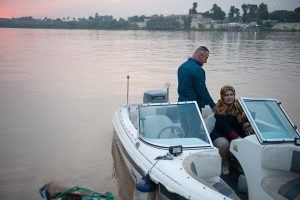 Iraq has endured decades of sanctions, war, invasion, regime change and dysfunctional government. These span Saddam Hussein’s dictatorship, a devastating eight-year war with Iran in the 1980s and crippling UN sanctions throughout the 1990s. Those difficult years gave way to the traumas of the 2003 U.S.-led invasion and its chaotic aftermath, which brought the insurgents of the Islamic State to the outskirts of the Iraqi capital Baghdad in 2014.
 Few issues in economics have generated such heated debates as the nature of money and its role in the economy. What is money? How is it related to debt? How does it influence economic activity? The recent mainstream economic literature is an unfortunate exception. Bar a few who have sailed into these waters, money has been allowed to sink by the macroeconomics profession. And with little or no regrets.
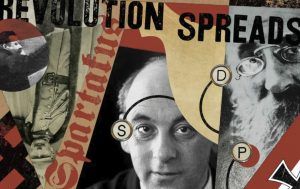 It was slightly more than a century ago, in November 1918, that revolution swept through Germany, bringing chaos to a country that, in the final days of World War I, was already in desperate straits and verging on collapse. Although it was obvious to nearly everyone that the war was lost, the fighting staggered on, even as a growing pacifist movement issued the cry for “Peace, Freedom, Bread!” In Kiel on the Baltic Sea, sailors at the docks refused the order for a last battle and went into open mutiny, while soldiers and revolutionary workers in Berlin called for a general strike. Kaiser Wilhelm II, an absurd and incompetent militarist, at last faced the truth that his time was up and abdicated the throne, leaving confusion in his wake. On November 9, Philipp Scheidemann, a member of the Social Democratic Party of Germany (SDP), seized the moment to declare the founding of a new republic.
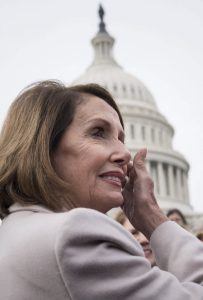 Speaker Nancy Pelosi and the
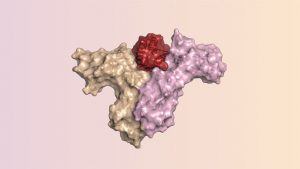 For patients with aggressive kidney and skin cancers, an immune-boosting protein called interleukin-2 (IL-2) can be a lifesaver. But the dose at which it fights cancer can also produce life-threatening side effects. Now, scientists have used computer modeling to design a new protein from scratch that mimics IL-2’s immune-enhancing abilities, while avoiding its dangerous side effects. The protein has so far been tested only in animals, but it may soon enter human trials. IL-2 plays a key role in directing the body’s immune response to outside invaders. The protein, a signaling molecule called a cytokine, ramps up the activity of white blood cells known as T lymphocytes by binding simultaneously to their IL-2β and IL-2γ receptors. In cells where a third type of receptor, IL-2α, is present, IL-2 binds collectively to all three. In other white blood cells, this dampens the body’s immune response. But it can also occur in cells in blood vessels, causing those vessels to leak, a potentially deadly condition.
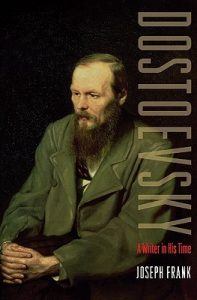 The testament Dostoevsky left his children was the parable of the Prodigal Son. He asked that it be read to them the night of the day he knew would be his last, and the late, great Joseph Frank judged that Dostoevsky had probably understood the whole of his life and all of his literature as having existed under the sign of this tale of “transgression, forgiveness, and redemption.”
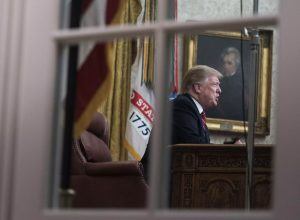 Donald Trump campaigned on the absurd lie that the United States could construct a large concrete wall across the entire US-Mexico border and coerce the Mexican government into paying for its construction. The government is currently shut down because Trump refuses to admit that his absurd lie was, in fact, an absurd lie.
 Thomas Piketty and his colleagues
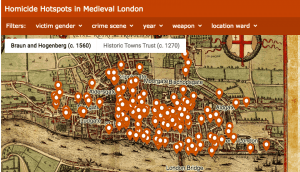 In July of 1316, a priest with a hankering for fresh apples sneaked into a walled garden in the Cripplegate area of London to help himself to the fruits therein. The gardener caught him in the act, and the priest brutally stabbed him to death with a knife—hardly godly behavior, but this was the Middle Ages. A religious occupation was no guarantee of moral standing.