
Jordana Cepelewicz in Quanta:
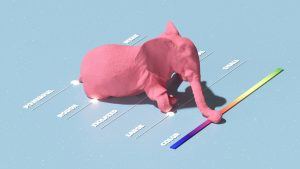 We humans have always experienced an odd — and oddly deep — connection between the mental worlds and physical worlds we inhabit, especially when it comes to memory. We’re good at remembering landmarks and settings, and if we give our memories a location for context, hanging on to them becomes easier. To remember long speeches, ancient Greek and Roman orators imagined wandering through “memory palaces” full of reminders. Modern memory contest champions still use that technique to “place” long lists of numbers, names and other pieces of information.
As the philosopher Immanuel Kant put it, the concept of space serves as the organizing principle by which we perceive and interpret the world, even in abstract ways. “Our language is riddled with spatial metaphors for reasoning, and for memory in general,” said Kim Stachenfeld, a neuroscientist at the British artificial intelligence company DeepMind.
In the past few decades, research has shown that for at least two of our faculties, memory and navigation, those metaphors may have a physical basis in the brain. A small seahorse-shaped structure, the hippocampus, is essential to both those functions, and evidence has started to suggest that the same coding scheme — a grid-based form of representation — may underlie them. Recent insights have prompted some researchers to propose that this same coding scheme can help us navigate other kinds of information, including sights, sounds and abstract concepts. The most ambitious suggestions even venture that these grid codes could be the key to understanding how the brain processes all details of general knowledge, perception and memory.
More here.
 You wouldn’t think that a defense of reason, science, and humanism would be particularly controversial in an era in which those ideals would seem to need all the help they can get. But in the words of a colleague, “You’ve made people’s heads explode!” Many people who have written to me about my 2018 book
  Journalist, teacher, and novelist, pan-Africanist historian and left-leaning political activist, Cyril Lionel Robert James is best remembered for
  Citizenship, for a person like me from a country like Nigeria, in a continent like Africa, is not just a sensibility, it is also a condition. A condition that arises from being what I like to call “inhabitants of the periphery”. And what do I mean by inhabitants of the periphery? I am not merely referring to political expressions like Third World, but to the phenomenon of being outside the centre in ways more subtle than mere politics, in ways metaphysical and psychological.
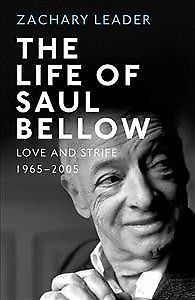 As Atlas explains in The Shadow in the Garden, ‘Bellow had three sons: Greg, Adam, and Dan. He also had three disciples: James Wood, Leon Wieseltier and Martin Amis.’ Wood, the literary critic and novelist; Wieseltier, the former literary editor of the New Republic; and Amis, who, on the death of his father, Kingsley, declared to Bellow, ‘You’ll have to be my father now.’ Atlas: ‘These three were – I won’t say pseudo-sons, because their affection for Bellow was so deep as to be almost filial – but surrogate or substitute or perhaps alter-sons, whose love was uncomplicated by anger and the unruly demands of hereditary sons.’ And we can add a fourth alter-son, Atlas himself, who elsewhere in the book confides: ‘I had become accustomed to thinking of Bellow not only as a father figure but as a father, whose unconditional love – or at least forgiveness – I could count on no matter what I did.’ It’s difficult to imagine a less likely candidate for a chalice of unconditional love than Bellow (‘prickly’ was practically his middle name), but the whole surrogate dad/surrogate son business is a bewildering proposition, a sidebar of aberrant psychology; I’m not sure there’s anything comparable in American literary history.
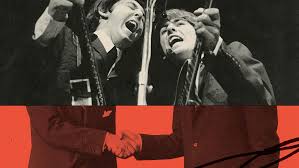 In his languidly titled autobiography, “Life”, Keith Richards tells a story that captures something about the workplace culture of the Rolling Stones and his decades as the band’s guitarist. It’s 1984 and the Stones are in Amsterdam for a meeting (yes, even Keith Richards attends meetings). That night, Richards and Mick Jagger go out for a drink and return to their hotel in the early hours, by which time Jagger is somewhat the worse for wear. “Give Mick a couple of glasses, he’s gone,” Richards writes, scornfully. Jagger decides that he wants to see Charlie Watts, who has already gone to bed. He picks up the phone, calls Watts’s room and says, “Where’s my drummer?” There is no response from the other end of the line. Jagger and Richards have a few more drinks. Twenty minutes later, there’s a knock at the door. It is Watts, dressed in one of his Savile Row suits, freshly shaved and cologned. He seizes Jagger and shouts “Never call me your drummer again,” and delivers a sharp right hook to the singer’s chin.
 One of the core challenges of modern AI can be demonstrated with a rotating yellow school bus. When viewed head-on on a country road, a deep-learning neural network confidently and correctly identifies the bus. When it is laid on its side across the road, though, the algorithm believes—again, with high confidence—that it’s a snowplow. Seen from underneath and at an angle, it is definitely a garbage truck. The problem is one of context. When a new image is sufficiently different from the set of training images, deep learning visual recognition stumbles, even if the difference comes down to a simple rotation or obstruction. And context generation, in turn, seems to depend on a rather remarkable set of wiring and signal generation features—at least, it does in the human brain. Matthias Kaschube studies that wiring by building models that describe experimentally observed brain activity. Kaschube and his colleagues at the Frankfurt Institute for Advanced Studies have found a host of features that stand in stark contrast to the circuits that engineers build: spontaneous activity and correlation, dynamic context generation, unreliable transmission, and straight-up noise. These seem to be fundamental features of what some call the universe’s most complex object—the brain.
 In November, Politico
  Sometimes science is asking esoteric questions about the fundamental nature of reality. Other times, it just wants to solve a murder. Today’s guest, Raychelle Burks, is an analytical chemist at St. Edward’s University in Texas. Before becoming a full-time academic, she worked in a crime lab using chemistry to help police track suspects, and now she does research on building new detectors for use in forensic analyses. We talk about how the real world of forensic investigation differs from the version you see portrayed on CSI, and how real chemists use their tools to help law enforcement agencies fight crime. We may even touch on how criminals could use chemical knowledge to get away with their dastardly deeds.
 Was austerity the only possible response to the debt that many nations incurred after the global economic mess post 2008? The answer, if one looks at
 I CAN TELL YOU the moment Roma revealed itself to be an indulgence, a liberal pose struck by a director whose infrequent output has helped build an unsupportable myth about his genius. It involves a trip to the movies, every director’s favorite shorthand for the magical, transporting power of cinema that saves them the trouble of having to conjure that power themselves.
 So it is that underneath Venturi and Brown’s extraordinary analysis of the decorated shed, Rome slowly appears in all its glory and monumentality. The facades of the great cathedrals move out to the street and become signs and ads of varying proportions (depending on the speed of the drivers); St. Peter’s vast square becomes a parking lot, the basilica a casino, and the side chapels so many dimly lit gambling salons under low ceilings. This is truly another form of historicism, the one we deserve; and it accommodates the theory. For the concept of the decorated shed explicitly tells us to do what we like with the space of the shed, to pray, sleep, give speeches, store our boxes, repair our cars: It is a form and not a content. Is it a structure, like Adam’s house in paradise? Perhaps, but then in that case, unlike the duck (where the ad or sign has been amalgamated with the monument itself), the structure is a tripartite one: the sign or facade, the parking lot, and then the basilica itself, the showcase or display space versus the back room (as Erving Goffman might have put it), where its unconscious, perhaps, or its hidden meanings (Freudian or ideological), its secret intentions or “programs,” live.
 Every death erases a uniqueness. But to say that there was no one on earth like Francine du Plessix Gray is to state a simple and obvious truth. There were three cultural—call them national—streams in her existence: French by birth and background, she was American in upbringing and in principles, and yet also deeply Russian in personal mythology and values and warmth. (Her Russian mother, Tatiana Yakovleva, was the great love of the poet Mayakovsky’s life, and Francine, by a rumor that both exasperated and entertained her, was acclaimed on her visits to Russia as his illegitimate daughter.) Francine, who died on Sunday, at the age of eighty-eight, was raised in what used to be called high or café society—Tatiana, whom she once
 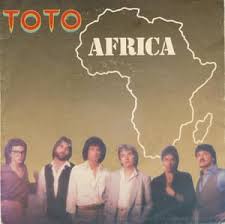 Somewhere amid the sand dunes of the world’s oldest desert croons a soft voice: “It’s gonna take a lot to take me away from you.”
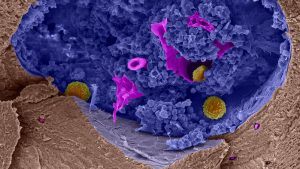 In multiple sclerosis (MS), a disease that strips away the sheaths that insulate nerve cells, the body’s immune cells come to see the nervous system as an enemy. Some drugs try to slow the disease by keeping immune cells in check, or by keeping them away from the brain. But for decades, some researchers have been exploring an alternative: wiping out those immune cells and starting over. The approach, called hematopoietic stem cell transplantation (HSCT), has long been part of certain cancer treatments. A round of chemotherapy knocks out the immune system and an infusion of stem cells—either from a patient’s own blood or, in some cases, that of a donor—rebuilds it. The procedure is already in use for MS and other autoimmune diseases at several clinical centers around the world, but it has serious risks and is far from routine. Now, new results from a randomized clinical trial suggest it can be more effective than some currently approved MS drugs. “A side-by-side comparison of this magnitude had never been done,” says Paolo Muraro, a neurologist at Imperial College London who has also studied HSCT for MS. “It illustrates really the power of this treatment—the level of efficacy—in a way that’s very eloquent.”
 Just over forty years ago the Supreme Court struck down race-based quotas in school admissions while also upholding the core tenets of affirmative action. In the landmark 1978 decision, Regents of the University of California v. Bakke, Justice Lewis F. Powell, Jr., singled out Harvard’s admissions program as an exemplar for achieving diversity and applauded the university’s own description of its policy, according to which the “race of an applicant may tip the balance in his favor just as geographic origin or a life spent on a farm may tip the balance in other candidates’ cases.” As the Supreme Court would later emphasize, such review considered race merely a “factor of a factor of a factor.”