
Sean Carroll in Preposterous Universe:
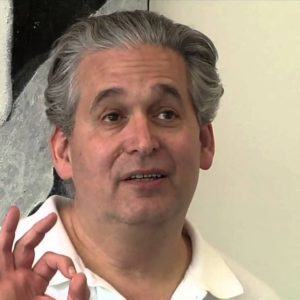 Quantum mechanics is our best theory of how reality works at a fundamental level, yet physicists still can’t agree on what the theory actually says. At the heart of the puzzle is the “measurement problem”: what actually happens when we observe a quantum system, and why do we apparently need separate rules when it happens? David Albert is one of the leading figures in the foundations of quantum mechanics today, and we discuss the measurement problem and why it’s so puzzling. Then we dive into the Many-Worlds version of quantum mechanics, which is my favorite (as I explain in my forthcoming book Something Deeply Hidden). It is not David’s favorite, so he presents the case as to why you should be skeptical of Many-Worlds. (The philosophically respectable case, that is, not a vague unease at all those other universes.)
More here.
 Citizens of
  But beyond the pleasure of Dreyer’s prose and authorial tone, I think there is something else at play with the popularity of his book. To put it as simply as possible, the man cares, and we need people who care right now. Dreyer’s English is, beyond a freakin’ style guide, the document of a serious person’s working life. At sixty, Dreyer is at the top of his game and profession, an honorable profession he has worked diligently at for more than three decades. To write a book is to care deeply and in a sustained way about something; to copyedit a book is to care deeply and in a sustained way about someone else’s deep and sustained caring. And to have copyedited books for one’s adult life is to have spent one’s adult life caring about other people’s words and the English language. As he writes in the introduction:
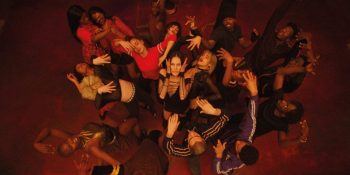 GASPAR NOÉ’S CLIMAX is an encyclopedia of ways in which the human body can bend and break, a sailor’s knot guide of the contortions possible with four limbs, a trunk, and a head, skulls seemingly empty here of thoughts other than sex and death. Set in an isolated school somewhere outside of Paris where a troupe of hip-hop dancers have assembled for intensive rehearsals before an impending American tour, the movie unravels in something like real-time as, cutting loose at the end of a day’s work, they dip into a punchbowl of sangria before discovering that one of their group has spiked it with LSD, precipitating a collective freak-out.

 High in the mountains of Central America lives a little known creature called Alston’s singing mouse. This rodent, which spends its life scuttling around the floor of the cloud forest, may not seem like it has much to tell us about ourselves. But the mouse produces remarkable songs, and researchers
  The man for whom the word “Emergency” must have been invented (“serious, unexpected, and often dangerous situation requiring immediate action”) pulled the pin out of yet another hand grenade.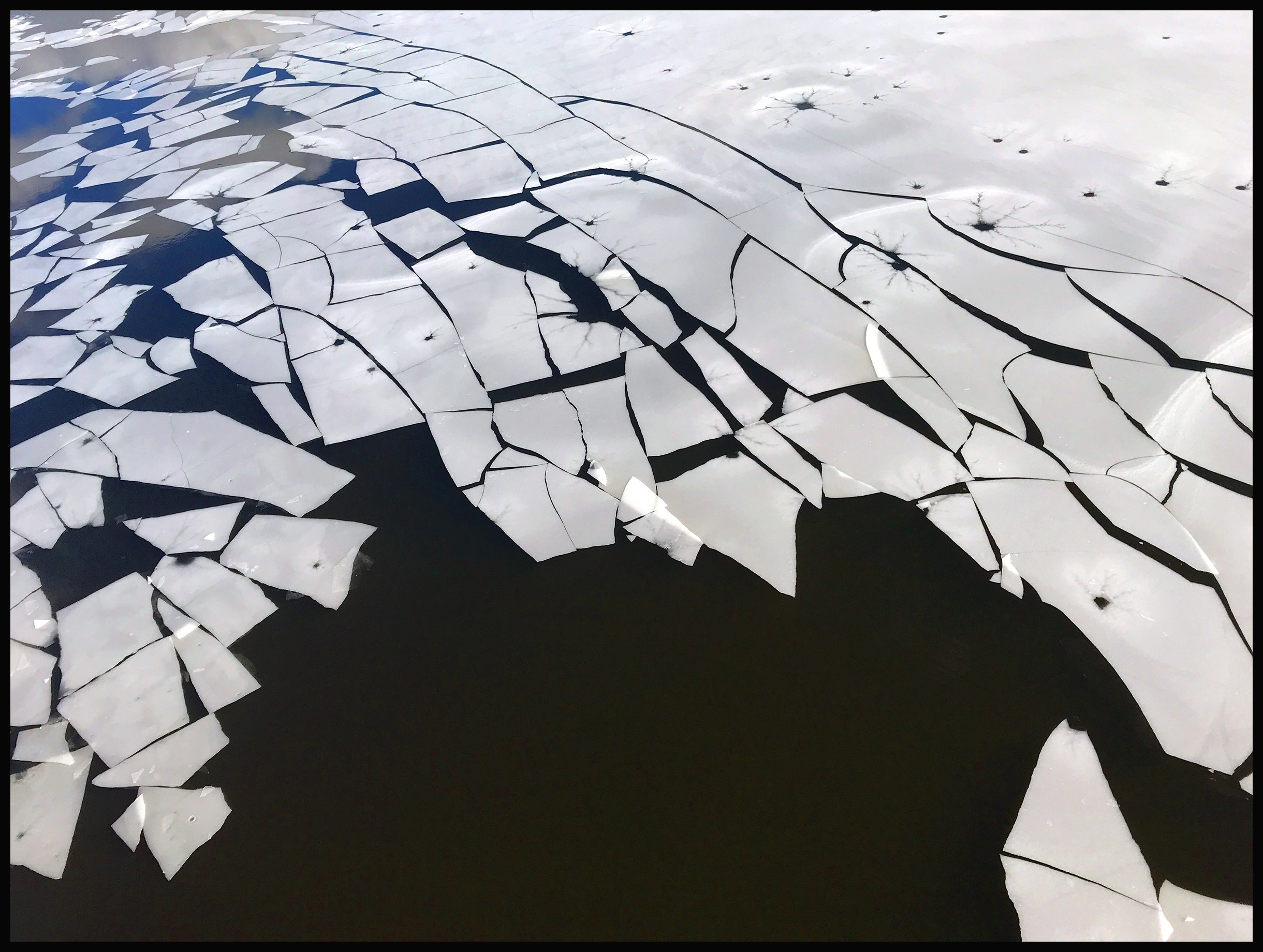
 Just about everyone who visits the famous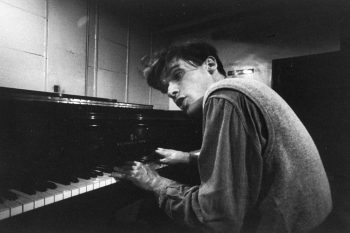
 My seventy-something year old uncle, who still uses a flip phone, was talking to me a while ago about self-driving cars. He was adamant that he didn’t want to put his fate in the hands of a computer, he didn’t trust them. My question to him was “but you trust other people in cars?” Because self-driving cars don’t have to be 100% accurate, they just have to be better than people, and they already are. People get drunk, they get tired, they’re distracted, they’re looking down at their phones. Computers won’t do any of those things. And yet my uncle couldn’t be persuaded. He fundamentally doesn’t trust computers. And of course, he’s not alone. More and more of our lives have highly automated elements to them,
  The Anna Karenina Fix
 In the Third Essay of On the Genealogy of Morality, Nietzsche levels a powerful attack on the modern Platonistic conception of mind and nature, urging us to reject such “contradictory concepts” as “knowledge in itself,” or the idea of “an eye turned in no particular direction, in which the active and interpreting forces, through which alone seeing becomes seeing something, are supposed to be lacking.” More recently, Donald Davidson’s attack on the dualism of conceptual scheme and empirical content, and thus of belief and meaning, requires us to see inquiry into how things are as essentially interpretative.
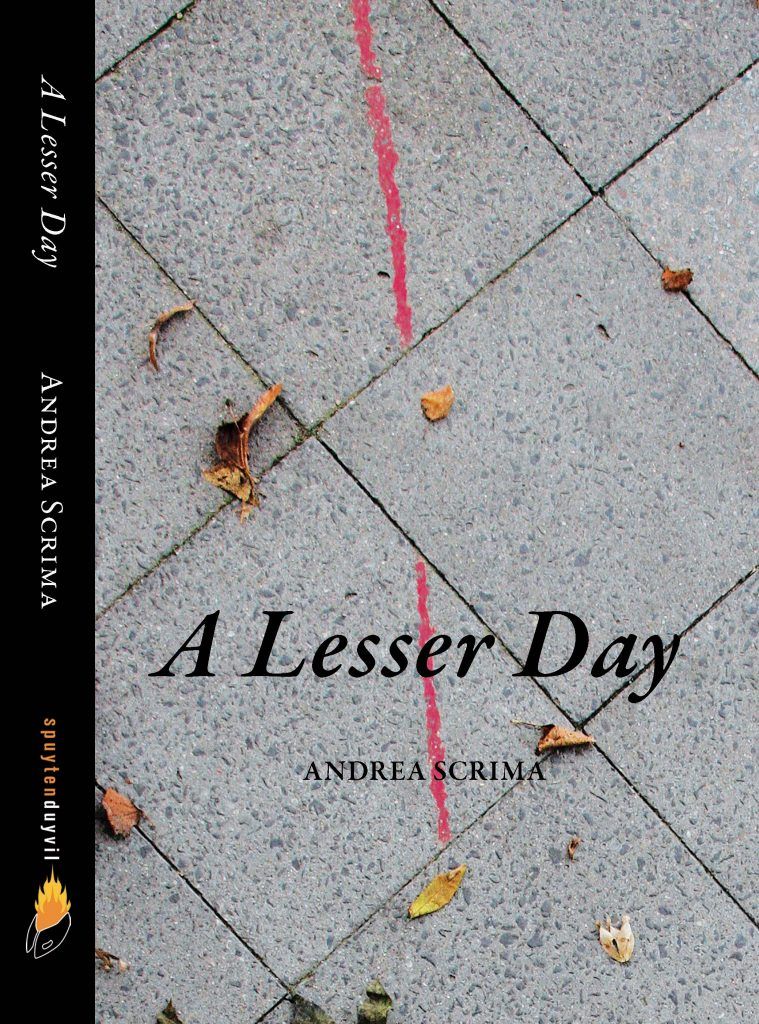 Andrea Scrima: As a visual artist, I worked in the area of text installation for many years, in other words, I filled entire rooms with lines of text that carried across walls and corners and wrapped around windows and doors. In the beginning, for the exhibitions Through the Bullethole (Bemis Center for Contemporary Arts, Omaha), I walk along a narrow path (American Academy in Rome) and it’s as though, you see, it’s as though I no longer knew… (Künstlerhaus Bethanien Berlin in cooperation with the Galerie Mittelstrasse, Potsdam), I painted the letters by hand, not in the form of handwriting, but in Times Italic. Over time, as the texts grew longer and the setup periods shorter, I began using adhesive letters, for instance at the Neuer Berliner Kunstverein, Kunsthaus Dresden, the museumsakademie berlin, and the Museum für Neue Kunst Freiburg. Many of the texts were site-specific, that is, written for existing spaces, and often in conjunction with objects or photographs. Sometimes it was important that a certain sentence end at a light switch on a wall, that the knob itself concluded the sentence, like a kind of period. I was interested in the architecture of a space and in choreographing the viewer’s movements within it: what happens when a wall of text is too long and the letters too pale to read the entire text block from the distance it would require to encompass it as a whole—what if the viewer had to stride up and down the wall? And if this back and forth, this pacing found its thematic equivalent in the text?
  Soon after I arrive in Chicago, on an August afternoon with a heat I remember from childhood, I head to a bar on the North Side and shoot pool. I haven’t been to this city in more than a year, because going home isn’t easy. But I’ve been called back for the wedding of a close friend, which will take place later in the weekend. My friend, the groom—let’s call him X.— is a journalist, and many of the other attendees are people like me, journalists or writers.
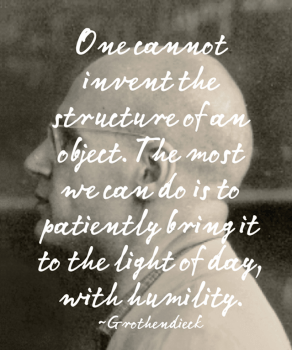 The tiny village of Lasserre is tucked into one of France’s southernmost hills, a hamlet of stone buildings strong in the embrace of centuries-old cement. The home in which the mathematician Alexander Grothendieck spent the last two decades of his life in near-complete seclusion is as tranquil as its neighbors. A patchwork of vines—trained, then abandoned—climb toward the white shutters and terracotta roof. Among the few postwar sentries is a standard-issue metal mailbox. Visitors left mostly unclaimed notes for him; letters via post were marked retour a l’envoyeur. The locals knew to leave him alone, but when a young mathematician arrived in the early 1990s in hopes of speaking to him, he slammed the door in her face, screaming.