Lab-grown meat’s steady march to your plate

Matt Davis in Big Think:

Lab-grown beef may very well be the path forward. In 2008, it was estimated that just half a pound of lab-grown beef would cost $1 million. Then, on August 5, 2013, the first lab-grown hamburger was eaten. It cost $325,000 and took two years to make. Just two years later, the same amount of lab-grown beef costs about $11 to make.

Lab-grown beef checks almost all of the boxes: it doesn’t require animal cruelty, and a study in Environmental Science and Technology showed that it could cut emissions from conventionally produced meat by up to 96 percent and cut down on the land use required for meat production by 99 percent. In the U.S., where cow pastures take up 35 percent of available land — that’s about 654 million acres — this could be huge. Imagine having 647 million acres for development, housing, national parks, anything at all!

But does lab-grown beef pass the most crucial test? Does it taste like an honest-to-goodness hamburger?

More here.

The Material Power of Ideas and Knowledge

Henry Farrell in Crooked Timber:

Attention conservation notice: long (nearly 5,000 words long) essay on the economic power of ideas. To its credit, the questions discussed are plausibly important. To its detriment, the arguments are less arguments than gestures, and the structure is decidedly baggy.

For the last couple of weeks, I’ve been wanting to write a response to Aaron Major’s (paywalled) article on ideas and economic power for Catalyst. Now there’s a second piece by Jeremy Adelman in Aeon on Thomas Piketty and Adam Tooze. I think they’re both wrong, but in different ways. Major’s piece suggests that economic ideas don’t really matter very much – it’s the economic base, not the superstructure that’s doing the work. Adelman, in contrast, think that ideas are super important – he just thinks that Piketty and Tooze have ones that are leading us in the wrong direction.

These arguments come from radically different places, but they have one thing in common. They both substantially underestimate the role that ideas have played in getting us to where we are on the left, and what they they’re likely to do for us in the near future.

More here.

The Left’s Choice

Dani Rodrik in Project Syndicate:

The main political beneficiaries of the social and economic fractures wrought by globalization and technological change, it is fair to say, have so far been right-wing populists. Politicians like Donald Trump in the United States, Viktor Orbán in Hungary, and Jair Bolsonaro in Brazil have ridden to power by capitalizing on the growing animus against established political elites and exploiting latent nativist sentiment.

The left and progressive groups have been largely . The left’s relative weakness partly reflects the decline of unions and organized labor groups, which have historically formed the backbone of leftist and socialist movements. But ideological abdication has also played an important role. As parties of the left became more dependent on educated elites instead of the working class, their policy ideas aligned more closely with financial and corporate interests.

The remedies on offer from mainstream leftist parties remained correspondingly limited: more spending on education, improved social-welfare policies, a bit more progressivity in taxation, and little else. The left’s program was more about sugarcoating the prevailing system than addressing the fundamental sources of economic, social, and political inequities.

More here.

How to Escape Pseudo-Events in America: The Lessons of Covington

Joshua Rothman in The New Yorker:

For around a decade, people who think critically about the media have worried about filter bubbles—algorithmic or social structures of information flow that help us see only the news that we want to see. Filter bubbles make it easy to ignore information that could change our views. But the Covington story is an example of a different problem. It’s a story that’s disproportionately talked about and hard to avoid. It’s relatively inconsequential, but also inescapable. There is no bubble strong enough to keep it out.

The Covington saga isn’t fake news, strictly speaking. The events on the Mall really happened; what’s more, the surrounding story raises many questions of broad, genuine interest. How much should we hold teen-agers accountable for their political views? Would a group of nonwhite demonstrators have been permitted to behave as the Covington boys did? What is the moral status of Catholicism, and of socially conservative religious institutions generally? (What if the boys had been students at a Jewish or Muslim school?) How reactive should journalists be? These subjects are interesting to debate, as are the reputations of Sandmann and Phillips. All of this lends the Covington video a kind of moral momentum. As more people weigh in, the momentum builds.

It would be wrong, however, to take the moral interest of the Covington video at face value.

More here.  [Thanks to Dan Dennett.]

Sunday Poem

By a poverty of vision a
wealth of calamity occurs.
…….…………….—Roshi Bob

I Know a Man

As I sd to my
friend, because I am
always talking, —John, I
sd, which was not his
name, the darkness sur-
rounds us, what

can we do against
it, or else, shall we &
why not, buy a goddamn big car,

drive, he sd, for
christ’s sake, look
out where you’re going

Robert Creeley
from Contemporary American Poetry
Penguin Books, 1966

Complete Axolotl Genome Could Reveal the Secret of Regenerating Tissues

Joshua Rapp Learn in Smithsonian:

When Lake Xochimilco near Mexico City was Lake Texcoco, and the Aztecs founded their island capital city of Tenochtitlan in 1325, a large aquatic salamander thrived in the surrounding lake. The axolotl has deep roots in Aztec religion, as the god Xolotl, for whom the animal is named, was believed to have transformed into an axolotl—although it didn’t stop the Aztecs from enjoying a roasted axolotl from time to time. The custom of eating axolotl continues to this day, although the species has become critically endangered in the wild. Saving the salamander that Nature called “biology’s beloved amphibian” takes on a special significance given the animal’s remarkable traits. Axolotls are neotenic, meaning the amphibians generally do not fully mature like other species of salamander, instead retaining their gills and living out their lives under water as a kind of juvenile. On rare occasions, or when stimulated in the lab, an axolotl will go through metamorphosis and develop lungs to replace its gills.

Accompanying these unique traits is a remarkably complex genome, with 32 billion base pairs compared to about 3 billion base pairs in human DNA. The axolotl has the largest genome ever fully sequenced, first completed last year by a team of European scientists. The University of Kentucky, which heads axolotl research in the United States, today announced that researchers have added the sequencing of whole chromosomes to the European effort—“about a thousand-fold increase in the length of assembled pieces,” according to Jeremiah Smith, an associate biology professor at the University of Kentucky. Scientists hope to use this new data to harness some of the axolotl’s unique abilities.

More here.

A Series of Selves

Colin Dickey in The New Republic:

Every so often a book comes along and changes the way you see a classic of literature. The Diary of Virginia Woolf, published between 1977 and 1984, came out decades after Woolf’s death in 1941, and added a stunning lens through which to view her long and dynamic career. Her husband Leonard had carefully edited a volume initially in 1953, one that focused entirely on Woolf’s writing process and avoided personal details, but it was only when Woolf’s diaries were released in their totality that readers gained a precious glimpse inside a complicated mind at work.

They revealed a Woolf unexpectedly playful and at times mundane: “So now I have assembled my facts,” she wrote on August 22, 1922, “to which I now add my spending 10/6 on photographs, which we developed in my dress cupboard last night; & they are all failures. Compliments, clothes, building, photography—it is for these reasons that I cannot write Mrs Dalloway.” They also reveal a Woolf at times both vicious and shitty: her cattiness, her casual racism. Ruth Gruber, who wrote the first PhD dissertation on Woolf, had a short, pleasant correspondence with her in the 1930s, only to discover, when the diaries were later published, Woolf referring to her dismissively as a “German Jewess” (Gruber was born in Brooklyn). As Gruber would write of the experience, “Diaries can rip the masks from their creators.”

Unlike many writers’ diaries, The Diary of Virginia Woolf has become more than just a gloss on her novels; it is a work of literature in and of itself, a powerful and startling look into the inner life of a woman writer during a dramatic time. “I will not be ‘famous,’ ‘great,’” she wrote in 1933. “I will go on adventuring, changing, opening my mind and my eyes, refusing to be stamped and stereotyped. The thing is to free one’s self: to let it find its dimensions, not be impeded.” Woolf began writing in a diary in 1897, when she was just 14 years old; she would continue on and off again, for the rest of her life; she would write the final entry four days before her death in March 1941. In total, she wrote over 770,000 words in her diaries alone.

More here.

Saturday, January 26, 2019

What is truth? On Ramsey, Wittgenstein, and the Vienna Circle

Cheryl Misak in Aeon:

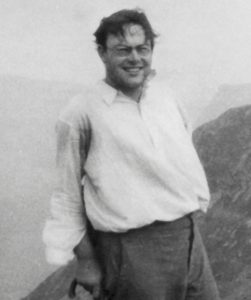
Frank Ramsey in 1925

Vienna in the 1920s was an exciting place. Politically, it was the time of Red Vienna, when the municipal government experimented with radical democratic reforms in housing, healthcare, education and worker’s rights. There was optimism in the air, despite postwar hyperinflation and rising conservatism. It was also an exciting time intellectually, for one of the most influential movements in the history of philosophy was in full swing: the Vienna Circle.

They were a group of philosophers, mathematicians and physicists who gathered around the German philosopher Moritz Schlick, and included luminaries such as Rudolf Carnap, Otto Neurath and Herbert Feigl. The Circle put forward an ambitious programme that would have all knowledge constructed out of an objective foundation of observation and deductive logic. Their ‘verifiability principle’ would assert that a meaningful sentence had to be reducible, via truth-preserving logic, to a basic language of observation statements. Metaphysics, ethics, religion and aesthetics were either to be revised so as to be stated in this scientific language, or else declared meaningless – mere nonsense. These new scientific philosophers were socially progressive, at home in Red Vienna, and they saw themselves as intellectually progressive as well. Unfortunately, others all too readily concurred, such as the fascist student who gunned down Schlick on the steps of the University of Vienna in 1936.

Theirs was an idea whose time had come. A similar group was developing in Berlin, with Hans Reichenbach and Carl Hempel as its most prominent members. In Cambridge, Bertrand Russell had also been arguing that philosophy must proceed by a logical analysis that bottoms out in simple, metaphysically fundamental existents in the world. But it was Russell’s Viennese student Ludwig Wittgenstein who most intrigued the Circle with his first book, written mostly during the First World War on the perilous Eastern and Italian fronts, where he was ultimately taken as a prisoner of war.

More here.

No One Is Prepared for Hagfish Slime

Ed Yong in The Atlantic:

At first glance, the hagfish—a sinuous, tubular animal with pink-grey skin and a paddle-shaped tail—looks very much like an eel. Naturalists can tell the two apart because hagfish, unlike other fish, lack backbones (and, also, jaws). For everyone else, there’s an even easier method. “Look at the hand holding the fish,” the marine biologist Andrew Thaler once noted. “Is it completely covered in slime? Then, it’s a hagfish.”

Hagfish produce slime the way humans produce opinions—readily, swiftly, defensively, and prodigiously. They slime when attacked or simply when stressed. On July 14, 2017, a truck full of hagfish overturned on an Oregon highway. The animals were destined for South Korea, where they are eaten as a delicacy, but instead, they were strewn across a stretch of Highway 101, covering the road (and at least one unfortunate car) in slime.

Typically, a hagfish will release less than a teaspoon of gunk from the 100 or so slime glands that line its flanks. And in less than half a second, that little amount will expand by 10,000 times—enough to fill a sizable bucket.

More here.

Rationality: research shows we’re not as stupid as we have been led to believe

George Farmer and Paul Warren in The Conversation:

Rationality has long been an important concept in the study of judgement and decision making. The highly influential work of psychologists Daniel Kahneman and Amos Tversky comprehensively showed that we often fail to make rational decisions – such as worrying about a terrorist attack but not about crossing the road.

But this failure is based on a strict interpretation of what it is to be rational – obeying the laws of logic and probability. It is not interested in the machine that must weigh up the evidence and reach a decision. In our case, that machine is the human brain – and like any physical system, it has its limits.

Although our decision making falls short of the standards required by logic and mathematics, there is still a role for rationality in understanding human cognition. The psychologist Gerd Gigerenzer has shown that while many of the heuristics we use may not be perfect, they are both useful and efficient.

But a recent approach called computational rationality goes a step further, borrowing an idea from artificial intelligence. It suggests that a system with limited abilities can still take an optimal course of action.

More here.

Without Workers, We Wouldn’t Have Democracy

Shawn Gude in Jacobin:

Discussions about the state of democracy are suddenly all the rage. And it’s not hard to see why: Bolsonaro in Brazil, Trump in the US, Erdoğan in Turkey, Orbán in Hungary — all point to a resurgent authoritarianism and a diminution of democratic forms. But we can’t understand the current retrenchment without understanding how mass democracy came about in the first place.

In Capitalist Development and Democracy, first published in 1992, a trio of scholars (Evelyne Huber, John Stephens, and Dietrich Rueschemeyer) provide a sweeping examination of democracy’s rise in the twentieth century across three regions: Europe, North America, and Latin America and the Caribbean. Breaking from the conventional story, they argue that capitalism has been crucial to democracy’s ascension not because of its natural symbiosis with popular government, but because it breaks up traditional power structures and generates a larger, more organizable working class. “Capitalism,” they write, “creates democratic pressures in spite of capitalists, not because of them.”

Huber and her coauthors pay special attention to how distributions of power, both domestically and internationally, have opened up or closed off democratic struggles.

More here.

Sally Wen Mao’s Visionary Poems

Dan Chiasson at The New Yorker:

Sally Wen Mao’s new book of poems, “Oculus,” borrows its slightly menacing title from the Latin word for “eye,” which also refers to, among other things, a virtual-reality company and the eye-shaped skylight at the Guggenheim Museum in New York City. There are eyes everywhere in “Oculus,” but not all of them are blessed with sight. Some are all-seeing, panoptic; others are yearning and blinkered, unable to return the gaze they attract. These poems are haunted by images of human faces staring out from all kinds of screens, faces that are themselves screens upon which the world projects its fantasies and anxieties. “The stories about our lives do not have faces,” Mao writes. Her strange and morally succinct book is, in part, a sustained defense of writing. Mao’s poems intervene in a culture glutted with visual images, on behalf of what she calls “the self you want to hide”—the “sad, pretty thing,” lost behind the images. “Because being seen,” she writes elsewhere, “has a different meaning to someone / with my face.”

more here.

The Final Days of EMI

John Harris at The Guardian:

In the summer of 1965, the Rolling Stones released “(I Can’t Get No) Satisfaction”. On the US version, its B-side was a makeweight piece titled “The Under Assistant West Coast Promotion Man”, which directed sneering contempt on some poor unfortunate who worked for the group’s record label: “I promo groups when they come into town / Well they laugh at my toupee, they’re sure to put me down.”

Thus began a lineage of rock songs founded on the eternal contradiction between the artistic impulse and the hucksterish, often seedy ways of the music business. This reached a peak of fury and cynicism in the era of punk with the Sex Pistols’ gloriously incoherent classic “EMI”, in which John Lydon vents his rage at the company that put out the group’s first single in 1976, only to dump them. “It’s an unlimited supply,” he spits. “And there is no reason why / I tell you it was all a frame / They only did it ’cos of fame / Who? / EMI!”

more here.

Finding Redemption in Daphne Du Maurier’s Cornwall

Kitty Wenham at The Quarterly Conversation:

The beating heart of it all, Du Maurier’s estate Menabilly, remains a secret few have been allowed to penetrate. Nestled behind locked gates, a visitor would find it impossible to catch even a glimpse of its infamous facade from the roadside. Nearby is the town of Fowey. Another great love. Once referred to as Du Maurier’s ‘salvation’, it is the picture of gentle tranquillity. By a twinkling blue estuary lined with quaint white cottages, you can glance at her other famous home —Ferryside. The coves are full of families, the beaches always busy. Journey on for forty minutes more, and you might stumble across the infamous Jamaica Inn. Far from an isolated hub of menacing activity and excitement, it now stands on a busy motorway leading out of Cornwall — an impersonal, family stop on the way back from a typical summer road trip.

I first came to Cornwall searching for Daphne Du Maurier in August 2013, the first of many family trips to the coast. I imagined the high, thrashing waves of the sea, the ruined mansions, the wild landscape untamed, overrunning every bend in the road. Instead, I found Cornwall to be a place of solitude.

more here.

‘BlacKkKlansman’ Was The Most Frighteningly Accurate Movie Of 2018

Talia Lavin in Huffington Post:

2018 was a year overstuffed with culture. That’s just the way it is now, movies and TV and songs and memes and thoughtful features and endless, endless politics scrolling past our weary eyes at the speed of silicon and too-blue light. But in all the chaos there’s a moment where my hazy memories of frenetic consumption pause, for a piece of filmmaking that called on me to think hard and to remember. That movie was Spike Lee’s “BlacKkKlansman.” It’s currently raking in a modest haul of awards, but for me, it’s going to linger long past the last bottle of popped January 1st champagne, a remarkable slice of light to which I’ll return for years to come.
Much has been said about the film ― its ambition, historicity and panache have been amply noted. But I’ve elected to discuss it here because I admire it as a piece of artistry and as a salvo launched at the perfect cultural moment. he film is about a pioneering black cop who confronts the Ku Klux Klan, providing the voice of a would-be Klansman on the phone while his Jewish co-worker offers a white body to attend the meetings in person. Any summary would be a bare gesture at the substance of the movie, which deftly conjures up the early 1970s with both winking kitsch and careful verisimilitude. “BlacKkKlansman” delivers more than any blockbuster ever needs to, filling its slick packaging with layers of complexity that Hollywood rarely allows for. The film addresses the conditional whiteness of Jews in America; the ways in which the presumed fragility of white womanhood can provide a shield for those who would do violence; the vitality of student activism, and the way it forms an irresistible target for those who would silence dissent; and the role of music, rhetoric and film itself in shaping black and white identities. It does all this and so much more, wrapped in a compulsively watchable package.

There’s a bravura quality to it, a bracing reminder of the need to combat racism in both its most overt guises ― Klansmen burning crosses ― and its subtler incarnations, as when rookie black cop Ron Stallworth faces an array of racist behaviors at his new workplace, from skepticism to outright slurs.

More here.

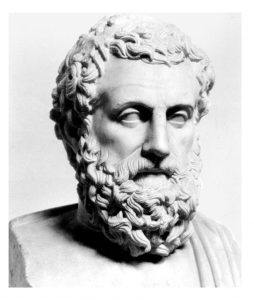
Need a New Self-Help Guru? Try Aristotle

John Kaag in The New York Times:

Three years ago, New Year’s came and I promised to eat only organic. I lasted two weeks. A year ago, I resolved to run before dawn and take a cold shower every morning. That lasted two days. This year, I don’t have a resolution. Instead I read Edith Hall’s “Aristotle’s Way: How Ancient Wisdom Can Change Your Life,” and concluded I probably didn’t have to undergo some painful — and therefore temporary — transformation to remake my life. I just had to put some sustained effort into being properly happy.

There is a pernicious, but widely held, belief that turning over a new leaf always involves turning our worlds upside down, that living a happy, well-adjusted life entails acts of monkish discipline or heroic strength. The genre of self-help lives and dies on this fanaticism: We should eat like cave men, scale distant mountains, ingest live charcoal, walk across scalding stones, lift oversize tires, do yoga in a hothouse, run a marathon, run another. In our culture, virtuous moderation and prudence rarely sell but, taking her cues from Aristotle, Hall offers a set of reasons to explain why they should.

Hall’s new book clears a rare middle way for her reader to pursue happiness, what the ancient Greeks called eudaimonia, usually translated as well-being or prosperity. This prosperity has nothing to do with the modern obsession with material success but rather “finding a purpose in order to realize your potential and working on your behavior to become the best version of yourself.” It sounds platitudinous enough, but it isn’t, thanks to Hall’s tight yet modest prose. “Aristotle’s Way” carefully charts the arc of a virtuous life that springs from youthful talent, grows by way of responsible decisions and self-reflection, finds expression in mature relationships, and comes to rest in joyful retirement and a quietly reverent death. Easier said than done, but Aristotle, Hall explains, is there to help.

More here.