Suzy Hansen at Lapham’s Quarterly:
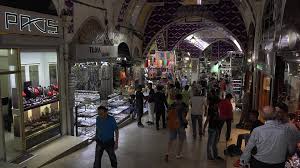 For some, the Grand Bazaar, with its remnants of Ottoman behaviors and designs and artisanal crafts, might suggest itself as Turkey’s most authentic self, but in Turkey the quest for authenticity often leads you further and further away from how life is actually lived. Since even before the founding of the Turkish Republic in 1923, Turks have seen the Grand Bazaar eclipsed many times: first by the European-style shopping boulevard, then by the stand-alone shopping mall, then by the stand-alone luxury shopping mall and apartment and office complex, and then most recently—in one of neoliberalism’s uglier incarnations—by the luxury shopping mall that invades and occupies what was once a fine nineteenth-century building on a beloved European boulevard. (See: the Demirören mall on İstiklal Street, itself a commercial and artistic center during the Ottoman and modern eras.) Turkey’s cities have also expanded tenfold—Istanbul is roughly four times London’s physical size—and bazaars and pedestrianized shopping streets now serve every neighborhood, each of them microcities with their own microeconomies, their own bakkal (corner shop) and manav (greengrocer) and kasap (butcher), which are as faithfully patronized as they would have been a century ago. By now every neighborhood also has its own mall. The Galleria belongs to the neighborhood of Ataköy, Forum Istanbul belongs to Bayrampaşa, Zorlu Center to Gayrettepe, Kanyon to Levent, İstinye Park to İstinye. There is even a Mall of Istanbul—though it should be called the Mall of Başakşehir, where it is actually located. I would never go there, for example, because it is an hour and fifteen minutes away by public transportation. The Mall of Istanbul belongs to another Istanbul entirely.
more here.
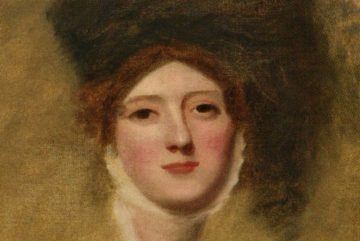 Not all readers will agree with the claims Miller makes for L.E.L.’s significance, but it is hard to dispute that the very ephemerality of L.E.L.’s work makes her a peculiarly appropriate spokeswoman for a literary age marked by artifice. L.E.L. came to maturity just as the voices of Shelley, Keats and Byron faded away and her life was over by the time the dominant figures of the Victorian novel made their names. Her nearest literary contemporaries were Edward Bulwer, Lady Blessington and the young Disraeli, all of whose early work shared in the neglect accorded to hers. From the late 1820s, the whiff of scandal attached to L.E.L. barred her from more respectable drawing rooms; the majority of her acquaintances were drawn from the raffish circles surrounding the Bulwers and a small circle of equally shady figures. Mary Anne Wyndham Lewis, who subsequently married Disraeli and courted scandal herself, gave her dresses and jewellery, and the art critic Samuel Carter Hall abetted her relationship with Jerdan. Jerdan himself never acknowledged the central role L.E.L. played in his emotional life, and, throughout the period in which she conceived and bore his children, he remained with his wife and legitimate children, escorting his mistress to parties before returning to the family home while she sought sanctuary in attic lodgings nearby.
 Not far from the monstrous checkpoint at Qalandia – the main gateway through which the Israeli military controls the passage of human beings between Ramallah and Jerusalem – is a small, outdoor, stonecutters’ workshop, one of hundreds scattered throughout the West Bank. Whatever may be happening at the checkpoint, at least one worker can usually be seen standing in the stone-cutters’ yard, his face, hair and clothes caked with the same white dust that covers the high concrete wall and the watchtower, where it mixes with the black smoke and char from burning tyres and the molotov cocktails that local youths, on particularly bad days, hurl at the checkpoint and barrier that confine them.
 Conceived by
 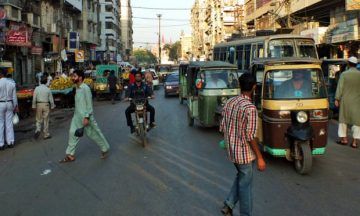 Abdullah the Cossack”, the antihero of HM Naqvi’s follow-up to the award-winning
  L
L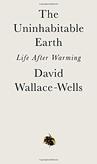 Wallace-Wells stresses that these scenarios are the signs not of a new normal, but of a world in which “normal” ceases to be a useful framework for understanding an environment that is constantly changing, and almost always for the worse. “By 2040, the summer of 2018 will likely seem normal,” he writes. “But extreme weather is not a matter of ‘normal’; it is what roars back at us from the ever-worsening fringe of climate events. This is among the scariest features of rapid climate change: not that it changes the everyday experience of the world, though it does that, and dramatically; but that it makes once-unthinkable outlier events much more common, and ushers whole new categories of disaster into the realm of the possible.”
 To read
 It is one of the great dilemmas of climate change: We take such comfort from air conditioning that worldwide energy consumption for that purpose has already tripled since 1990. It is on track to grow even faster through mid-century—and assuming fossil-fuel–fired power plants provide the electricity, that could cause enough carbon dioxide emissions to warm the planet by another deadly half-degree Celsius. A
  The idea that humans have cognitive instincts is a cornerstone of evolutionary psychology, pioneered by Leda Cosmides, John Tooby and Steven Pinker in the 1990s. ‘[O]ur modern skulls house a Stone Age mind,’
 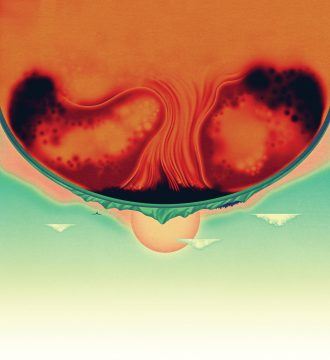 Climate change is the greatest challenge humanity has collectively faced. That challenge is, to put it mildly, practical; but it also poses a problem to the imagination. Our politics, our societies, are arranged around individual and group interests. These interests have to do with class, or ethnicity, or gender, or economics — make your own list. By asserting these interests, we call out to each other so that as a collective we see and hear one another. From that beginning, we construct the three overlapping, interacting R’s of recognition, representation and rights.
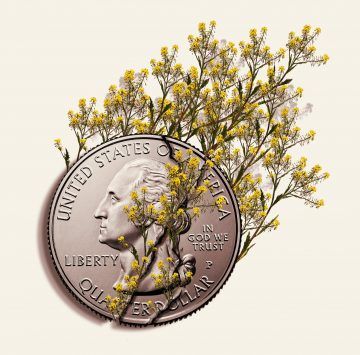 Despite the lowest unemployment rates since the late 1960s, the American economy is failing its citizens. Some 90 percent have seen their incomes stagnate or decline in the past 30 years. This is not surprising, given that the
  When we talk about the mind, we are constantly talking about consciousness and cognition. Antonio Damasio wants us to talk about our feelings. But it’s not in an effort to be more touchy-feely; Damasio, one of the world’s leading neuroscientists, believes that feelings generated by the body are a crucial part of how we achieve and maintain homeostasis, which in turn is a key driver in understanding who we are. His most recent book,
 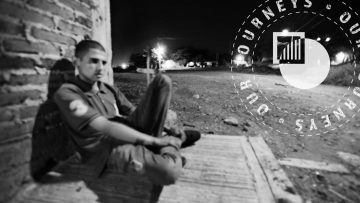 It’s 7pm on a Sunday, and night is falling in this Michoacán town. The heat of the day is past, and there’s a pleasant breeze. The first visitors to the park have left for dinner, but many hang around.