
Daniel Kraft in Nautilus:
 The innovations I describe here—many of which are still in early stages—are impressive in their own right. But I also appreciate them for enabling the shift away from our traditional compartmentalized health care toward a model of “connected health.” We have the opportunity now to connect the dots—to move beyond institutions delivering episodic and reactive care, primarily after disease has developed, into an era of continuous and proactive care designed to get ahead of disease. Think of it: ever present, analytics-enabled, real-time, individualized attention to our health and well-being. Not just to treat disease, but increasingly, to prevent it.
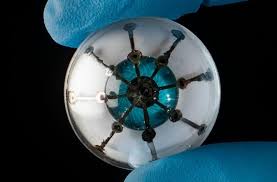
Just a decade after the first Fitbit launched the “wearables” revolution, health tracking devices are ubiquitous. Most are used to measure and document fitness activities. In the future these sensing technologies will be central to disease prevention, diagnosis, and therapy. They’ll measure health objectively, detect changes that may indicate a developing condition, and relay patients’ data to their clinicians. Flexible, electronic medical tattoos and stick-on sensors can take an electrocardiogram, measure respiratory rate, check blood sugar, and transmit results seamlessly via Bluetooth. It’s mobile vital sign tracking, but at a level once found only in an intensive care unit. Hearing aids or earbuds with embedded sensors will not only amplify sound but also track heart rate and movement. Such smart earpieces also could be integrated with a digital coach to cheer on a runner, or a guide to lend assistance to dementia patients. Smart contact lenses in the future will be packed with thousands of biosensors, and engineered to pick up early indicators of cancer and other conditions. Lenses now in development may someday measure blood sugar values in tears, to help diabetics manage diet and medications.
More here.
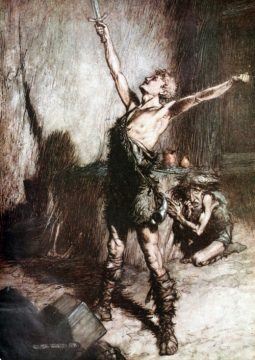 Music can have a decisive influence in a person’s life and in a nation’s history. Were it not for a brief passage in the second volume of Ian Kershaw’s biography of Hitler, I would never have learned of the direct connection between Wagner’s Siegfried and the first crucial victory of Franco’s army during the uprising that set off the Spanish Civil War. On July 25, 1936, as Kershaw recounts, Adolf Hitler attended a production of Siegfried in Bayreuth, which brought him to the state of exaltation that Wagner’s music had always caused in him from early youth. From the age of 17, to be precise, when he first heard Rienzi in Linz—as August Kubizek, friend, countryman and companion during his early years in his native city and then in Vienna, would reverently record years later. On that day in 1906, a young Hitler left the opera house in a fevered state of musical and patriotic excitement, rapt in a sense of kinship with the figure of the Roman tribune who in the fourteenth century tried to revive the glories of imperial Rome, only to meet, in Wagner’s opera, an heroic, glorious end at the hands of his betrayers. In June of 1936, exactly thirty years later, Hitler’s deranged dream was being fulfilled.
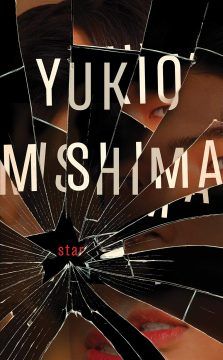 IT SEEMS BOTH the great comedy and the great tragedy of Yukio Mishima’s life that hardly any of his work’s plots live up to his death. While anything but a wallflower, Mishima didn’t have the topsy-turvy life of a Daniel Defoe or a Herman Melville — he was neither jailed and pilloried nor on the hunt for roly-poly whales. But when it comes to spectacular deaths among the writers of the world, Mishima is top tier.
 When Lorraine Vivian Hansberry died on January 12, 1965, her play The Sign in Sidney Brustein’s Window was at the end of a three-month run at Broadway’s Longacre Theatre. It was the second play written by a black woman to appear on Broadway. The first was her groundbreaking drama A Raisin in the Sun. Ntozake Shange’s for colored girls who have considered suicide when the rainbow is enuf, the third, opened in 1976. Remembrances of Shange published last year, after her death, called for colored girls “the second play by an African American woman” to have a Broadway run. In writing my own remembrance of Shange, I nearly made the same mistake. We are prone to myopia when we remember, and it can make inconvenient details difficult to decipher. Jewell Handy Gresham-Nemiroff, in charge of Hansberry’s estate for fourteen years, wrote that Hansberry is “not really credited, to the extent deserved, with being Mother of the modern black drama.” The scholar Margaret Wilkerson called Hansberry one of the “major literary catalysts” of the Black Arts Movement. Both are true, yet The Sign in Sidney Brustein’s Window, which Hansberry worked on feverishly during hospital stays at the end of her life, is not a black drama.
 A
A 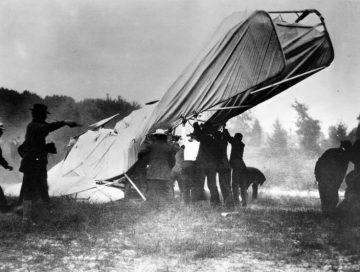 Thinking about the risk-reward of air travel can help us think about how to solve the most perplexing problem of our time—the clean energy dilemma. All the known solutions to producing clean power have risks. So how do we evaluate the risk/reward of each possibility? How do we decide which ones to pursue? Being human, our evaluation of risk is hampered by our tendency to focus on the sensational single event instead of the broader picture. When looking at accidents or “disasters,” we also tend to ignore the reward we were getting from whatever it was that failed. For example, if one were to focus only on crashes, deaths, and disasters, we would quickly conclude that air travel is deadly and must be seriously curtailed. Yet in spite of the danger, people clearly think the reward of air travel is worth taking the risk. Moreover, if one steps back, looks at the full picture, and evaluates the danger of air travel compared to other methods, it becomes clear that putting a halt to air travel would result in more, not fewer, deaths. The relative risk of air travel is lower than other travel options.
 Poet, writer and musician Joy Harjo — a member of the Muscogee Creek Nation — often draws on Native American stories, languages and myths. But she says that she’s not self-consciously trying to bring that material into her work. If anything, it’s the other way around.
 These two new books give lucid, stimulating accounts of recent discoveries in neuroscience and psychology. Both authors aim to challenge antiquated views of the brain and human behavior. In so doing, they help us think through perennial debates about the sources of morality and the degree to which we inherit or can enhance traits like empathy. Both are careful to evaluate the cogency of the research they cite, noting when it remains inconclusive or unpersuasive. Jamil Zaki, a professor of psychology at Stanford, who also directs its Social Neuroscience Laboratory, usefully includes an appendix summarizing the evidence for the findings he cites and giving them a 1 to 5 rating, from weaker to stronger. Oddly, however, neither book mentions, much less rates, possible moral problems with some of the research, whether by neuroscientists injecting substances into the brains of rats or monkeys or by social scientists subjecting students to deceptive scenarios.
 It is easy to make fun of the Aristotelian idea that humans are rational animals. In fact, a bit too easy. Just look at the politicians we elect. Not so rational. Or look at all the well-demonstrated biases of decision-making, from confirmation bias to availability bias. Thinking of humans as deeply irrational has an illustrious history, from Francis Bacon through Nietzsche to Oscar Wilde, who, as so often, came up with the bon mot that sums it all up: “Man is a rational animal who always loses his temper when he is called upon to act in accordance with the dictates of reason.”
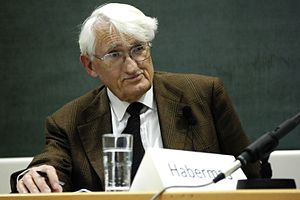 Is “discussion” really so wonderful? Does “communication” actually exist? What if I were to deny that it does?
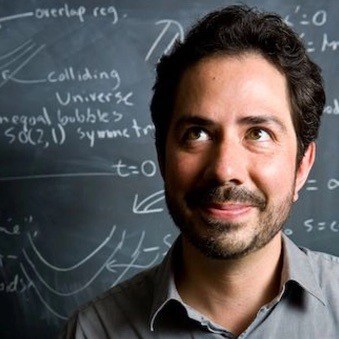 Cosmologists have a standard set of puzzles they think about: the nature of dark matter and dark energy, whether there was a period of inflation, the evolution of structure, and so on. But there are also even deeper questions, having to do with why there is a universe at all, and why the early universe had low entropy, that most working cosmologists don’t address. Today’s guest, Anthony Aguirre, is an exception. We talk about these deep issues, and how tackling them might lead to a very different way of thinking about our universe. At the end there’s an entertaining detour into AI and existential risk.
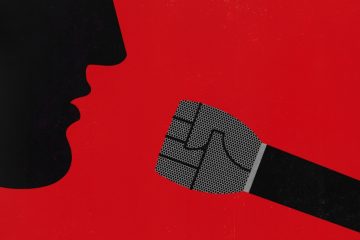 Debates about political correctness on college campuses can be extremely frustrating. On one side you have those, like New York magazine’s Jonathan Chait, who
  In his new book, “Irrationality: A History of the Dark Side of Reason” philosopher Justin Smith presents a fascinating narrative that reveals the ways in which the pursuit of rationality often leads to an explosion of irrationality. Smith, a professor of the history and philosophy of science at the University of Paris, acknowledges that we are living in an era when nothing seems to make sense. Populism is on the rise, pseudoscience is still around and there is no shortage of of conspiracy theories. Smith discusses the core of the problem that the rational gives birth to the irrational and vice versa in an endless cycle, and any effort to permanently set things in order sooner or later ends in an explosion of unreason.
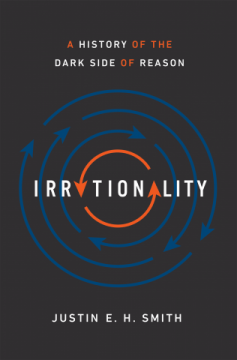 He notes that despite the fact logic and reason are well understood, methods and practises that were supposed to have been setup to counter irrationality, ended up mired in the very problem that they were meant to solve, and that is irrationality.
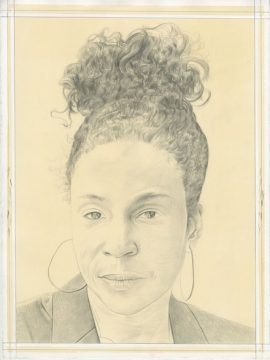 Simpson’s benevolent yet piercing approach to life is not far from how her art grasps us under the guise of beautiful images of models from magazine spreads. Her unassuming warmth and determination to always look into my eyes during our conversation melts the breeze emanating from her paintings of mountainous ice chunks gloriously standing at remote corners of the world. She blows up images culled from science publications and prints them onto gessoed fiberglass, after adding occasional cutouts of text. Then, the surface is hers to paint into blue, horizontally or on the floor, letting the blues build serpentine paths on the surface. In the far corner of her spacious studio, blown up images of women pulled from Ebony and Jet magazine ads stare in convincing perfection. Arguably her most extensively know works, her collages of women from vintage magazine ads have over the decades evolved into bridges between America’s past and present histories of race and visibility.
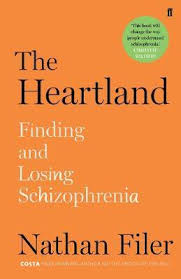 Madness is deep-rooted in the human imagination. The mad are unreachable, unfathomable, alarmingly other. They unsettle us. Yet we also romanticise madness. Great poetry and art spring from transcendent states at the edge of sanity, don’t they? And falling in love is a kind of madness, a stumbling into a dream world of irrationality and delusion. The lunatic, the lover and the poet are of imagination all compact. One line of thought is that madness is the price Homo sapiens has paid for the jewel of human consciousness. Perhaps it is.
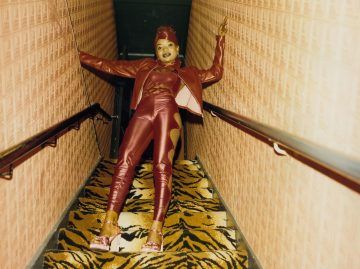 There is so much sound, movement, and energy in Liz Johnson Artur’s first solo museum show, “Dusha,” at the Brooklyn Museum, that walking through the galleries feels like attending a party at a local Pan-African community center. The exhibit showcases Artur’s “Black Balloon Archive,” which consists of images of the global African diaspora captured in the course of decades. Here are two boys spinning each other on the sidewalk, surrounded by a crowd of onlookers. Nearby is Brother Michael, in a black suit and white tie, selling Nation of Islam newspapers. A group of women show off their matching head wraps, and precocious schoolgirls relax outside a classroom. A man wearing Ankara prints and sunglasses mugs for the camera. All that is missing is the line for jollof and the music of Fela Kuti.
 With its gold-striped spine, crimson endpapers and silky leaves, My Seditious Heart is a handsome edition of previously published essays by Booker-winning writer