Knvul Sheikh in The New York Times:
 Lodestone, a naturally-occurring iron oxide, was the first persistently magnetic material known to humans. The Han Chinese used it for divining boards 2,200 years ago; ancient Greeks puzzled over why iron was attracted to it; and, Arab merchants placed it in bowls of water to watch the magnet point the way toMecca. In modern times, scientists have used magnets to read and record data on hard drives and form detailed images of bones, cells and even atoms. Throughout this history, one thing has remained constant: Our magnets have been made from solid materials. But what if scientists could make magnetic devices out of liquids? In a study published Thursday in Science, researchers managed to do exactly that. “We’ve made a new material that has all the characteristics of an ordinary magnet, but we can change its shape, and conform it to different applications because it is a liquid,” said Thomas Russell, a polymer scientist at the University of Massachusetts, Amherst, and the study’s lead author. “It’s very unique.”
Using a special 3D printer, Dr. Russell and his colleagues at the Lawrence Berkeley National Laboratory injected iron oxide nanoparticles into millimeter-scale droplets of toluene, a colorless liquid that does not dissolve in water. The team also added a soap-like material to the droplets, and then suspended them in water. The soap-like material caused the iron oxide nanoparticles to crowd together on the surface of the droplets and form a semisolidshell. “The particles get stuck in place, like a traffic jam at 5 o’clock,” Dr. Russell said. Next, the scientists placed the droplets on a stirring plate with a spinning bar magnet, and observed something extraordinary: The solid magnet caused the positive and negative poles of the liquid magnets to follow the external magnetic field, making the droplets dance on the plate. When the solid magnet was removed, the droplets remained magnetized.
The motion of liquid droplets can also be guided with external magnets. Thus employed, liquid magnets could be useful for delivering drugs to specific locations in a person’s body, and for creating “soft” robots that can move, change shape or grab things.
More here.

 Charles Mills’s Black Rights/White Wrongs represents the culmination of more than two decades of work on the philosophy of race and social justice. Mills received his PhD from the University of Toronto in 1985, working with the left-wing philosophers Frank Cunningham and Daniel Goldstick on the concept of ideology in Marx and Engels. In the following years, liberal political philosophy would be strongly challenged. A growing number of feminists argued that liberal normative theorists were engaged in a form of selective historical imagination, erasing everyone but white males from the story of political society’s origins.
 Pei’s stature among architects is hard to convey. However visually entertaining their work, the likely legacies of other American so-called starchitects shrink—some to triviality—beside the decades of modern design that Ieoh Ming Pei produced, from his earliest built work in 1948 to his last project sixty years later. By the time he co-designed the Museum of Islamic Art in Doha in 2008, he was among the last practicing students of a teacher from the Bauhaus. Walter Gropius taught, and later taught beside, Pei at the Harvard Graduate School of Design. Gropius had arrived there in 1937. Pei, the scion of a Suzhou banking family who left Shanghai in 1935 for undergraduate study at Penn and MIT, arrived at Harvard in 1942. His classmates included Paul Rudolph and Philip Johnson.
 Climate change is certainly an urgent challenge. Rising levels of greenhouse gases are raising temperatures worldwide, leading to shifting weather patterns that are only expected to get worse, with increased
  John Bolton, White House national security adviser and notorious Iraq-era hawk, is a man on a mission. Given broad latitude over policy by Donald Trump, he is widely held to be driving the US confrontation with
 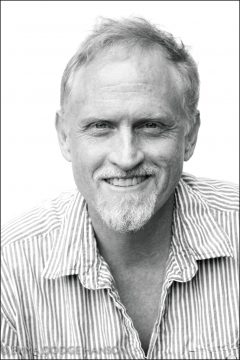 “America’s epic,” the poet Campbell McGrath writes, “is the odyssey of appetite.” It’s a good line, both clever and seductive, though in the wrong hands it’s the sort of thing that could be merely reductive. But McGrath knows the ins and outs of appetite as deeply, and as thoroughly, as he knows the highways and byways of America. He has spent decades exploring both. “Nouns & Verbs: New and Selected Poems” is a rich and invigorating sampling of the poetic results of these explorations.
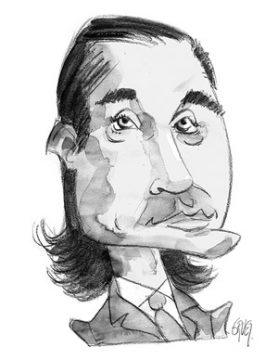 GENERAL EQUILIBRIUM THEORY
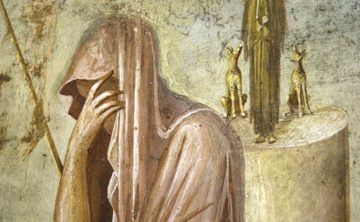 Who is secular man, and why is he so unhappy?
 Artificial intelligence is an existence proof of one of the great ideas in human history: that the abstract realm of knowledge, reason, and purpose does not consist of an élan vital or immaterial soul or miraculous powers of neural tissue. Rather, it can be linked to the physical realm of animals and machines via the concepts of information, computation, and control. Knowledge can be explained as patterns in matter or energy that stand in systematic relations with states of the world, with mathematical and logical truths, and with one another. Reasoning can be explained as transformations of that knowledge by physical operations that are designed to preserve those relations. Purpose can be explained as the control of operations to effect changes in the world, guided by discrepancies between its current state and a goal state. Naturally evolved brains are just the most familiar systems that achieve intelligence through information, computation, and control. Humanly designed systems that achieve intelligence vindicate the notion that information processing is sufficient to explain it—the notion that the late Jerry Fodor dubbed the computational theory of mind.
 ‘The pursuit of Happiness’ is a famous phrase in a famous document, the United States Declaration of Independence (1776). But few know that its author was inspired by an ancient Greek philosopher, Epicurus. Thomas Jefferson considered himself an Epicurean. He probably found the phrase in John Locke, who, like Thomas Hobbes, David Hume and Adam Smith, had also been influenced by Epicurus. Nowadays, educated English-speaking urbanites might call you an epicure if you complain to a waiter about over-salted soup, and stoical if you don’t. In the popular mind, an epicure fine-tunes pleasure, consuming beautifully, while a stoic lives a life of virtue, pleasure sublimated for good. But this doesn’t do justice to Epicurus, who came closest of all the ancient philosophers to understanding the challenges of modern secular life.
 Alyssa Battistoni in n+1:
 Steven Simon and Jonathan Stevenson in New York Review of Books:
 John Case in The New Republic:
 T
T I was first alerted to Raymond Geuss’s sour anti-commemoration of Jürgen Habermas’s ninetieth birthday, “