Wednesday Poem

Forgive me, distant wars, for bringing
flowers home.
…………… –Wisława Szymborska

Why I Don’t Mention Flowers When Conversations
with My Brother Reach Uncomfortable Silences

In the Kashmir mountains,
my brother shot many men,
blew skulls from brown skins,
dyed white desert sand crimson.

What is there to say to a man
who has traversed such a world,
whose hands and eyes have
betrayed him?

Were there flowers there? I asked.

This is what he told me:

In a village, many men
wrapped a woman in a sheet.
She didn’t struggle.
Her bare feet dragged in the dirt.

They laid her in the road
and stoned her.

The first man was her father.
He threw two stones in a row.
Her brother had filled his pockets
with stones on the way there.

The crowd was a hive
of disturbed bees. The volley
of stones against her body
drowned out her moans.

Blood burst through the sheet
like a patch of violets,
a hundred roses in bloom.

by Natalie Diaz
From When My Brother Was an Aztec
Copper Canyon Press, 2012

Video games are an underrated art form

Tim Cross in More Intelligent Life:

For those who believe in the distinction between high art and low, video games have long been near the bottom of the pile. Fortunately, that has not stopped some of the world’s great art museums from putting on exhibitions. The Museum of Modern Art, in New York, began acquiring games in 2012 and a year later invited visitors to play some of them in a show called “Applied Design”. The most recent video-games exhibition, “Videogames Design/Play/Disrupt”, takes place at an even grander instituion – the Victoria and Albert Museum in London. The arriviste status of video games means that exhibitions about them – and especially those that take place in marbled bastions of established culture – risk coming across as cringing and defensive. The V&A, to its credit, mostly manages to avoid that trap. Instead it unapologetically addresses video games on their own terms, as a medium that, more than any other, combines art and storytelling with engineering and technology. The show kicks off with a quote from Frank Lantz, an academic and developer, that neatly summarises the blend of skills required. “Making games combines everything that’s hard about building a bridge with everything that’s hard about composing an opera. Games are operas made out of bridges.”

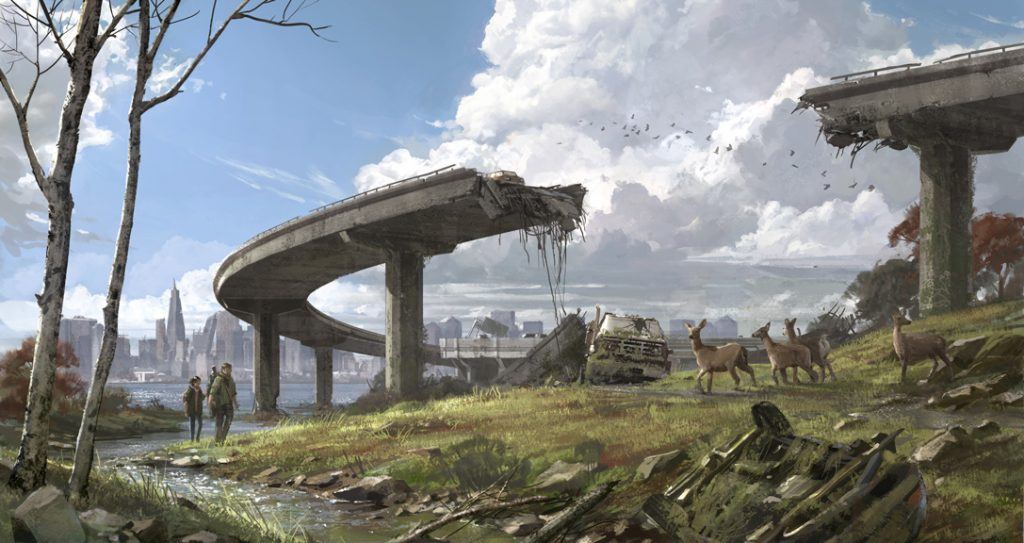
Parts of the process look like storyboarding for a film. The concept art and character sketches for the protagonists of “The Last of Us”, a post-apocalyptic survival game, show the attention to detail present in the designers’ creation of Ellie, the teenage girl that is the focus of the story. Other parts have no real parallel with other forms of art. Books and films, for instance, railroad readers and viewers along the plotlines invented by their authors. Games are different. Even those that focus on narrative rather than gameplay must give players enough choice and freedom to maintain the illusion that they are influencing a coherent, believable world – but not so much that anarchy reigns and storytelling becomes impossible. “Journey”, which puts players in the shoes of a pilgrim travelling towards a mysterious mountain, nudges its players towards interesting encounters with subtle tricks of light and shadow.

More here.

How Jocks and Mathletes Are Alike

Sarah Zhang in Nautilus:

From bulging biceps to 7-foot wingspans to a striking paucity of fat, elite athletes’ bodies often look quite different from those of the rest of us. But it’s not only athletes’ bodies that are different; their brains are just as finely tuned to the mental demands of a particular sport. Here are seven areas of the brain that enable seven different athletes to pull off extraordinary feats.

Winning a Battle of Wills

When the 1988 World Series started, Kirk Gibson, the best hitter on the underdog Los Angeles Dodgers, had injured both legs. He wasn’t even supposed to play. But at a key moment in Game 1, he was nevertheless called to pinch hit. He promptly took on one of a baseball player’s most challenging jobs: getting inside the head of the opposing pitcher. It was the bottom of the ninth, and the Dodgers were down by one, with a runner on base and two outs. Dennis Eckersley, one of the greatest closers in baseball history, was pitching. The count on Gibson went to three balls and two strikes. Douglas recalled a bit of advice from Mel Didier, a Dodgers scout. “Now remember, and don’t ever forget this, if you’re up in the ninth inning and we’re down or it’s tied and you get to 3-and-2 against Eckersley,” said Didier retelling the conversation later in ESPN, “Partner, sure as I’m standing here breathing, you’re going to see a 3-2 backdoor slider.” Sure enough, a slider came breaking toward Gibson. He swung awkwardly, unable to use his legs, but he had the advantage of knowing exactly what pitch was coming. The ball sailed into the stands in right field. The Dodgers won the game and, eventually, the series.

More here.

Tuesday, September 11, 2018

Academic Activists Send a Published Paper Down the Memory Hole

Theodore P. Hill in Quillette:

In the highly controversial area of human intelligence, the ‘Greater Male Variability Hypothesis’ (GMVH) asserts that there are more idiots and more geniuses among men than among women. Darwin’s research on evolution in the nineteenth century found that, although there are many exceptions for specific traits and species, there is generally more variability in males than in females of the same species throughout the animal kingdom.

Evidence for this hypothesis is fairly robust and has been reported in species ranging from adders and sockeye salmon to wasps and orangutans, as well as humans. Multiple studies have found that boys and men are over-represented at both the high and low ends of the distributions in categories ranging from birth weight and brain structures and 60-meter dash times to reading and mathematics test scores. There are significantly more men than women, for example, among Nobel laureates, music composers, and chess champions—and also among homeless people, suicide victims, and federal prison inmates.

Darwin had also raised the question of why males in many species might have evolved to be more variable than females, and when I learned that the answer to his question remained elusive, I set out to look for a scientific explanation.

More here.  And here is a rebuttal by the Fields Medalist Sir Tim Gowers writing in his own blog:

I was disturbed recently by reading about an incident in which a paper was accepted by the Mathematical Intelligencer and then rejected, after which it was accepted and published online by the New York Journal of Mathematics, where it lasted for three days before disappearing and being replaced by another paper of the same length. The reason for this bizarre sequence of events? The paper concerned the “variability hypothesis”, the idea, apparently backed up by a lot of evidence, that there is a strong tendency for traits that can be measured on a numerical scale to show more variability amongst males than amongst females. I do not know anything about the quality of this evidence, other than that there are many papers that claim to observe greater variation amongst males of one trait or another, so that if you want to make a claim along the lines of “you typically see more males both at the top and the bottom of the scale” then you can back it up with a long list of citations.

You can see, or probably already know, where this is going: some people like to claim that the reason that women are underrepresented at the top of many fields is simply that the top (and bottom) people, for biological reasons, tend to be male. There is a whole narrative, much loved by many on the political right, that says that this is an uncomfortable truth that liberals find so difficult to accept that they will do anything to suppress it. There is also a counter-narrative that says that people on the far right keep on trying to push discredited claims about the genetic basis for intelligence, differences amongst various groups, and so on, in order to claim that disadvantaged groups are innately disadvantaged rather than disadvantaged by external circumstances.

I myself, as will be obvious, incline towards the liberal side, but I also care about scientific integrity, so I felt I couldn’t just assume that the paper in question had been rightly suppressed.

More here.

Sean Carroll’s Mindcast Podcast: Neha Narula on Blockchain, Cryptocurrency, and the Future of the Internet

Sean Carroll in Preposterous Universe:

For something of such obvious importance, money is kind of mysterious. It can, as Homer Simpson once memorably noted, be exchanged for goods and services. But who decides exactly how many goods/services a given unit of money can buy? And what maintains the social contract that we all agree to go along with it? Technology is changing what money is and how we use it, and Neha Narula is a leader in thinking about where money is going. One much-hyped aspect is the advent of blockchain technology, which has led to cryptocurrencies such as Bitcoin. We talk about what the blockchain really is, how it enables new kinds of currency, and from a wider perspective whether it can help restore a more individualistic, decentralized Web.

More here.

Dumb Messenger

Anjuli Fatima Raza Kolb at the Poetry Foundation:

In halls and moods of violent possession, we speak of languages as things we “have.” This mood comes easy when the books are small and green—a Loeb’s fits in the palm like a secret jewel, a perfect bun. Its loose-woven ribbon reminds us the gift is inside, our reading an unwrapping—happy birthday to our most serious, our highest mind. In the early aughts, I was often high haha.

In those days, when I was still a teenager, I went over and over the lines in the Timaeus that told me what we might be about. Our atoms and waves, our tides and our matter. I didn’t know then how much of this is in Lucretius, too, from the Atomists, and also in a lot of hokey theory that comes out now about mycology and the end times. I worry that if these idiot dialogues are the kind of philosophy that covers up its poetry—lets people forget about, well, people and their errors, language and its habit of always running away and wild, which also means forgetting about justice—then maybe the Timaeus is also bad, since it telegraphs messages about ideal forms and eternal essences, whether it wants to or not. I mostly think philosophy is bad when we forget it’s poetry. Don’t talk to me about Plato on this subject.

More here.

How Teeth Became Tusks, and Tusks Became Liabilities

Natalie Angier in The New York Times:

GORONGOSA NATIONAL PARK, Mozambique — We are flying in a Bat Hawk aircraft — which may be named for a raptor that preys on bats but looks more like a giant, lime-green dragonfly — and my hair, thanks to the open cockpit, has gone full Phyllis Diller. Scudding above flood plains the color of worn pool table felt and mud flats split like jigsaw puzzles, we dip toward the treetops and see herds of waterbuck scatter with an impatient flash of their bull’s-eye rumps. We are searching for the elusive tuskless elephants of Gorongosa, elephants that naturally lack the magnificent ivory staffs all too tragically coveted by wealthy collectors worldwide. Tuskless elephants can be found in small numbers throughout Africa, but Gorongosa is known to harbor a sizable population of them, the legacy of a violent 15-year civil war. Tusked elephants were slaughtered for their ivory at a harrowing rate, and the park’s rare tusk-free residents thus gained a sudden Darwinian advantage. Today, about a quarter of the park’s 700 or so elephants are tuskless, all of them female, and I am determined to catch a glimpse of at least one. Yet a week of ground searches has proved fruitless, and now we are circling in a plane and still nothing and, holy mother of Horton, how can such massive creatures go missing?

“There!” Alfredo Matavele, the pilot, cries triumphantly, pointing toward a cluster of trees. “And there!” pointing toward a watering hole. And there and there. “Do you see them?” he demands. Oh yes, I see them. Dozens, scores, cliques and claques of elephants, ears flapping like flags, trunks slowly swinging, and many of their faces decidedly free of ivory eruptions. I have found them at last, my sisters in dental deprivation. Other people may admire elephants for their brains or their complex social lives; I feel a bond with this mutant crew. After all, I’ve learned that we share a basic developmental anomaly, which may well be traceable to the same underlying glitches in our DNA. Elephant tusks happen to be overgrown versions of the upper lateral incisors — the teeth right next to the front teeth, before you get to the canines. Simply put, tuskless elephants lack lateral incisors.

More here.

Anatomy of a beep

Eric Boodman in Stat News:

WASHINGTON — As deals struck by health care behemoths go, this was one of the stranger ones. On one side, you had a medical device giant, with a phalanx of PR professionals carefully guarding the company’s image. On the other, you had a consultant who didn’t sound much like a consultant:

“I am synthetic life form ‘Yoko K.,’ assembled in the US with components made in Japan,” one of her websites explained. “I am designed to assume the role of an ‘electronic musician.’ I am one of many secret agents sent to this time to plant magical thinking in people through the use of ‘pre-22nd century nostalgia Mars pop music.’”

In other words, Yoko K. Sen is an ambient electronic musician, born in Japan but transplanted to the United States, where she’s layered her breathy, machine-modulated vocals over ethereal blooms of synth at galleries, in concert halls, and on award-winning albums. In recent years, though, she’s created a new, more corporate niche for herself: revamping the soundscape in hospitals. Medtronic had hired her, late in 2017, for a related project, to help design the beeps patients would hear from their cardiac monitors at home.

We live in an era of constant redesigns, and health care — with its cheerless institutional bent and vomit-like color palette — has proven especially ripe for reimagining. Fashion icons have taken on the hospital gown. Architects have gone after the hospital room, and celebrity chefs have barged into the cafeteria. One bigwig San Francisco designer even tried to rebrand death. You name it, there’s probably someone out there working to give it a makeover. And sometimes, these aesthetic changes might just save lives. As the New York Times reported in 2014, when patients moved into homier hospital rooms as a test, they not only felt more comfortable but also requested less pain medication.

More here.

Tuesday Poem

Violets

Down by the rumbling creek and the tall trees—
…. where I went truant from school three days a week
…….. and therefore broke the record—
there were violets as easy in their lives
….. as anything you have ever seen
……… or leaned down to intake the sweet breath of.
Later, when the necessary houses were built
…… they were gone, and who would give significance
………. to their absence.
Oh, violets, you did signify, and what shall take
…… your place?

by Mary Oliver
from Evidence
Beacon Press, 2009

Monday, September 10, 2018

Visual Histories: Discovery

by Timothy Don

Speak the word “discovery” and familiar images of explorers, scientists, ships, and treasure chests come to mind. To look into the visual record of “discovery” over the past 50,000 years, however, is to witness the concept expand, swell, and overwhelm the imagination. There is a wonder that arises in the wake of one’s research with the realization that the deeper and closer one looks, the wider, richer, and more capacious the topic at hand becomes. Consider the egg.

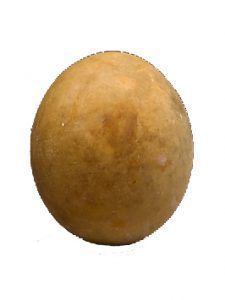
Ostrich Egg, Egypt, c. 3450–3300 B.C. © The Metropolitan Museum of Art. Gift of Egypt Exploration Fund, 1901

A simple egg. The familiarity of its shape is unnerving, even disarming. Hovering there, alone in space, it has the weight of a moon or a planet. A red planet. A symbol of discovery in its expansive, exploratory sense: to discover is to reach out into space, to land on the moon, to plan for Mars. But…this object is not Mars. It is an egg. It is an ostrich egg, more than 5,000 years old, from the predynastic period of Northern Upper Egypt, dug out of a tomb. Mars remains undiscovered. This is an artifact from an era now lost to us, uncovered by a forgotten Egyptologist from the 19th century. It belongs to the past. This is an actual discovery. And it is wonderful. It is pure potential. It has been discovered, but it remains uncracked. Full of mystery, this old egg from the past, it fills you with wonder. At that moment a gestalt switch gets thrown, and one realizes that discovery’s arrow points not only forward and outward to unexplored planets, but backward and inward to things lost, buried, and forgotten. To discover a thing is also to discover the past, and the act of discovery is about the recovery of the past just as much as it is about the probing of the future. And so a planet (symbol of the undiscovered future) becomes an artifact (material expression of the discovered past), and the artifact (the egg) becomes a mystery, a wonder, a promise. To be an egg is to promise discovery. Every egg, from this one (c. 3400bc) to the one you opened into a frying pan this morning, contains and shelters something utterly familiar and utterly unique, something waiting for you to find it. Every egg is a discovery.

There are certain artists who seem to have something to say about everything and whose work as a result appears regularly in the pages of the journal at which I serve as visual curator. Hieronymus Bosch is one. Caravaggio is another. Paul Klee and William Kentridge make the list. The genius of these artists (and many others) makes their work ever-contemporary, as immediate and compelling today as it was when they made it. The density of their work allows it to absorb the assault of time, so that its meaning can shift and apply itself to any period without diluting the purity of its original conception and execution. Read more »

Monday Poem

Little Miracles 2:

Cloudmaker

you, generator of clouds,
are indispensable. you
fling them up as if
they were mere vapor
your creativity is unsurpassed
much like cloud yourself
you may be dark or bright
free and light or stretched
like a cowl under stars,
in daylight white grey saffron
pink

at night you draw curtains
cross a moon
but you are not mere vapor
as you stride
and dance with wind
waving arms to fan the air
you cool it down to give
us drink

Jim Culleny
8/2/18

Drawing, Cloudmaker
Jim C. 1997

Apportioning Democracy

by Jonathan Kujawa

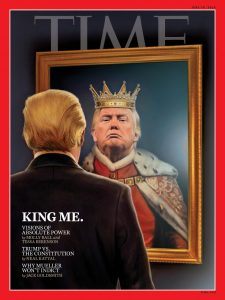
Despite what he may wish, the President of the United States is not a king. We have Congress to act as a check and to ensure the varied opinions of the citizens are represented [1]. In principle, a representative democracy is straight-forward: the voters vote, select their representatives, and the legislature gets down to the business of running the country.

The devil, of course, is in details. The framers of the Constitution had knock-down, drag-out fights over basic questions like: does the legislature represent individual citizens or the states? On one side you had those who saw the new country as a joining together of independent, co-equal states. William Patterson of New Jersey compared a large state having more votes than a small one, to the idea “that a rich individual citizen should have more votes than an indigent one”. Those on the other side took the view if this is to be a true common enterprise, then every voter should be treated equally regardless of where they happened to reside. In what can only be a coincidence, a founder’s position on the issue almost invariably matched whether they came from a large state or a small one.

They finally agreed the Senate would have two representatives from each state, regardless of size, while the House of Representatives would have its members allocated to the states according to their population. Even this reasonable compromise nearly failed. Read more »

Argument Repair and the Sporting Attitude

by Scott F. Aikin and Robert B. Talisse

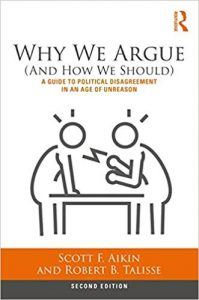
The second edition of our Why We Argue (And How We Should) is set to be released this month. The new edition is an update of the previous 2014 edition, and in particular, it is occasioned by the argumentative events leading up to and subsequent to the 2016 US Presidential election. New forms of fallacy needed to be diagnosed, and different strategies for their correction had to be posed. But we also saw that another element of a book on critical thinking and politics was necessary, one that has been all-too-often left out: a program for argument-repair. We looked at strategies for finding out what arguers are trying to say, what motivates them, and how to address not just the things argued, but the things that drive us to argue. We think that very often, repairing an argument requires repairing the culture of argument.

One reason why arguments go so badly is because the disagreement and interplay between us, our interlocutors, and our onlooking audiences starts off as fraught. And so, further exchange often makes things worse instead of better. We call this phenomenon argument escalation. Again, we’ve all seen it happen — a difference of opinion about some small matter grows into an argument, an argument becomes a verbal fight, and the verbal fight becomes a fight involving more than merely words. And it’s worse when there are onlookers who will judge us and our performances. Half of the time, we want to stop it all and say, “We are all grownups here . . . can’t we just calm down?” But were one to say this, the interlocutor is liable to respond, “Are you calling me a child, then? And don’t tell me to calm down!” How can we repair arguments without further escalating them? Read more »

Should We Own Ourselves?

by Tim Sommers

Do You Own Yourself?

In 1646, the Leveller leader, Richard Overton became the first person in the English-speaking world to assert that we own ourselves. “To every Individuall in nature, is given an individuall property by nature, not to be invaded or usurped by any,” he wrote, “for every one as he is himselfe, so he has a selfe propriety, else he could not be himself.”

We might question the claim that without owning ourselves we couldn’t be ourselves. After all, we don’t need ownership, or property law, to explain why my beliefs are mine or why my actions are mine.

But it’s easy to appreciate the political strategy behind Overton’s use of self-ownership – once you hear it.

The Levellars, so-named originally by opponents for supposedly having leveled hedges during the enclosure riots, were the egalitarians of the English Civil War preaching that sovereignty was founded on consent and that the franchise and property ownership should be extended to all men. Overton was responding to the argument that only men of property should be allowed to vote, when he wrote that all men are men of property, because all men have property in themselves.

Do they, though? It sounds plausible. But do you own yourself?

Actually, that’s an easy one. Ownership is a legal notion. In no legal system in the world do you own yourself. (About as close as you can come to a legal precedent, in American law, that might be interpreted as supporting self-ownership has to do with copyright: celebrities do, at least to some extent, own the use of their image for commercial purposes.)

But even if you don’t own yourself, maybe, you should. Read more »

A Poem About The Service Area

by Amanda Beth Peery

In the service area
where a handful of the families of New Jersey
have pulled off the highway,
the trees are surprising me
with their thickness—
the edge of a secret
or rather forgotten forest
running beside the turnpike.
A small animal occasionally waits,
then breaks
from the velvet shadowed elms.
They press the delicate imprints of leaves
against the broiling sky
as a storm tentatively begins
and one dark-eyed girl, bored with her parents
watches the rain start by the food machines
and swings her arms in loose arcs
like the trees that are now swaying
in the rain and in the wind.
She is just as foreign to me
as these particular trees.
I will never see any of them again.

My Swat Valley Story

by Shadab Zeest Hashmi

The most stunning memory of Swat valley that remains with me since my first visit as a child is the euphoria of the headstrong Darya e Swat, the luxuriously frothy river, like fresh milk churning and churning joyfully. That, and the first time I heard the pristine and full silence of wilderness, meandering along languorous brooks and spotting the smallest wild flowers I had ever seen. Like any child, scale impressed me: the mountains were the highest, the river the fastest, the silence of the trails the deepest I had yet experienced. If there was anything subtle I may have observed, the awe of scale and novelty eclipsed it completely.

On my visit to Swat this year, I tried to recapture that spirit of childhood, trying to set the senses free as well as refining them with the subtlety that was beyond the capacity of my younger self, wrestling furiously against the disquiet and frustration Swat evokes due to recent political events. It struck me that subtlety still eludes the perception of Swat as far as the global psyche goes, dominated as it is by narratives of scale: the most unsafe place in the world, the worst place for women and education, home of the youngest person to receive the Nobel prize, etc. Read more »

Painful and Inevitable Dissonances

by Niall Chithelen

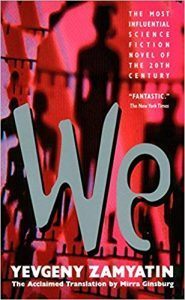
A number of scenes in Eugene Zamyatin’s dystopian novel We (1921) echo moments from Alexander Bogdanov’s utopian Red Star (1908). Bogdanov was a Bolshevik when he wrote Red Star (he was expelled from the party some years before the Russian Revolution), and his “red star” was a socialist, wonderfully technocratic Mars whose residents are preparing to export revolution back to Earth. Zamyatin, also once an Old Bolshevik, wrote in the disturbing aftermath of the Russian Revolution, and his We takes place on a future Earth, ruled over by the United State. It is possible to read We as a response to Red Star and its intellectual moment, with Zamyatin flipping Bogdanov’s Bolshevik idealism to reflect the fright of Bolshevik reality. Bogdanov sought a sort of Communist technocracy, and Zamyatin sensed its enormity, feared it. But, while the two books do offer different political conclusions, the authors seem to share an important belief in humanity and its imperfections, as they provide rather similar answers to a fundamental question of their genre: what kind of freedom do we really need? Read more »

Digital Art?

by Nickolas Calabrese

The subject of digital art is unclear. Work that was new five years ago can look ancient now because of the constant changes in technologies. The term “digital art” itself is an umbrella term that applies to a variety of names for art that is produced with the aid of a computer including, but is not limited to, “new media art”, “net art”, and “post internet art” (for a fuller linear history of the various terms that denote art made with or assisted by computers, see Christine Paul’s terrific introduction to A Companion to Digital Art reader, which she edited). The decision to use “digital art” is twofold. First, some of the alternatives only denote a temporal category while not actually referring to the form (new media can only be “new” for a brief period; it makes little sense for a “post internet” when it hasn’t significantly evolved from “net art”; put more brusquely, in the words of critic Brian Droitcour in Art in America magazine “most people I know think “Post-Internet” is embarrassing to say out loud”); and second, because I regularly teach an undergraduate visual arts course at NYU named Digital Art (a title I did not choose).

The upshot of digital art’s classification is that it might not actually exist as a category. Read more »