
Tom Standage in More Intelligent Life:
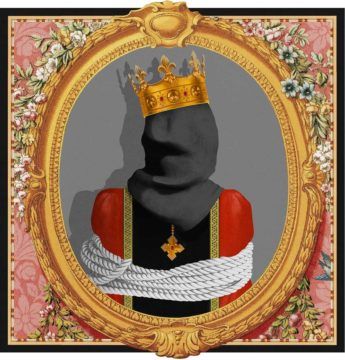 In 74bc a band of pirates made a terrible mistake when they captured a ship off the coast of Asia Minor, now Turkey. They kidnapped one of the passengers, a young Roman citizen named Julius Caesar, along with his entourage, and demanded a ransom of 20 talents (about 650kg in silver) for his release. Caesar, in his mid-20s and on his way to study rhetoric in Rhodes, burst out laughing. Didn’t they know who he was? He was worth 50 talents, not a mere 20! Unsurprisingly the pirates agreed to this higher ransom, and released some of Caesar’s associates to raise the money.
Pirates were the scourge of the Mediterranean, bribing their way around efforts to suppress them. But despite their fearsome reputation, Caesar refused to be intimidated. He told them to be quiet when he wanted to sleep, “as if the men were not his watchers, but his royal bodyguard”, writes Plutarch. He joined in their games and regaled them with speeches and poetry, mocking them as illiterate barbarians. Once he was free, he said, he would execute the lot of them. According to Plutarch, “the pirates were delighted at this, and attributed his boldness of speech to a certain simplicity and boyish mirth.”
When Caesar’s friends arrived with the ransom the pirates released him. He went straight to Miletus, a city on the coast of Asia Minor, raised a fleet and returned to the pirates’ camp. After helping himself to their treasure, he captured most of the pirates, took them to the city of Pergamon and asked the local governor to execute them. When the governor wavered, Caesar had the pirates crucified, even though he lacked permission to do so.
More here.
 Let’s say you’re at a big office party full of people, both coworkers and strangers, when someone walks up to you. You have a split second to determine if you know this person or not; you don’t want to make the faux pas of re-introducing yourself to your receptionist. Luckily, your brain is adept at what computer scientists call “novelty detection”—the ability to distinguish new information from details that have been encountered before. Most of the time we do it effortlessly. How exactly that skill works is a provocative scientific mystery, however.
 My father died at 2:15 pm last Sunday. I would like to say that he died in my arms, but the truth is that by the time I heard my sister scream and ran in from the next room, he had already moved on from this world.
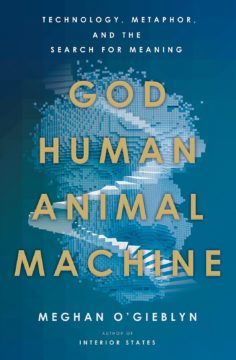 The question of subjectivity had been very much on my mind that summer. A few months earlier I’d been commissioned by a magazine to review several new books on consciousness. All of the authors were men, and I was surprised by how often they acknowledged the deeply personal motivations that led them to their preferred theories of mind. Two of them, in a bizarre parallel, listed among these motivations the desire to leave their wives. The first was Out of My Head, by Tim Parks, a novelist who had become an advocate for spread mind theory—a minority position that holds that consciousness exists not solely in the brain but also in the object of perception. Parks claimed that he first became interested in this theory around the time he left his wife for a younger woman, a decision that his friends chalked up to a midlife crisis. He believed the problem was his marriage—something in the objective world—while everyone else insisted that the problem was inside his head. “It seems to me that these various life events,” he wrote, “might have predisposed me to be interested in a theory of consciousness and perception that tends to give credit to the senses, or rather to experience.”
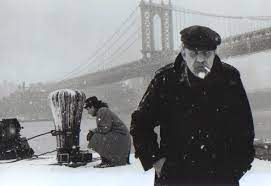 Every great urban filmmaker has a personal metaphysics of the city, a sense that the synergies and mysteries of urban life can find their ideal form in images. That’s what Pola Rapaport reveals in her first feature, “Broken Meat,” from 1991, which is showing, starting Wednesday, on
  We humans have a profound impact on the world around us. Bob Paine, the groundbreaking American ecologist, once described us as a “hyperkeystone” species: our actions affect the lives and habitats of other creatures more than any other species on Earth. So much so, some scientists have adopted the term
  In 1974, Stephen Hawking
  In the 25years that have passed since the assassination of Yitzhak Rabin, his two-state Oslo legacy has been driven into the ground. In 1993, when the agreement was first signed, approximately 110,000 settlers were living in the West Bank, and 146,000 were living in occupied territories surrounding Jerusalem. By now, the numbers have increased to approximately 400,000 settlers in the West Bank and 300,000 around Jerusalem. This situation will not be reversed. In 2021, roughly 10 percent of Israel’s Jewish population lives on occupied territory—subject to Israeli law, represented by Israel’s parliament—and enjoys the opportunities and prosperity of a flourishing first-world country, with public schools, factories, banks, a system of highways, and a research university at their disposal. Around them, however, are almost 3 million Palestinians who, for 53 years now, have lived under Israel’s aggressive military regime.
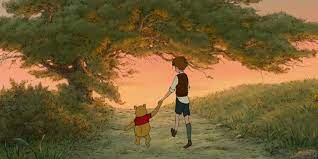 Still, where friendship operates as a code, it is still present as text. These stories are still “about” friendship, after all, and so friendship steadily accrues these myths along with whatever it’s meant to insinuate. And because friendship begins to seem like an off road into an alternate adulthood—or no adulthood at all—the friendship plot’s most congenial home is children’s literature, followed by books that concern themselves with childhood. Read through the lens of the friendship plot, many books that either are childhood classics or focus on childhood reveal themselves as stories that portray the end of childhood and initiation into adulthood as the death or abandonment of a beloved friend.
 I
I F
F
 Macbeth is a creepy play.
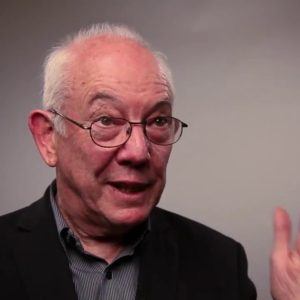 Economies in the modern world are incredibly complex systems. But when we sit down to think about them in quantitative ways, it’s natural to keep things simple at first. We look for reliable relations between small numbers of variables, seek equilibrium configurations, and so forth. But those approaches don’t always work in complex systems, and sometimes we have to use methods that are specifically adapted to the challenges of complexity. That’s the perspective of W. Brian Arthur, a pioneer in the field of complexity economics, according to which economies are typically not in equilibrium, not made of homogeneous agents, and are being constantly updated. We talk about the basic ideas of complexity economics, how it differs from more standard approaches, and what it teaches us about the operation of real economies.
 Encouraged by the election of Joe Biden, the COVID-19 vaccine, and the so-called “major opportunity” of smart technology, commentators and investors now predict that the economy will rebound from the pandemic downturn, or even accelerate, once the “exogenous” shock caused by the coronavirus has been absorbed. But is this a plausible future scenario?