
by Mike Bendzela
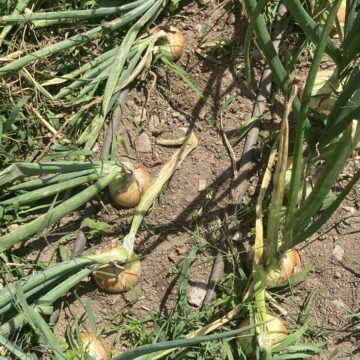
From preface of Numbers One and Two: Anytime is a good time to take stock of what you think you know, or what you think you have actually learned, but once you have seen two-thirds to three-quarters of your life pass, it would seem rather high time to do so. [. . .] What would I say if, launched into the firmament and finding myself at Heaven’s Gate, St. Peter said to me, “What have you learned, sinner?” So, a few things I think I actually do know, in descending order of certitude, over the course of three articles: evolution, overshoot, determinism.
*
I have always been something of a determinist, but I never consciously mulled the issue much. Now, Robert Sapolsky’s book Determined: A Science of Life without Free Will has pretty much dragged me out of the closet: I think it unlikely that we have anything like free will. I’ve only recently learned that the proper term is “incompatibilist,” which is the view that free will is incompatible with the notion of a determined universe, that is, a physical universe where everything has a cause. (But then what caused the universe? God? Which one? I short-circuit here.) That’s about as philosophical as I can stand to get. For me, the issue is simply, If the universe is determined, then human behavior, like that of the macaque, is determined as well. Some big-brained Apes don’t get to carve out a special exemption for themselves just because they like to imagine they exercise “free will” independent of everything else.
“In the cards” is a tired trope, I know, but it works well for this issue. I was surprised to learn that the expression “in the cards” doesn’t come from playing cards but from Tarot. I prefer to look at it in terms of playing cards, though, because a card game denotes being given a limited set of options which you then have to deal with, as it were. Besides, a Tarot-reading neighbor once “read my cards” for me and it struck me as wishy-washy bullshit. I used to really dig playing Euchre, though, years ago.
“Cards” is a vague enough term that any card can represent either genes or environment, nurture or biology, chance, serendipity, stupid luck. These I parcel out into the categories “conditions,” “constraints,” and “contingencies,” through which I’ll show how who I am is all in the cards. This essay, then, will be part book review, part memoir, part blind-ass speculation.
I’m not a very “philosophical” thinker or person, which might be kind of surprising to hear coming from someone who was a humanities major (MA English). I took several philosophy courses as an undergrad, and one of my favorite thinkers is the late Daniel Dennett, but that’s mostly due to his book Darwin’s Dangerous Idea, which I so adored I had him sign it for me when he came to Portland, Maine in the late 90s to give a talk.
Sapolsky is one of those intellectual heroes of mine I wish were my neighbor. In addition to reading his books, I’ve watched hours of his Stanford lectures in Human Behavioral Biology on YouTube and many episodes of the series “Father-Offspring Interviews,” where his daughter Rachel asks him scientific questions posed by viewers. Watching and listening to him reel out his long, informed, erudite, hilarious answers is a wonder.
It would be nice to chat with Sapolsky about the natural wonders around the farm, the same way I would have liked to chat with Dennett about growing apples in Maine and making cider (he managed an orchard in Maine for many years).
An intellectual highlight for me was watching Dennett debate Sapolsky about free will (the original link may have appeared right here at 3QD). Imagine, two of my favorite evolutionists in conversation! Dennett is a compatibilist, whose book Freedom Evolves I read years ago. The thing that struck me about the debate was that Dennett seemed to get a little testy with Sapolsky at one point, over some philosophical issue that Sapolsky supposedly got wrong. I don’t remember anything about the issue that stuck in Dennett’s craw, but I remember Sapolsky maintaining a demeanor as calm as that of Buddha as Dennett raged on camera. Therefore, in my mind, Sapolsky “won”. [I’m working under time constraints and won’t be able to revisit all these previous sources. Jesus! “Constraints” is one of those features I identify as a “card”! But I’m getting ahead of myself.]
*
Sapolsky’s book is both informative and a hoot. Like his previous book, Behave, it is also a monster. But unlike the latter, Determined is a mere 500 pages (including notes), whereas the other is 800 pages (including notes). Behave is one of the few monstrous nonfiction books I’ve managed to read twice. I can get away with about one-and-a-half readings of Determined as it is more accessible. I mention the notes in each case because a mere glance at them is enough to precipitate in me abject despair over my intellectual ability to evaluate the book. Sapolsky is simultaneously a neuroendocrinologist, professor of biology, primatologist (he and his family lived with baboons in Kenya for decades), consultant to sociologists, psychiatrists, and juries, as well as a sort of armchair philosopher. I’m just an adjunct writing instructor who plays fiddle and grows onions and apples. How can I ever come to a conclusion about such deep flossify as free will?
As I mentioned, the book, happily, is, fairly accessible, as well as clearly written and damn funny in places. His main trope comes from an apocryphal tale about a conversation between William James and a woman who insisted that the world rests on the back of a turtle. When James (supposedly) asked her what the turtle itself was resting on, his interlocutor preempted him with the quip, “It’s no use, Professor James, it’s turtles all the way down.” Sapolsky’s task is to show that any human action depends on antecedent causes, starting in the nervous system one millisecond before and stretching back into the evolutionary history of life hundreds of millions of years ago. In between is every kind of biological process, organ, gene, and chemical you can think of. Each of the antecedent biological and social causes is a “turtle,” each resting on the back of the other, extending into the depths of time so far as to seem an eternity. All these turtles “change your brain and behavior, beyond your control, often beyond your awareness.” I tentatively but “willingly” concur with this.
I admit to balking at understanding the neurobiological and philosophical arguments Sapolsky reviews — in fact, I admit to eliding a few chapters. There are some sentences that just stop me dead in my tracks: “The indeterminacy that releases magnesium from a glutamate receptor doesn’t enhance excitation across a synapse all that much.” And when he goes into the weeds about hippocampal neurons, action potentials, and molecules of neurotransmitters, I’m immediately transported back to my sophomore year in college, when it was becoming clear to me that I did not have the mental discipline to become a scientist. Knowing I was about to fail chemistry, I dropped the class, slunk off to the local museum where I changed my major to art (my major at the time was geology), and spent a year in the museum’s basement doing pencil drawings of “undraped human figures.” One may go off to college to discover one’s incompetencies as well as to train in areas of one’s interests. I would soon discover I couldn’t even draw as well as many of the others in the class and so washed up on the shores of the English department a year later.
In any case, my comprehension issues worsened during the chapters Sapolsky calls “Primers” on “Chaos,” “Emergent Complexity,” and “Quantum Indeterminacy.” I can’t even! my brain reeled. I managed to get the gist, though: Sapolsky, the scrupulous scholar, must review all the arguments, ordinary and arcane, that precede his own, dismiss them all, and go on to state his own argument. This is the usual algorithm in academia: First, show how all the other arguments suck; then, show how yours is the best. I actually didn’t care about these previous arguments anyway and so proceeded to follow Sapolsky onto his home turf.
Luckily, Sapolsky provides the lay reader with what I call “life raft sentences” along the way to take us out of the depths of neurobiology, quantum physics, etc., and allow us to get our footing enough to move one:
So the notion that random, indeterministic quantum effects can bubble up all the way to behavior strikes me as a little dubious. Moreover, nearly all the scientists with the appropriate expertise think it is resoundingly dubious.
And,
If our behavior were rooted in quantum indeterminacy, it would be random.
Period. So there. I have written THANK YOU in the margin.
I don’t know what a bolus of fentanyl or heroin feels like, but I got what I imagine is a similar kick from reading the chapter titled, “The Ancient Gears within Us: How Does Change Happen?” I knew I was in for an ecstatic time when I read this from near the beginning:
When you begin to be biased against some alien group of people because their customs differ from your own, the biology underlying your change in behavior is the same as when a sea slug learns to avoid a shock administered by a researcher.
This is why I never tire of learning about evolution, even as a lay person’s gardener and banjoist. I get such a charge out of the subject that I spent a few years writing a whole book of animal stories — fables and parables — about evolution. The story of this lowly, two-foot-long sea slug is one such parable of our kinship with the other animals. It’s a beast we would never even think of accusing of having anything like free will.
In this chapter Sapolsky describes the findings resulting from research in the nerve responses of the California sea hare, Aplysia californica. Much of our knowledge about the basic biology of sensory neurons, motor neurons, and neurotransmitters comes from decades of lab work by Nobel laureate Eric Kandel. Instead of my going on about it, I’ll just quote a wondrous passage of Sapolsky’s prose:
Humans, being conditioned to blink their eyes, and marine sea slugs, being conditioned to withdraw their gills, haven’t shared a common ancestor for half a billion years. And here we are, with their neurons and ours using the same intracellular machinery for changing in response to experience. You and an Aplysia could [swap out some chemical machinery] and things would work just fine in both of you. And you’d both be using serotonin to kickstart this. These Aplysia/human similarities should demolish anyone’s skepticism about evolution.
In other words, one of the lowest turtles in Sapolsky’s grand succession of biological causes of our behavior turns out to actually be an ancestor of the sea slug.
*
WTF do I do with all this? Swallow it whole, hold it in for as long as I can, then disgorge it.
I can’t do neurobiology, psychiatry, sociological research, behavioral genetics . . . but I can list all the attributes that make up who I am that I never asked for and that I have no control over. Where Sapolsky speaks in terms of the turtles of biology, genetics, and evolution stacked on top of one another throughout immense time, I can at least speak in terms of the cards I know I’ve been dealt. They come in three classes: Conditions, constraints, and contingencies.
Conditions (largely genetic): Sex: Male, which is the precondition for the next one, sexuality: Homosexual. If life were a game of Euchre and hearts is the trump suit, these are my right bower and left bower, jack of hearts and jack of diamonds. The behaviors that have flowed from these two conditions alone, over the 66 years of my life so far, are so numerable as to be inestimable.
The list of things I could not have done is probably as long as the things I have done as a direct result of these building blocks of my personality. I could not have menstruated or gotten pregnant or suffered from the outrages of misogyny; and I was at least very unlikely to have become romantically involved with a woman and fathered children.
Other building block conditions: White, brown-haired, brown-eyed mesomorph, which have as much to do with ethnicity as with coloration and body type: Slovakian/Italian/English/German. Search me how much of this mutt’s inheritance has influenced my behavior! As for skin color . . . it in effect trumps my difference from the norm — homosexuality — making it largely invisible. I look like just another white dude. Again, the things I did not and could not have done as a result of this inheritance, the outrages I did not have to deal with, are as inestimable as the overt behaviors I exhibited as a nondescript, white, American male. How would I behave if were tall, blond, blue-eyed, athletic?
Subtler conditions: Personality type. Most likely undiagnosed, low-level avoidant personality “disorder” (which I prefer to think of as a condition), that is, introvert, loner, bookworm. I chose none of this. The behaviors that flow from this condition are astonishing to contemplate. And think as well about what almost perfect health for 66 years means in terms of my behavior. I get no credit for that.
Now for constraints, those extra-biological locks on behavior, such as social status: Working class. My parents didn’t take us on expensive road trips to Disneyland but to Kentucky to visit cousins. We got a few toys for Christmas, and that was all. The whole gestalt of a working-class upbringing is different from that of middle class, white-collar or, Heavens forfend, upper-crust upbringings. Think of education. We were sent to public, not private schools. We rode busses. There’s also the Catholic religion, which the whole family “inherited” from both sides, forming beliefs in my head which influenced my behavior (beliefs I took decades to shake off), as well as three years of parochial school and “catechism”, which I remember fondly not for the religion but for the episodes on the playground and in the classroom. English language? Is that formative? You betcha! (See? I can’t think or write in any other tongue.)
Just consider the constraints of family life and the dynamics therein. Huge! . . . One parent? Two? Adopted? They make a difference. I come from a typical “nuclear family” with blue-collar Dad working and Mom at home. Siblings? Yes. And being the eldest (of five) is a helluva different story than being the youngest. What would I be like had I older brothers or sisters? What does it mean for my personality that I babysat so much as an adolescent? Was I expected to “be more responsible”? These are origin stories lost in the dusts of time.
There’s more, but I have to move on to contingencies: Fat chance, blind-ass luck. For some reason, having a great-grandmother who hand-pumped water from a well, made jams and jellies sealed with wax, and brewed dandelion wine seared itself into my neurons: I didn’t see abject poverty, I saw something more like self-reliance. Same with having cousins, aunt, and uncle who lived in the mountains of Kentucky and toted water from a spring, raised animals and grew vegetables. It blew my city mind. Oh, yeah: Midwestern, post-industrial, middling city in Ohio. I just happened to have been born there. Still, I had a romantic longing for rural living lodged in my mind’s eye.
Other big hairpins in life: Getting accepted to graduate school in upstate New York . . . and meeting my first open homosexuals there and tumbling off the top shelf of the closet. Twenty months of galvanizing changes, all unbidden, all un-asked-for, including meeting the friend who would bring me to Maine of all places to work . . . and being within walking distance of the university in Portland and attending a gay men’s meeting there, where I met my partner (now husband) of 40+ years, who lives in the boonies. These were all huge, accidental changes accomplished within two years. As a result, I now live on the type of farm I only dreamed of being able to live on.
And what about those accidents of our relationship . . . Don has Type 1 diabetes — a condition, a constraint, and a contingency, all rolled into one. Few feel they’ve been dealt an unfair hand as acutely the chronically ill do. I’ve lived with his disease, too, and maybe that’s what spurred me to be a part-time Emergency Medical Technician for ten years. He survived a stroke in 2016. Four years later, he had a cancer removed from his jaw and required radiation. So, the last decade has been an unbidden tour through a whole new landscape of appointments, treatments, therapies, limitations, trials and triumphs, all contingencies that have constrained and shaped my behavior.
*
“All that came before, with its varying flavors of uncontrollable luck,” Sapolsky tells us, “is what came to constitute you.”
These are the cards you are dealt, and who asked from them? And amid so many, where is the one marked free will? Is this not awful?
This takes us back to something I said at the beginning of this series, as I embarked on my explanation of how we are just animals running roughshod over the planet:
When confronted with multiple explanations for a phenomenon, the one explanation that is the most humiliating, the most embarrassingly material, the most destructive to “common sense,” is the explanation you should seriously look at because it’s probably true.
A moment’s contemplation reveals the hair-raising implications of acknowledging that, with any action, you could not have done otherwise. Is this fatalism? I think not. In the same way that lessons taught in church or by parents feed back into the personality to forge formative behavioral patterns, so, too, might knowledge of the deterministic nature of human behavior feed back into the personality and alter existing patterns.
Thus, awareness of the lack of free will is just another card dealt out of life’s deck.
With the knowledge there is no free will, there could come a sense of release and relief, as when you realize your disease is not your fault, your addiction is not something you can control, your personality is not something you asked for. Today, as Sapolsky distinctly points out, schizophrenics, people with epilepsy, those with autism no longer need to blame themselves or excoriate their parents, unlike in the recent past, when such conditions were viewed as personal failures, curses, or worse.
Likewise, body shame and self-loathing, prejudice and ethnic hatreds, as well as violent tendencies, might melt away in an atmosphere of diminishing culpability and relenting blame.
It could make fertile ground for forgiveness and acceptance.
*
The moral of this whole series, I take from Sapolsky:
We’re just another animal, if a weird one.
Enjoying the content on 3QD? Help keep us going by donating now.