
by Michael Liss
[T]he most important political office is that of the private citizen. —Justice Louis Brandeis
We are losing that essential bit of democracy. Bit by bit, not all at once, not linearly, but the decline is there. Fading is Alexis de Tocqueville’s young country of joiners of civic associations, maintaining their differences, but working together for a common good. The new reality is a more atomized society that may share more grievances, but fewer communitarian urges.
We would be foolish and lazy to ascribe this all to Trump. Yes, he is a talented accelerant, but the fuel was there well before 2016. The reality is that the importance of the ordinary private citizen has been shrinking. Those charged with protecting the freedoms that are essential to a productive civil life have often been either dismissive or actively hostile to them. Couple this malign neglect with the rise of a new Gilded Age cohort that can buy anything—influence, access, and platforms to amplify its views, and the public squares have suddenly become a lot less appealing.
How did this all come about? Let’s start with the lawyers (no Shakespeare joke please). The lawyers have let us down, and more than once.
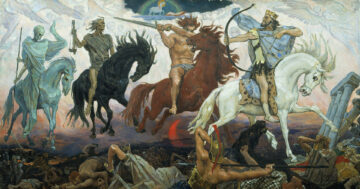
They rode in on their horses, came for our votes and took them. Shelby County v. Holder (2013) and Rucho v. Common Cause (2019).
Let us not mince words: Shelby and Rucho are, with their progeny, among the most corrosive, most destructive Supreme Court decisions handed down in the past century. They diminish what should be fundamental rights of American citizens—the right to vote to select the candidates of their choice without molestation or excessive obstruction, the right to have their votes counted, and the right to be fairly represented in the corridors of power.
The Shelby line of cases puts to death critical sections of the Voting Rights Act, plowing the field for all types of discriminatory behavior. It is based on a simple calculus—it is a lot easier to block people from voting than it is to convince them to vote for your team. That’s the essence of Shelby: empower those who would use what any impartial observer would consider a dirty trick to suppress the vote and enable them to do it without fear of consequences.
Let’s briefly touch on Justice Roberts’ Opinion in Shelby, and his continuing assault on the Voting Rights Act. Shelby struck down Section 4(b) of the VRA, also effectively rendering Section 5 moot, which required “covered jurisdictions” to obtain “preclearance” from either the District Court for the District of Columbia or the U.S. Attorney General for any new voting practices and procedures. At one point, there were 37 “covered jurisdictions” with a history of serious discriminatory policies and which thus needed a “preclearance” to make changes. Roberts had long seethed over their existence and leaped at the opportunity to eliminate them. A generous reading of his position is that he truly believed that America had grown past the stage of race-based voter suppression. We can be gracious and allow him that, because the irony of Shelby was that it created transparency, and, almost from the moment it was decided, those formerly “covered jurisdictions” and more plunged into a competition to be the most effective vote suppressors. Roberts was wrong, almost instantly demonstrably wrong, but he was also the man with the gavel and pen, so some rights of minorities were, shall we say, obliterated.
Eight years later, now fortified by Trump-appointed Justices, Justice Alito expanded on Shelby in Brnovich v. Democratic National Committee, which rewarded “creative” state legislatures for inventing new techniques that had a disproportionate impact on minority voters. In this case, Arizona’s new election law disfavored them, particularly Native Americans, in very practical ways. Perfectly acceptable. To paraphrase Lincoln in another context, what was left of the VRA was about “as thin as the homeopathic soup that was made by boiling the shadow of a pigeon that had starved to death.”
Justice Brandeis once said that state legislatures were laboratories of democracy. Thanks to Shelby and Brnovich, they became kitchens for ever-greater creativity in denying citizens the right to vote, and a continuing inspiration for those in Congress and the White House who look to take the ideas national.
Let’s move on to Rusho, the gerrymandering case. If Shelby manages to block certain classes of voters from voting at all, Rusho takes it a step further by muting the voices of voters who can escape the Shelby traps, only to find themselves without their favored candidates because of an arbitrary change in district lines. This used to happen once every 10 years—redistricting after a census. Now, it’s a possibility in every two-year cycle, and single-party legislatures get directives from their ambitious Governors, and/or demands from the White House. For citizens who liked their incumbents, there would be no question of competency, no feedback from constituents, no votes on the redistricting—just brute force.
SCOTUS finds the legal justification for this by embracing essentially unlimited gerrymandering so long as you put it in the right cigar wrapper. The “Partisan” brand can be savored right out of the humidor. The “Racial” one is abhorrent, because of SCOTUS’s profound commitment to the ideals of the VRA. So, if you just happen to “pack” excess minority votes into one district so as to take them out of a more conventionally competitive district, that’s perfectly OK—you just explain to the Court, “Hey, we were just cheating to win.” Problem solved. So, what’s the difference between “Partisan” and “Racial”? About the roughly nine seconds it takes to exchange one cigar wrapper for another. SCOTUS will provide instructions.
Is this all about race? No, it’s mostly about partisanship, and mostly to the extent race correlates with partisanship. One-party state legislatures can “pack” and “crack” to their heart’s content, then draw lines that look like a figure skater coming off an all-night frat party, so long as they do it to win.
But it’s wrong. Wrong to gerrymander in a big way regardless of whether you are Texas, Florida, California, or New York. Wrong to gerrymander in Ohio, Missouri, Utah. Wrong in Virginia. And wrong for the Supreme Court to suddenly learn table manners when it has been wading into the seven-course dinner and decide that it doesn’t play politics—situationally. If the rule is that unlimited gerrymandering can be defended, then you don’t put Republican complaints on one docket, and Democratic ones on another.
I’m not claiming the moral high ground here. Politics ain’t beanbag; one trick leads to a countermeasure, and escalation is not only inevitable, but makes sense. To disarm voluntarily is political suicide. The only way to make this work is something a supermajority of states would probably be unwilling to do—enter into something structured like The National Popular Vote Initiative. Or, to hope that somehow SCOTUS will change significantly enough in its composition and thinking and someday revisit Shelby and Rucho and their offspring.
Let’s move on to the next horse. Citizens United v. Federal Election Commission (2010). We all know the case, if not its finer points—the Court overruled parts of a previous decision (Buckley v. Valeo) that allowed prohibitions on so-called “independent expenditures” by corporations. It also overruled a part of a second decision that held that corporations could be banned from making electioneering communications.
This was the matter that induced the famous State of the Union exchange between President Obama (who critiqued the decision) and Justice Alito, who was in the majority and mouthed, “You’re wrong”).
There are a great many weeds to this complex but comprehensive decision, and I’m not going to go through them all. To mention one thing: the Court might have been better off having a couple of “real world” members as opposed to academics. I wonder how many of them anticipated the insane flood of cash that would be both tendered and often demanded to play ball. Might they have reasoned differently if they had realized the swamp was going to get 20 times deeper?
Maybe they didn’t know; more likely, they wouldn’t have cared . Instead, the levees were breached, and in flowed (and flowed out) a tidal surge of swamp water. SCOTUS wasn’t done yet—in 2014, it decided McCutcheon v. FEC, and we began discharging campaign cash sewage directly into the drinking water. McCutcheon struck down the aggregate limits on the amount an individual may contribute during a two-year period to all federal candidates, parties, and political action committees combined.
In 1976, the Buckley Court had held that limits on contributions implicate fundamental First Amendment rights, but that such limits may be imposed as long as they are carefully/narrowly drafted to match a sufficiently important governmental interest. Roberts wasn’t satisfied, and, in McCutcheon, he sought a tighter ruling. He identified the government’s interest in reducing political corruption as the sole permissible basis for limits on political contributions, and then, even more narrowly, defined a new universe.
The government’s careful drafting would have to be limited to corruption and not to boring, every day pay-for-play. “Did you like the 50-year-old Scotch I dropped off, Senator? Mellow, right?” The booze wouldn’t do the job. As Roberts reasoned:
Congress may target only a specific type of corruption—‘quid pro quo’ corruption . . . . Spending large sums of money in connection with elections, but not in connection with an effort to control the exercise of an officeholder’s official duties, does not give rise to quid pro quo corruption. Nor does the possibility that an individual who spends large sums may garner ‘influence over or access to’ elected officials or political parties.
Oh, that is almost poetic. But “quid pro quo” corruption means what? We know what it does not mean—read those last couple of sentences out loud for flavor. Is it a matter of sequencing? When the contributor gave, when the ask came about, when the Senator or Congressman suddenly realized that the bill bottled up in his committee had an interested party in the person who just left the Scotch and a few centimes along with it?
This, this right here, this is the problem. The reality of politics is right in our face—the junkets, the book deals, the appointments to prestige committees, the sinecures, the Rolex for a Congressional wrist, as well as assistance during a hard fought primary or general election. The payoffs are sometimes harder to see: the insertion of a couple of sentences in a 1000-page bill. Or the surprisingly quick passage through regulatory approval, or an incentive-laden new contract without the bother of bidding. “Quid pro quo” or constituent service? To quote the Chief Justice himself, the “line between quid pro quo corruption and general influence may seem vague at times.”
Time to talk about the rich. According to Forbes, there are 989 billionaires in the United States. 989. I would imagine more than a few of them participate in some way in the political system. Three, Elon Musk, Larry Ellison, and Jeff Bezos are players politically beyond the obligatory writing of checks to decorating committees. Musk has and will continue to donate hundreds of millions to conservative causes and candidates and owns the increasingly hard-right X. Ellison, a long-time supporter of Trump, now controls, with his son, a reoriented CBS, after a little regulatory help that certainly didn’t arise from a quid pro quo. Bezos has acquired and reconfigured The Washington Post to express his love of free markets (and complain about everything else). X, CBS, and The Washington Post—serious platforms, notwithstanding their edgier content.
All three men made their money through their drive and talent. All three are spending it to build their businesses, using all available channels. All appear to be trying to enhance their influence. They don’t seem to be breaking any laws while doing it, although Bezos has many thousands of cancelled subscriptions to tell him that many of his readers find his cranky “what’s good for me” editorials a little tiresome. Does he care? I doubt it. He plays in an entirely different sandbox.
Of course, it’s not just these three. And we all know that a great deal of money legally—legally—flows in from so-called dark money groups, who do not have to disclose their donors. The Brennan Center estimated dark money spending hit $1.9 billion in 2024 federal races. Compliance with the limited disclosure requirements is met with sophisticated techniques to (legally) bury even those contributions. The Citizen’s United rationale that contributions would at least be made public has been demonstrated to be the falsehood it was when written.
Here is a link to a relevant portion of the Federal Election Commission’s website: https://www.fec.gov/data/raising-bythenumbers/ It is updated on a regular basis. On Sunday, April 19, 2026, it showed $766M to Senate candidates (and remember, only a third of them are up each cycle) and $1,362B to House candidates.
All that muffled activity makes a great deal of noise when it comes at you with grave-sounding issue ads that make it clear that Candidate A supports something horrible (let’s say, cannibalism, since everything else seems to have been taken by our multi-talented politicos), and Candidate A comes back with an accusation that Candidate B participated in secret-ceremony veganism with illegals.
So, we just live with this? The biennial screeching, the influence peddling, the “non” quid pro quos?
Let me answer that in part by suggesting you spend a half hour with Jamie Dimon, the head of JPMorgan Chase and the man the interviewer, Zanny Minton Beddoes, Editor-in-Chief of The Economist, calls “the most successful banker of our era.” The interview was conducted at Davos (where else?) and yes, I know, elites, blah blah blah.
It is still worth your time. This is a practical man. He’s going to play the game, including politically, in a low-key way. He bats off any question that might be controversial (meaning, “Trump-related”) with a response dismissing the “binary.” He’s elusive, even frustrating to the audience and Beddoes. He’s also immensely wealthy, extraordinarily powerful, certainly could have any forum he wanted to make even a politically pointed remark. But he will not do it. He has a business to run, and it’s a highly regulated one. His job is to maximize the profitability of that business, and taking potshots doesn’t further his goals. He keeps at this for close to 30 minutes, on the one hand proposing some very creative and even progressive ideas, on the other…well, he’s not answering a binary. By the end, I’m not sure whether Ms. Beddoes wants to hug him or strangle him, but this is what wealthy, powerful men will do, and you have to admire the bluntness. He’s calibrated the risk. It’s not worth taking, at least now.
Shelby and Rucho seem unfixable for the foreseeable future, but Citizens United might find a consensus for reform. Certainly, pretty much all of us recognize the rot of the swamp. If we could get some of the money out of politics, some of the corruption, “quid pro quo” or not, we could begin the process of restoring basic principles. I don’t believe Musk, Ellison, or Bezos have much interest in that, because they can pay any price for influence, but Dimon, given the right environment, probably would, and I’ll bet some of the 989-billionaire cohort and the businesses they control might agree.
The reason is simple. If you were to limit campaign contributions (both to individual candidates and in the aggregate), corporations could “pay their annual dues” and move on. There wouldn’t be nearly as much competitive bidding for favors and a lot less of a distraction from the real business of doing business—which is doing business.
We are never going to completely eliminate lobbying, influence peddling, and the perpetually open palm. If we could take it to a place where money wouldn’t be able to purchase everything, it would be a step. Candidates would need to reacquaint themselves with their constituents, and the democracy that has been hacked away at might have an opportunity to grow back.
Of course, we would have to hack away at the encrusted ideas of those who currently hold the keys to the kingdom—those who profit from the system, who wish to keep power to themselves and their ideological allies.
But if we are to attain Justice Brandeis’s vision of what the private citizen should be, we have to start, and soon, to recapture some of the rights that we have lost. After all, a very smart and powerful man once wrote:
There is no right more basic in our democracy than the right to participate in electing our political leaders. Citizens can exercise that right in a variety of ways: They can run for office themselves, vote, urge others to vote for a particular candidate, volunteer to work on a campaign, and contribute to a candidate’s campaign.
That was Justice Roberts. Pity he only seemed to mean the last five words.
***
Enjoying the content on 3QD? Help keep us going by donating now.