
Samuel Myon in Harper’s Magazine:
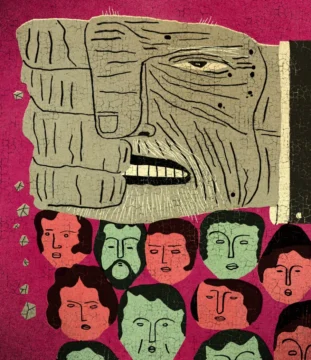 In Greek myth, Eos falls in love with Tithonus. She is the goddess of the dawn. He is a Trojan prince, yet still a mere mortal. Eos asks Zeus to give her mate the gift of eternal life—but, foolishly, she forgets to ask for eternal youth too.
Tithonus never dies; he just grows older and older. “Ruthless age,” goes the Homeric hymn recounting his story, is “dreaded even by the gods.” Tithonus becomes more decrepit and wizened with each passing year. Eventually, when he can no longer move, Eos has to shut him away, in a place where “he babbles endlessly, and no more has strength at all.” Eternal life amid the decline of one’s faculties is not a blessing but a curse. “Me only cruel immortality / Consumes: I wither slowly in thine arms,” Tithonus complains in Alfred Tennyson’s rendition of the myth (published in these pages in 1860), in a rare moment of lucidity that emerges from his everlasting gibberish.
The story of Tithonus no longer feels so outlandish, because our society postpones death to an unprecedented degree. Unlike immortals, we still pass. But the great majority of us, and not only the bad, now die old. In whatever nursing home he was parked in, Tithonus must have looked much like we increasingly do, as doctors continuously defer our mortality. We are approaching a time when a legion of Tithonuses will live in our midst. We have already felt the social and political consequences.
More here.
Enjoying the content on 3QD? Help keep us going by donating now.