
by Daniel Gauss
If the United States reinstated the military draft, many defense experts and policy analysts argue that this would weaken the all-volunteer force by lowering personnel quality, hurting morale and negatively affecting retention. Yet, the administration of Donald Trump is moving to automate draft registration under Pete Hegseth, streamlining a system the military itself would prefer not to use.
Why modernize a program widely seen as unnecessary, or even potentially harmful? To answer that, we need to look at how draft registration was quickly reborn (1980) after the draft ended (1973) and registration was suspended (1975), and why registration has not been abandoned, even though it should have been.
President Jimmy Carter proposed reinstating military draft registration in the late 1970s, after it had been suspended just a few years earlier. Only someone oblivious to the lessons of Vietnam could have ignored the well-documented problems with the draft (lower morale, discipline issues and personnel quality) that severely plagued the military for years.
Post‑Vietnam, Army leaders, most prominently Gen. Creighton Abrams, became champions of an all‑volunteer force. Abrams believed draftees undermined discipline and unit cohesion, so he redesigned the Army around high-quality volunteers, proving the draft was neither necessary nor desirable long-term and establishing a model that the other services ultimately adopted.
Carter reinstated registration for the military draft anyway, apparently for self-serving political reasons…pure political theater to prop up a failing presidential run. Since then, maintaining the Selective Service has cost taxpayers hundreds of millions of dollars, money spent to keep a draft machine ready that an all-volunteer force has made obsolete.
Given how quickly and eagerly the draft was disbanded, and given the significant problems revealed about it in Vietnam, it’s hard to believe that Carter and his advisors did not understand that a draft might be detrimental to the interests of the US military. It would follow that they should also have realized that responsible leadership in the future would probably never allow a draft to happen again. Thus, the reintroduction of draft registration was probably a calculated move: a way to project strength without risking a disastrous future conscription.
Carter and his staff definitely knew that the Carter administration looked weak and incompetent due to the crisis in Iran and needed some bold “strong-man” moves to beat Ronald Reagan. Reagan was running on a platform critical of Carter’s foreign policy decisions and he vowed to bring respect and strength back to the USA.
So, allow me to explain why Carter might have wanted draft registration and why a draft would, basically, harm the US military and our national security.
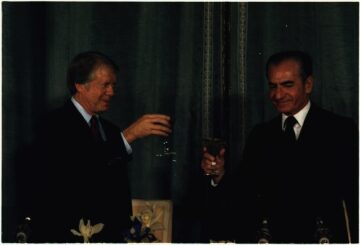
It is 1979/1980 and Jimmy Carter is suffering badly in the polls. Sure he beat Ted Kennedy in the primaries, but who wouldn’t have (just 11 years after Chappaquiddick)? He has largely botched the Iranian situation, primarily by allowing a brutal, cruel dictator into the US for medical treatment, thus harboring a despot widely accused of torture, repression and corruption, a man Iranians passionately wanted tried for human rights crimes committed under his regime.
This decision helped spark the seizure of the U.S. embassy by Iranian students, who took American embassy personnel hostage. TV news shows, starting in November 1979, soon begin counting the days that Carter has been unable to secure the release of innocent Americans harassed and brutalized as hostages in a foreign country. They stop at 444.
It is December 1979 and the Russians have invaded Afghanistan. Americans really do not care, we have our own problems – where’s Afghanistan? Let the Russians fight in the mountains, that’s their problem, not ours. The invasion aimed to prevent a friendly communist government from collapsing and to keep Afghanistan within Moscow’s strategic sphere, possibly as a stable buffer state on the USSR’s southern border.
But Carter, reeling from Iran, uses this invasion to assert that the world is a very dangerous place and he must take action to make it more secure, showing that domino theories can be recycled quite easily. He had to keep the free world safe from the clutches of the Soviet bear and Afghanistan was where he would take his stand against those sneaky commies hell bent on world domination.
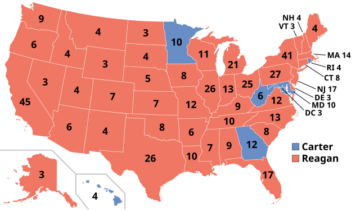
So Carter decided the fate of humanity and freedom depended on doing two things: taking our athletes out of the 1980 Summer Olympics in Moscow and starting draft registration (which had, again, been enthusiastically disbanded in the recent past for all the right reasons). Both measures were completely ineffective things to do. Neither helped him beat Ronald Reagan in the 1980 presidential election. He got clobbered, really clobbered, as Reagan won 44 states.
We can’t do anything about the Olympics and the dreams of American athletes crushed by a politician who got propelled into office by the aftershock of Watergate and who nearly destroyed his own political party within four years. Did I mention 44 states (489-49 electoral votes)? Did I mention twelve consecutive years of a Republican executive branch following Carter? I’m a registered Democrat from Chicago/New York and I know I’m not supposed to say this, but I did. It’s called history.
So we can’t bring back the Olympics for all the hard working and patriotic, amateur American athletes who got nothing for their commitment, dedication and trust; but we can, and should, reverse draft registration because it is totally counter-productive to the needs of our military and if we ever re-established the draft, it would mean we were in a desperate situation and probably making it worse. Why?
Let’s go back to American involvement in the Vietnam War. The draft during that conflict was divisive and corrosive toward military effectiveness. You saw the movie Platoon, which reflected the problems of an army of unwilling draftees in an ambiguous and terrifying situation.
Many of those guys became drugged out and angrier with their own officer corps than the Vietnamese. Many draftees were unwilling, unfit or resentful. Discipline collapsed in certain units, insubordination spread and morale plummeted. Atrocities occurred. The Vietnam War Crimes Working Group documented 320 substantiated atrocities by U.S. forces. Some enlisted men “fragged” (blew up or shot) their own officers or NCOs (at least 904 documented cases from 1969-1972).
The image of soldiers refusing orders or mistrusting their leaders is, unfortunately, not a myth, it was a direct consequence of forcing large numbers of young men into a war they did not understand or believe in. It was also due to the absurdly selective nature of who did the fighting.
During Vietnam, the draft disproportionately swept up men from working-class and poor backgrounds. College students could get deferments, so the middle and upper classes were underrepresented in combat units. By the late ’60s, nearly half of enlisted soldiers in Vietnam did not even have high school diplomas.
By 1966–67 the Pentagon started lowering standards. There was “Project 100,000,” also known as (and I apologize for writing this, but this is what many called the project) “McNamara’s Morons,” (McNamara was the Secretary of Defense) and the Pentagon inducted tens of thousands who failed basic aptitude tests. History shows these men were far more likely to be injured, killed or cause discipline problems.
The United States wisely abandoned conscription after 1973, and the transformation into an all-volunteer force (AVF) has been one of the greatest successes of U.S. defense policy.
So what do you get when you take volunteers who are carefully screened and selected and rewarded after their service, instead of soldiers who cannot get deferments and do not want anything to do with the military?
When the U.S. shifted to an all-volunteer force after 1973, the Vietnam War dynamic changed radically. Volunteers, even if motivated by pragmatic reasons like the GI Bill, generally chose to be there. That choice alone increased buy-in, discipline and morale. On top of that, the military raised its standards, requiring high school diplomas, screening for aptitude and health and weeding out those least likely to adapt to military life.
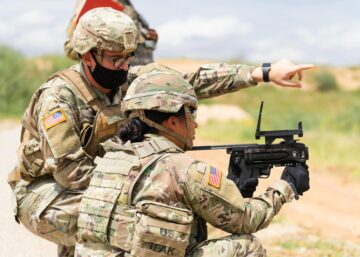
The result has been a professional force that is smaller, better educated and far more disciplined than the Vietnam-era draft army. So once recruitment shifted from reluctant draftees to willing, qualified volunteers, the military culture transformed. The overall baseline of professionalism and order is now much higher. But aren’t we exploiting the poor by having an all-volunteer army? No, let’s look at who serves our country militarily.
The most surprising fact about the U.S. military may be this: it does not draw heavily from the very poorest Americans. Studies that track recruits’ home ZIP codes and census tracts show that the lowest-income neighborhoods are actually underrepresented. The reasons are pretty straightforward. Poverty often creates barriers – poor schooling, health problems, encounters with the criminal justice system – that disqualify many young people before a recruiter ever speaks to them.
At the same time, the wealthiest Americans are also underrepresented. Their children have abundant civilian opportunities, college paid for, internships lined up, professional networks waiting for them and little incentive to risk combat for benefits they don’t need.
So the sweet spot lies in the lower-middle and middle classes. These families are stable enough to see their children finish high school and stay healthy, but not so wealthy that college tuition and career entry are easy or a sure thing. Parents might be tradespeople, nurses, teachers, truck drivers or small business owners. For their kids, the military looks like an effective and highly honorable way to gain independence, fund higher education and build a resume that sets them apart in the job world.
Current data show that White folks still make up the majority of enlisted personnel, about two-thirds of the force, but Black Americans account for roughly 17–19%, a share slightly higher than their proportion in the civilian population. Hispanics are growing quickly within the ranks, now making up 15–18% of enlisted troops, reflecting broader demographic changes in our country. Asian Americans and Pacific Islanders serve at lower rates than their share of the population, but they are present across all branches.
In short, the military is diverse but not dramatically skewed. It looks fairly representative of America’s working and middle classes and more diverse than elite universities. It’s worth noting, however, that the officer corps looks different.
Officers almost always have college degrees and disproportionately come from more affluent backgrounds. This creates a class divide inside the military: enlisted troops are more working-to-middle-class, while officers skew toward more upper-middle-class. Minority representation is also thinner at the officer level. That imbalance has been a source for reform efforts, as the Pentagon tries to open leadership pipelines to a more representative cross-section of society.
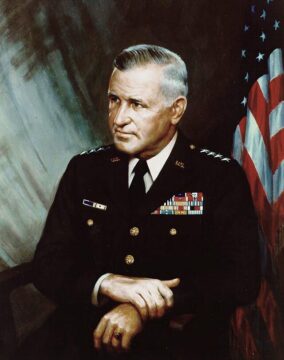
The all-volunteer force is much more skilled, disciplined and cohesive than the Vietnam-era draft force. Modern warfare is highly technical, requiring trained, motivated and educated service members. A surge of unwilling conscripts, most of whom might be unqualified or uninterested, would degrade effectiveness rather than help. The Department of Defense has testified that the all-volunteer force is sufficient for America’s defense needs, with no draft required for foreseeable conflicts.
Only about 30% of young Americans even meet the military’s minimum standards (health, fitness, education, no disqualifying criminal history). Drafting from a pool where 7 out of 10 wash-out is resource madness. It’s almost as if the US military is like a highly selective American university. West Point’s acceptance rate is about 10%, and basic recruit standards for enlisted personnel allow for selective college acceptance percentages. In a crisis, the military could expand incentives, pay and benefits to draw more volunteers before ever considering a draft. Indeed, given the need for high quality soldiers, the draft is what needs to be avoided more than anything.
Most importantly for senior commanders, the all‑volunteer force is made up of people who follow lawful orders, operate independently and don’t require the coercive discipline that plagues conscript armies. They are educated, self‑motivated problem‑solvers who enlisted with clear goals and a sense of future direction. They serve because they want to, and the country treats them with respect, gratitude and admiration.
Public support for our troops is one of the few stable features of American political life, and we try to take care of them. Unlike many European powers that historically accepted staggering battlefield losses, the United States has developed a culture that monitors casualties closely.
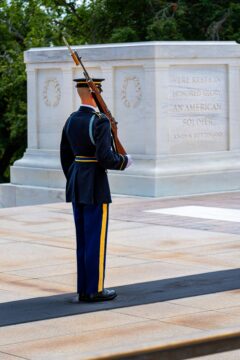
Since 1775, excluding the Civil War, roughly 600,000 American service members have died in combat. In contrast, major European armies in the First World War sometimes lost more than 50,000 soldiers in a single day. Compare our numbers to total British WWI deaths: 887,000, total French WWI deaths: 1.3 million, total German WWI deaths: 2 million, total Russian WWI deaths: 1.7 million. We lost 600,000 over 250 years. American voters notice military deaths, and politicians who appear indifferent to them face serious consequences.
The last thing our generals would want is to go back to drafting folks willy-nilly. If you know of a young person who is serving in the US military, this is a remarkable person who made the cut.
So, imagine Toby, a smart person and a good student, no legal or discipline problems. He finishes high school with decent grades but doesn’t feel excited about college right away. He isn’t struggling in poverty, but his parents might not be able to easily pay for four years of tuition/campus housing either. In the meantime, he’s a little tired of school and wants independence, a paycheck and maybe some adventure.
His uncle reminds him: serve four years, and the government pays for college. In the meantime, Toby might pick up valuable technical skills, live abroad and return home more mature and focused. So Toby doesn’t join because he’s desperate, he joins because he sees the military as a viable, secure pathway to adulthood, a chance to turn uncertainty into opportunity. Multiply Toby by thousands, and you get a kind of profile of today’s enlisted force.
But Jimmy Carter needed to reinstate draft registration, right after it was disbanded. Why has no one found the guts, or honesty, to end this pointless, potentially harmful boondoggle? Why is the Trump administration not just maintaining but also automating a service that would harm the country, especially when this administration is so interested in pinching pennies to meet our 34 trillion-dollar debt? Here are the reasons that I have inferred.
First, draft registration only has been throwing away about $30 million dollars each year and we don’t seem to care about throwing “millions” of dollars away. But for $30 million we could pay full Pell Grants ($7,400/year) for about 4,000 low-income college students. We could provide outpatient mental‑health care to tens of thousands of veterans through the VA. We could fund millions of free school lunches for children. We could provide tens of thousands of COVID or flu vaccine doses. We could replace dozens of rural bridges. We could fund at least one hundred competitive National Science Foundation research grants.
Automatic draft registration came out of the Congress during a period when both the House and Senate were under Republican control, and the Armed Services Committees, where the National Defense Authorization Act is written, were led by Republican chairs with Democratic ranking members who did not have the will to block the provision.
In committee, where most of the real policymaking happens and where amendments rarely draw public attention, the automatic‑registration language was treated as a routine administrative update and moved forward with bipartisan consent. Once it was stuck into the massive FY 2026 National Defense Authorization Act, a bill that almost always passes because it funds the entire military, both chambers approved it by wide margins.
The President then signed it on December 18, 2025. In effect, automatic draft registration became law not because the country debated it or the Pentagon requested it, but because a Republican‑led Congress inserted it quietly into a must‑pass bill and no one in either party chose to fight over it because they feared for their political futures by doing so. What do I mean?
Ending registration might also be interpreted as Congress saying, “America will never fight a big war again,” which lawmakers shy away from saying. But, we probably, hopefully will never fight a big war again, because it might be the last big war as that big war may not last long and might yield neither a winner nor loser, just ashes. And, anyway, a big war can be fought with fewer soldiers.
I think many of us are concerned that after the attack on Iran, virtually anything can happen out of the blue. This, of course, is another reason we need to disband the draft – why allow a possibly incompetent, irrational demagogue the capacity to begin drafting people to engage in unnecessary wars? Is this why Hegseth needs to automate a system that can only hurt the military and country? He is looking ahead to another big war courtesy of the Trump administration and he’ll start another Vietnam-style draft to try to sustain it?
Some folks argue that in an absolute, total, existential war, conscription might be unavoidable, even if inefficient, so, registration keeps this legal framework alive. But, again, do we want a Vietnam situation where we are forcing people to fight? No, we want what the Pentagon has said will always be possible – a volunteer force, possibly expanded, to handle the high-tech equipment that will win a big war.
A smaller, highly motivated army with good technology can stand up to a much larger force of unmotivated soldiers. Please notice what has been happening in Ukraine. Putin tried to motivate his soldiers by claiming the Ukrainians were Nazis (they didn’t buy that) and then to motivate them he started painting the letter “Z” on all his tanks (not a great motivator and, no, I don’t know what it means either). The Ukrainians are already highly motivated as they are fighting for their very survival as a people. As long as they have munitions, they will hold their own against a larger army.
But, nobody is complaining and so the Congress can leave this. But, we should be complaining. The program should never have been re-created in the first place. Furthermore, it points to a possibility that will harm all of us: if some demagogue starts the draft again to make himself seem to be a big, strong-man amidst dwindling poll numbers and the need for more soldiers in over-extended wars.
The all-volunteer force has produced a force that is more skilled, better educated and more professional than the Vietnam-era military. Modern warfare demands technical expertise, whether in cybersecurity, intelligence, aviation or logistics. Soldiers must be willing and able to master complex systems, operate in small teams and adapt quickly. This is not a job for the unwilling or the unqualified. Again, raw numbers of service personnel look nice but often do not mean as much as we might think them to.
Bringing in a wave of reluctant conscripts would strain training resources, dilute unit cohesion and lower readiness. It would not strengthen America’s ability to fight, it would weaken it. A draft would also mean wasting time and money screening out the majority of registrants. This raises an obvious question: why maintain a system designed to draw from a pool of potential draftees when the vast majority would fail to even qualify?
It is bureaucratic theater, not serious policy. If the U.S. ever needed to expand the military, it could do so more effectively by raising pay, offering bonuses or improving veterans’ benefits, all of which have proven to boost enlistment without the negative effects of conscription.
Draft registration also fails the fairness test. Currently, only men between 18 and 25 are required by law to register. Women, who now serve in every combat role and make up an essential part of the military, are exempt. Why? This has, in fact, been challenged in court. A federal court ruled in 2019 that a male‑only draft was unconstitutional because women do currently serve in combat roles. When the ruling was appealed, a higher court decided, however, that Congress, and not the courts, needed to fix it. Congress, however, does not want to fix it. The result is a system that is outdated, potentially harmful to us all and discriminatory.
Draft registration is militarily unnecessary, inefficient and inequitable, but it remains. Ending registration would require Congress to admit that conscription is no longer a viable option, but lawmakers fear that doing so might look like weakness. In reality, the draft would immediately initiate the weakness we fear.
The United States should prepare for future challenges not by clinging to an outdated relic of the Vietnam era but by doubling down on what works: professionalization, technology and voluntary service. Draft registration is a Cold War holdover that no longer serves America’s needs. Congress has had 45 years to fix this mistake and it’s time they admit the truth: America doesn’t need the draft, and never will again.
When Carter reinstated draft registration, he probably did it believing it would never lead to an actual draft. But that logic collapses now. Today the United States has a president whose public statements often happen suddenly, impulsively and without warning, and a Congress that has shown little ability to restrain him.
If the president were to wake up one morning and announce on social media that he now believed conscription was a great idea, and that it would give the United States the manpower to pursue new conflicts abroad, the machinery would be in place. Automatic registration would make it far easier to claim that “the system is ready” and that a draft could be activated quickly. This would be a disaster that an incompetent president might nevertheless choose.
This is why Congress should not be handing any president the ability to revive conscription through a modernized, automated system. A draft would weaken the military and open the door to reckless decisions in moments of political pressure. No president should have that temptation sitting on their desk. We are committed to an all-volunteer force, and it would be irresponsible to even consider a draft for the future. No draft should obviously mean no draft registration.
***
Enjoying the content on 3QD? Help keep us going by donating now.