Greetings from sweltering Karachi,
As some of you know, I am spending the summer in Karachi. It's my first trip to the city of my birth in almost six years, and I've already been here a little over three weeks now. Here are a few things, picked rather arbitrarily, which I find to be very much the same as always:
- The sounds of rickshaws, scooters, street-vendors hawking stuff in a loud and crisp tone particular to their trade, a variety of birds (especially the quarking of crows), truck horns, the hammering of workmen, and other voices and noises which combine with the dusty smell to produce an ever-present aural/olfactory ambience so typical of Karachi that I am aware I am home when I awaken in the morning even before I open my eyes.
- The heat and the humidy: though by northeast-American standards it is quite extreme (many Pakistanis living in the West never return in May or June, so infernal are their memories of the blistering weather, and many such people asked me if I had lost my mind when they heard I was planning to arrive in Karachi a week before the summer solstice), I instantly found the weather comforting in a nostalgic way. Yes, both the heat and humidy are always there, but then they were always always-there when I lived here, and I am used to it. And we didn't have air-conditioning when I was growing up. We do now, at least for the hours that we have electricity (it cuts out 3-4 hours a day usually, sometimes more). The humidity is such that one almost swims through the air and one is drenched in sweat within a minute of stepping out of the shower, so it is a race to dry oneself quickly and step out of the fanless bathroom into the fanful bedroom before dressing. The ceiling fans here, by the way, are to ceiling fans in, say, your summer place in the Hamptons, what the jet engine of a Boeing 747 is to the propeller of a Cessna 172. If you had them in New York, you could blow-dry your hair into an early-Beatles mop in 45 seconds flat just by standing under one. Here, of course, one remains covered in a slimy film of dusty sweat even in the wind-tunnel-like conditions these fans generate. Heat rashes are common, and my lower legs are always itchy. Speaking of which, the best thing about extreme heat is that it keeps the mosquitos at bay. But, unfortunately, I know they are busy preparing for a massive assault and invasion in late July and August, just after the rains.
- The food is the same but I had forgotten just how good it is. Actually “good” doesn't even begin to describe the paradisiacal gustatory delights on offer both at home (I am staying with my brother) and in restaurants here. In America everything new is said to taste like chicken but this is a ludicrous formulation because even chicken doesn't taste like chicken there. Here, chicken actually has a flavor, and it tastes like, well, chicken. Fruits and vegetables are all organic, small in size, have spots where they are starting to become overripe (because they are not bred to look good or ripened in refrigerated trucks on the way to the supermarket) and bursting with what seems to my long-deprived palate to be concentrated flavor. I was shocked to remember what a carrot is supposed to taste like, for example (not like cardboard, which is what you must think, you poor people). In terms of sophistication, Pakistani cuisine is to Italian what Nabokov is to Dr. Suess. Sorry, that's just how it is. (There are ten aromatic spices alone–not counting other kinds of spice and other ingredients–which go into a commonly eaten chicken curry.) The lovely smell of fresh and hearty naan coming out of any tandoor here instantly brings to my mind the futile desperation with which fancy bakeries like Bouchon cater to the pretentious of Manhattan, and how much I hate such effete gourmandizing.
- I notice that without meaning to, or even realizing it, I have started cataloguing the effects of Karachi on all the senses, so I might as well mention the light: Karachi is just above the tropic of cancer, so the sun is only one-and-a-half degrees from completely vertically overhead near noon on June 21st, which results in a light the strength of which is literally stunning. To get a sense of it, turn the brightness knob on your TV (well, it probably isn't a knob, unless you have a pre-1980s TV, but you know what I mean) to max. That's what it looks like outside over here. Without sunglasses I get a headache in minutes. Heat stroke is a real risk of venturing outdoors in the afternoon. In general, the sun is a much angrier, less benign presence in these parts. In Urdu poetry sunshine is quite understandably a metaphor for adversity and difficulty, while the rainy season is romanticised into a symbol of joy and relief (from the sun). The light is very starkly beautiful though.
- The traffic: while an enormous number of improvements have been made in the roadways, including the construction of many under- and overpasses, new roads, bridges, and installation of traffic lights and road signs, they have been overwhelmed by the even greater increase in the number of cars, trucks, buses, minibuses, vans, rickshaws, motorcycles, scooters, and unimaginable vehicles of types beyond my humble powers of description–not to mention the crowds of pedestrians swarming orthogonally across the streets everywhere (Karachi has more people than all of Israel and Switzerland combined, and also more than the next five-largest cities in Pakistan combined. In fact, it's larger than 160 of the world's 200-and-some countries). In other words, the traffic is still the same. Oddly enough, and possibly because I first learned to drive in Karachi at the age of 14, I feel very comfortable driving here. Traffic here flows much like the cells in blood vessels: chaotically but efficiently. Driving here is relaxing in a bizarre way, because it's so unencumbered by stultifying rules of any kind. Instead, one guides one's car toward one's destination using the sort of natural proprioceptive sense that one uses to guide one's own body through a crowd. And having the driver's seat on the right side of the car somehow automatically cues one to drive on the left side of the road (a vestige of British colonial days) so that's not a problem either.


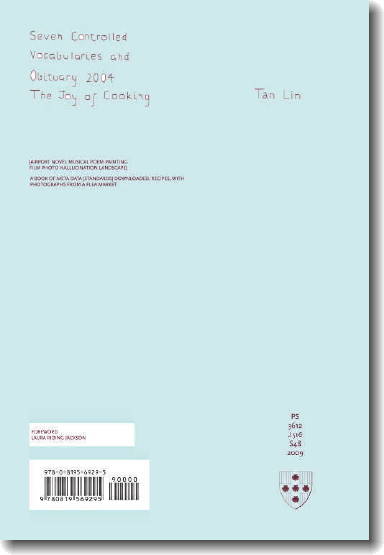

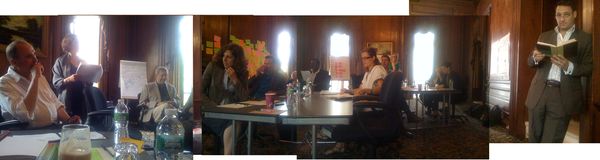



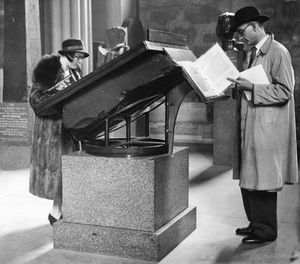 Seph Rodney: I wanted to start off the conversation by asking both my guests how it is that we get the kind of literacy that we have to decode writing. It seems to me that it’s everywhere, that we take it for granted. It seems that there’s a kind of decoding that happens in reading, isn’t there?