In today’s world, rarely do raping and pillaging so routinely coincide as in Eastern Congo's conflict. Increased scrutiny from the US Congress and concerned activist networks are highlighting the systematic rape and abuse of Congolese women and girls by marauding security forces, particularly Congo’s National Army. Equally appalling is Congo’s 'conflict minerals' problem—mineral ores extracted from mines controlled by various military factions, fueling the lucrative anarchy that is crippling the East and supporting the communications technology central to our way of life. Greater scrutiny should bring practical solutions, but our policy makers are missing the elephant in the room.
So is it greed, governance or grievance driving this crisis? Eastern Congo is a vast ungoverned space; some of its many armed groups are foreign, others domestic. Yet none treat the civilian population as brutally as President Kabila’s own National Army. A recent Human Rights Watch survey indicates that Congolese soldiers are the primary rapists in the East.
Since President Kabila took office in 2006, all three national security services—police, army, and intelligence—have operated as a winner-take-all bonanza where pedestrian pocket change, rare timber, protected fauna, and high-value minerals are equally expropriated by the services. As under Mobutu, a deliberate lack of oversight and no threat of sanction encourage economic opportunism among security officers, made easier with guns and uniforms with which to intimidate and extort. Would be public service providers but instead instruments of a nimble kleptocracy, state security services have become ‘Public Enemy Number One’, say Congolese here, raping and stealing instead of protecting and serving.
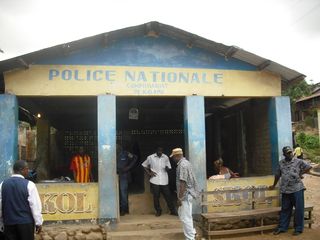
Outside observers, and many Congolese, believe that chronically unpaid soldiers and police must be destitute and thus obliged to extort, steal and beg in order to survive. The reality is that without a convincing deterrent to extraction and extortion—and their fantastic spoils—the security sector will continue to ransom the population into perpetuity. Lucrative extortion rackets and resource extraction are far more attractive than the promise of regular salaries, public accountability and civilian oversight. The current array of foreign-funded security sector reform programs, totaling hundreds of thousands of foreign tax dollars annually, contain only carrots, no sticks.





 I'm interested in talking to you as a film critic, but also as a fellow interviewer. You've interviewed two filmmakers that are my absolute luminaries for filmmaking: Werner Herzog and Abbas Kiarostami. What does those guys' work mean to you?




 I just used the phrase “radio portrait” of Los Angeles to describe your show. Is that accurate, or is that just me being public radio-y about it?