by Namit Arora
Why the Bhagavad Gita is an overrated text with a deplorable morality at its core. This is part two of a two-part critique (Part 1 is the appetizer with the Gita’s historical and literary context. This is the main course with the textual critique).
__________________________________
 The Bhagavad Gita, less than one percent of the sprawling Mahabharata, contains 700 verses in 18 chapters. It opens with Arjuna’s crisis on the battlefield, right before the start of the Great War. Turning to his friend and charioteer, Arjuna cries out,
‘O Krishna, I see my own relations here anxious to fight, and my limbs grow weak; my mouth is dry, my body shakes, and my hair is standing on end. My skin burns, and the bow Gandiva has slipped from my hand; my mind seems to be whirling.’
Arjuna is one of the bravest warriors alive and this visceral physical response, it is amply clear, is not due to performance anxiety, or fear of injury or death. Rather, it arises from Arjuna’s grave doubts over whether he is doing the right thing. He and his Pandava brothers wanted a minimally fair share of their material inheritance, but the devious, stubborn, and unjust Kauravas rebuffed them repeatedly. Though his cause is righteous enough, Arjuna now feels that the ends do not justify the means. He continues,
‘O Krishna, I have no desire for victory, or for a kingdom or pleasures. Of what use is a kingdom or pleasure or even life, if those for whose sake we desire these things—teachers, fathers, sons, grandfathers, uncles, in-laws, grandsons and others with family ties—are engaging in this battle, renouncing their wealth and their lives? Even if they were to kill me, I would not want to kill them, not even to become ruler of the three worlds. How much less for the earth alone? … We are prepared to kill our own relations out of greed for the pleasures of a kingdom. Better for me if the [Kauravas] were to attack me in battle and kill me unarmed and unresisting.’
Who among us can fail to be moved by Arjuna’s anguish? Hopelessly confused, Arjuna pleads with Lord Krishna to show him the way. Krishna obliges, taking on the role of a teacher to help Arjuna figure out the right course of action, which Krishna believes is to fight this war. The wisdom of the Gita—and the claim that it remains a relevant guide to our inner battlefield—is inseparable from Krishna’s advice to Arjuna. So, to evaluate the Gita, we need to evaluate the arguments Krishna uses to persuade Arjuna to fight. How good are these arguments?
I am aware that my reading of the Gita—like every other reading of it—is subjective and selective; I know that there are other ways of reading it. I have approached the Gita as expository literature, using the same yardsticks of truth and beauty that I take to other literary texts. I agree with Eknath Easwaran, an admirer and well-known translator of the Gita, when he says, ‘To understand the Gita, it is important to look beneath the surface of its injunctions and see the mental state involved.’ I have tried to do the same. I know that the Gita is not ‘mere literature’ to millions of Hindus, including many of my family and friends. It is also sacred scripture, a guide to practical wisdom, a source of personal and social identity, cultural and national pride, and more. My intention is not to offend as an end in itself, but this book review will likely unsettle many; a few will respond in angry and defensive ways. May they find in the Gita the wisdom to forgive my indiscretions.

Get Up and Fight!
 Imagine the scene. Having charioted Arjuna into the war zone with two vast armies arrayed against each other, Krishna watches Arjuna’s meltdown. Baffled by it, Krishna proceeds to shame Arjuna by calling his meltdown a ‘weakness in a time of crisis’, which is ‘mean and unworthy’ of him. He urges Arjuna to ‘arise with a brave heart and destroy his enemy.’ Refusing to fight, Krishna warns, will lead to loss of honor, which is worse than death. Arjuna will lose the respect of others and be ridiculed by his enemies, who will taunt him and call him a coward. ‘What could be more painful than this?’
Krishna continues, ‘Considering your dharma, you should not vacillate. For a warrior, nothing is higher than a war against evil’. Such a war should delight Arjuna, for it will guarantee him a place in heaven. If Arjuna dies in battle, he will attain heaven; if he wins, he will enjoy the earth. So what’s his bloody problem? A red flag for me here is the fact that Krishna takes Arjuna’s duty for granted, avoiding the thorniest of all problems with duty: how does one know what duty is? Later in the Gita, Krishna reveals how he thinks about it: one’s duty depends on one’s place in the caste hierarchy, which is ‘based on [one’s] nature.’ ‘By fulfilling the obligations one is born with, a person never comes to grief. No one should abandon duties because he sees defects in them’ and ‘by devotion to one’s own particular duty, everyone can attain perfection.’
But Arjuna remains unmoved as Krishna tries to shame him, hold up rewards, and remind him of his duty. Arjuna simply cannot imagine fighting elders he reveres, like Bhishma and Drona. He is not sure where his duty lies. Doesn’t his duty as a warrior conflict with his duty to not slaughter his kin and elders? Isn’t there a point when the means of upholding dharma risk pushing one into adharma? Arjuna would rather spend his life ‘begging than to kill these great and worthy souls.’ His will paralyzed, he complains of ‘a sorrow that saps all his vitality.’ Krishna, realizing that Arjuna’s crisis is pretty serious, shifts his strategy. He wheels in some heavy-duty philosophy into his arguments.
Krishna could have argued that this is a ‘just war’, that Arjuna’s relatives are aligned with an evil large enough to justify killing them—but he does not. Both of them indicate that the cause they are fighting for is to obtain for the Pandavas their share of the kingdom. If a larger cause is at stake—such as restoring righteousness on earth—Krishna neither elaborates one, nor invokes it to make a case for ‘just war’ in the Gita, preferring other arguments. So rather than offer up hypothetical reasons or apologia on behalf of Krishna, we should judge the Gita in light of the arguments for war that he does actually make in it, especially the ones he repeatedly makes—which is what I intend to focus on in this essay.
The Metaphysics of Detachment
 The Gita’s core metaphysics is based on the Upanishads, which represent, in my view, a major milestone in the history of abstract thought and a great leap in conceiving our relationship to nature—but not quite of an advance in terms of ethical philosophy. At the risk of oversimplification, I’ll summarize the metaphysics of the Upanishads by saying that they speak of a formless and all-pervasive vital force, or Brahman, which is the Ultimate Reality beneath the world of shifting appearances. Our own life force, the Self, or atman, is but one manifestation of Brahman, and it has the same nature as the atman of other beings, such as a dog’s. Atman is immortal; after the death of a body it migrates to inhabit another body. Grasping the true nature of atman and its essential unity with Brahman is what enables one to attain Moksha, or release from the endless cycle of rebirth—a preeminent individual pursuit. To attain Moksha, one must penetrate his or her veils of illusion and realize the truth of Brahman—a bracing view of reality as it might appear to the ‘cosmic eye’. In this view, our dualist conceptions of the world fall away, revealing the deeply interwoven strands of the phenomenal world (some dualist ideas based on samkhya metaphysics also appear in the Gita). As the Isha Upanishad relates, ‘He who sees everywhere the Self in all existences and all existences in the Self, shrinks not thereafter from aught.’ Nor are humans at the center of life or creation; in fact, particular human lives and concerns are seen as entirely insignificant in cosmic terms.
Krishna interprets this metaphysics to support a tangible objective, namely, persuading Arjuna to fight. Krishna’s is not the only possible interpretation, nor the most sensible one. Indeed, he belongs in the long line of shrewd characters who have bent metaphysics to their own ends. For instance, consider this interpretation: Krishna tells Arjuna that his sorrow is misguided. Those who grasp the true nature of reality, he says, ‘grieve neither for the living nor for the dead. There has never been a time when you and I and the kings gathered here have not existed, nor will there be a time when they will cease to exist. … The body is mortal, but he who dwells in the body is immortal and immeasurable. Therefore, Arjuna, fight in this battle.’ It is out of ignorance of the true nature of reality, he says, that we call one man a slayer, another man slain. ‘There is neither slayer nor slain. You were never born; you will never die.’ Krishna’s sleight-of-hand here lies in equating the people we care about with their atmans, and since atman is immortal, it matters not if their bodies are destroyed. ‘There could hardly be a better example of forked-tongue speciousness,’ wrote P. Lal (1929-2010), professor of literature and Indian Studies and translator of the entire Mahabharata into English, in the introduction to his translation of the Gita (1965).
Arjuna is still not sold, so Krishna presses on. O Arjuna, he says, ‘even if you believe the Self to be subject to birth and death, you should not grieve. Death is inevitable for the living … you should not sorrow.’ Every creature is unmanifested at first, is then manifested, and in time, is unmanifested again, so ‘what is there to lament in this?’ Krishna’s point is that if Arjuna’s arrow is what ‘unmanifests’ his uncle from earthly life, there is nothing wrong in it because it is all part of a cyclical process. Ambedkar called this line of reasoning ‘an unheard of defense of murder’, adding that if Krishna was a lawyer today and pleaded such a defense for a client, there is ‘not the slightest doubt that he would be sent to the lunatic asylum’.
The Path of Selfless Action
 The dialog continues. Krishna enjoins Arjuna to ‘seek refuge in the attitude of detachment … those who are motivated only by the desire for the fruits of action are miserable, for they are constantly anxious about the results of what they do.’ But in those who are detached, ‘all vain anxiety is left behind. There is no cause for worry, whether things go well or ill … thus they attain a state beyond all evil’ and attain Moksha. Several times he instructs Arjuna to ‘Act selflessly, without any thought of personal profit.’ This is to many, including Gandhi, the central teaching of the Gita.
On the face of it, this seems reasonable. What can be wrong with performing one’s duty without selfish desire and attachment? Self-control over one’s ego and passions are likely even good for one’s moral conduct. A thick skin against how others perceive our actions can sometimes be helpful. But a major problem lurks here. Krishna frequently talks about the duty that one is born into. ‘The distinctions of caste, guna, and karma have come from me,’ he says. ‘The responsibilities to which a brahmin is born, based on his nature, are self-control, tranquility, purity of heart, patience, humility, learning, austerity, wisdom, and faith,’ whereas ‘the proper work of the shudra is service.’ The problem is that Krishna never talks about the use of reason to figure out one’s duty—as the Buddha did—or to modify it in light of the potential and actual consequences of one’s action.
Without this corrective, the injunction to do one’s duty with total detachment serves only to bolster the doer’s equanimity, whatever the outcome. It becomes all about keeping the doer’s peace of mind, not about his impact on others. Rather than acknowledge that our worldly acts carry an ineliminable moral risk, the Gita says that this risk can be eliminated through a personal attitude adjustment. In this sense, the Gita’s idea of detached duty is less an ethical precept, more a self-help precept. As Easwaran writes: ‘Nishkama karma [selfless action] is not “good works” or philanthropic activity; [the latter] may benefit others, but not necessarily benefit the doer.’ And the Gita’s focus is relentlessly on the doer’s attitude while he dispenses his dharmic duty, not on what he actually does to others and its human impact. Krishna is thus able to ask Arjuna to perform ‘all actions for my sake, completely absorbed in the Self, and without expectations, fight!’ In The Idea of Justice, Amartya Sen too finds this problematic: ‘Krishna argues that Arjuna must do his duty, come what may, and in this case he has a duty to fight, no matter what results from it … Why should we want only to “fare forward” and not also “fare well”? Can a belief in a consequence-independent duty to fight for a just cause convincingly override one’s reasons for not wanting to kill people, including those for whom one has affection?’
 Krishna further elaborates what selfless action looks like and how meditation can help. ‘Those who cannot renounce attachment to the results of their work are far from the path’, he says. Those who conquer their senses, climb ‘to the summit of human consciousness. To such people a clod of dirt, a stone, and gold are the same. They are equally disposed to family, enemies, and friends, to those who support them and those who are hostile, to the good and the evil alike. Because they are impartial, they rise to great heights.’ They can control their turbulent mind ‘through regular practice and detachment’ to discover inner peace and joy by attaining union with Brahman.
Again, this stance is morally dubious and reflects the anti-humanistic sensibility that pervades the Gita. It may be good for achieving oneness with Ultimate Reality (whatever that is), but it is bad for moral life—it rejects the very idea that some actions have greater moral worth than others. It denies that some human bonds are more precious than others, which is part of what makes us human. This is the kind of detachment that can make moral villains out of men. It is a suitably desensitizing stance that can get a warrior to kill and feel no remorse, or to make us oblivious to each other’s human plight, as we pursue our given ideas of duty while upholding incoherent ideals like Brahman. As VR Narla put it, ‘while action without seeking some personal gain can be noble, action without any care for its evil consequences to other men [is] reprehensible, even diabolical.’
After all this talk, Arjuna longs to see a vision of Brahman. Krishna obliges and gives him a dazzling and ecstatic glimpse into cosmic reality, including his ‘radiant, universal form, without beginning or end’. While this is a brilliantly imaginative vision in many ways, Krishna unfortunately spoils it by infusing it with dubious morality. ‘I am time, the destroyer of all,’ Krishna tells Arjuna, ‘Even without your participation, all the warriors gathered here will die. Therefore, arise, Arjuna; conquer your enemies and enjoy the glory of sovereignty. I have already slain all these warriors; you will only be my instrument.’ The war hasn’t even begun and Krishna says, ‘Bhishma, Drona, Jayadrata, Karna, and many others are already slain. Kill those whom I have killed. Do not hesitate. Fight in this battle and you will conquer your enemies.’ How comforting, to have the Lord of the Universe (or Ultimate Reality personified) issue a moral blank cheque to a man disinclined to slaughter his relatives!
The Path of Devotion
 Krishna, now back in human form, tries another tack: Trust me! ‘Fill your mind with me; love me; serve me; worship me always,’ he urges Arjuna. In return, Krishna will take care of him. ‘You are dear to me,’ says Krishna. ‘Abandon all supports and look to me for protection. I shall purify you from the sins of the past; do not grieve.’ This is similar to the personal god in the mystical strains of many religions (e.g., Bhakti, Sufi), in which the mystic finds his rationality inadequate in knowing God and his design. Love and devotion—even rapturous ecstasy—help bridge the gulf the believer feels between himself and God. ‘By loving me he comes to know me truly,’ adds Krishna, ‘then he knows my glory and enters into my boundless being. All his acts are performed in my service, and through my grace he wins eternal life.’ But Krishna’s motives here are again dubious. He wants Arjuna to put all his faith and devotion in him and fight this war; in return, Krishna will ensure that no harm or anxiety befall him. The ostensible morality of the Gita, wrote DD Kosambi, is to ‘Kill your brother if duty calls, without passion; as long as you have faith in Me, all sins are forgiven.’
‘Many of the answers given by Krishna appear to be evasive and occasionally sophistic,’ wrote Lal. ‘Unable to satisfy a worried warrior’s stricken conscience with rational arguments, Krishna opts for the unusual—he stuns Arjuna with a glorious revelation of psychedelic intensity. He succeeds; [thereafter] Arjuna accepts whatever Krishna has to offer. Brain is overpowered by bhakti—but is it ethical to silence logic with magic?’ Arjuna, wrote Lal, is a ‘humanist hero who has risen above the demands of military caste and convention-ridden community. His plight on the field of Kurukshetra is not an abstract, condemnable intellectual perplexity that can be juggled away by “Cosmic Multi-Revelation.” It is a painful and honest problem that Krishna should have faced on its own terms, painfully and honestly, and did not. Or so the modern critical mind thinks.’
Near the end of the Gita, Krishna ominously warns Arjuna: ‘If you egotistically say, “I will not fight this battle,” your resolve will be useless; your own nature will drive you into it.’ Then almost immediately, he begins his closing remarks and makes a seemingly expansive gesture, ‘I give you these precious words of wisdom; reflect on them and then do as you choose.’ It is the perfect opening to let Arjuna, without giving him a real choice, feel as if he is making his own decision. Arjuna promptly succumbs, a sad ending to the Gita. ‘You have dispelled my doubts and delusions and I understand through your grace,’ Arjuna says. ‘My faith is firm now, and I will do your will.’ At the end of the Mahabharata, nearly everyone on both sides is killed. The epic, writes Sen, ‘ends largely as a tragedy, with a lamentation about death and carnage, and there is anguish and grief … It is hard not to see in this something of a vindication of Arjuna’s profound doubts.’
Not the Best of Its Age
 How do the metaphysical and moral ideas in the Gita stack up against other contenders in its day, for example, the teachings of the Buddha and the Carvaka? Was the smart money back then on the Gita? These questions can provide us another data point alongside critiques based on modern standards.
Of course, as I noted in Part 1, there are a few morally good and many morally neutral injunctions in the Gita. Krishna occasionally urges the spiritual aspirant to do his work ‘with the welfare of others always in mind … guided by compassion.’ He adds that ‘when a person responds to the joys and sorrows of others as if they were his own, he has attained the highest state of spiritual union.’ However, such emphasis on others is conspicuous by its presence in the Gita, which otherwise obsesses over given duties, detached action, evenness of mind, avoiding certain passions (greed, anger, lust, etc.), piercing one’s illusions to find Ultimate Reality, and (for folks too simple to relate to Brahman) a total devotion to God. Further, Krishna seems not to notice any conflict between his morally good advice—for instance, to not ‘harm any living creature, but be compassionate and gentle; show good will to all’—with goading Arjuna to war and detached action. It is almost as if the authors of the Gita felt compelled to acknowledge the ‘compassion meme’ of Buddhism (then growing at the expense of Hinduism) without thinking it through—the Gita neither articulates the basis for this compassion, nor reconciles it with Krishna’s advocacy.
That said, these empathic verses do leave the door open for a selective reading that is more charitable to karma-yoga, or the path of action. But it still remains a far cry from the Buddha’s central emphasis on compassion based on an active empathy with sentient beings, for they too suffer like us. He also advocated a far more egalitarian social ethics than the one implicit in the Gita. As historian Romila Thapar put it, ‘Had the Buddha been the charioteer the message would have been different.’ Going by the Dhammapada, he might have said: ‘They are not following dharma who resort to violence to achieve their purpose. But those who lead others through nonviolent means, knowing right and wrong, may be called guardians of the dharma.’ My goal here is not to score cheap points for the Buddha, or for Buddhism over Hinduism—I have no interest in doing so here, and this essay should not be read as such—Hinduism, as a living religion, is not what is written in an old poem; nor is Buddhism the same as the words of a teacher. My goal here is to evaluate the quality of ideas in the Gita in light of other ideas that were on offer to discerning people back then. For instance, here is how the Buddha approached dharmic duties and spiritual paths:
 ‘It is proper to doubt. Do not be led by Holy Scriptures, or by mere logic or inference, or by appearances, or by the authority of religious teachers. But when you realize that something is unwholesome and bad for you, give it up. And when you realize that something is wholesome and good for you, do it. … Be prepared to let go of even the most profound insight or the most wholesome teaching. Be a lamp to yourself. Be your own confidence.’
Such ideas are alien to the sensibility of the Gita. Krishna instead wants all aspirants to ‘realize the truth of the scriptures’ and set their hearts on him and worship him ‘with unfailing devotion and faith’. Those who listen to him ‘with faith, free from doubts, will find a happier world’. The Gita’s Krishna wants us to live free from doubt, ‘in accordance with these divine laws without complaining, firmly established in faith’. Those who claim, ‘There is no God,’ are ‘demonic’ (an extremist position; two of the six schools of Hinduism embraced atheism back then). Nor are humans to be relied on to make up their own dharma. ‘Whenever dharma declines and the purpose of life is forgotten,’ says Krishna, ‘I manifest myself on earth. I am born in every age to protect the good, to destroy evil, and to re-establish dharma.’ Contrast this with the views of the Carvaka, a skeptic of the materialist school named after him, who had proclaimed centuries earlier that good and evil are mere social conventions; the soul is only the body qualified by intelligence—it has no existence apart from the body. Only this world exists, there is no beyond. The Carvaka held that the Vedas are a cheat; they serve to make men submissive through fear and rituals. Nature is indifferent to good and evil, and history does not bear witness to Divine Providence. Such qualitatively different worldviews coexisted with the one in the Gita.
Krishna frequently insists that a mind established in Brahman is free from delusion. One then lives ‘in peace, alike in cold and heat, pleasure and pain, praise and blame’. That Brahman itself is a grand delusion was something the Buddha realized centuries earlier, arguing instead that there is no objective, mind-independent reality that is accessible to us. In the second century CE, Nagarjuna explained why ‘reality’ inevitably depends on the cognitive structure of our mind, rather than on anything we can identify as fundamental, innate, or essential attributes of reality itself. In other words, it is incoherent to speak of a firm foundation beneath the world of appearances, which the mind perceives through its conceptual categories. Nor is there a stable and unchanging Self. As our illusions fall away, we begin to see ourselves as contingent beings, inextricable from a reality that we shape and which in turn shapes us, rather than as beings able to detach ourselves to contemplate reality as it truly is (the so-called ‘view from nowhere’—much like the absurd, if poetic, Brahman).
Finally, the Upanishadic obsession with an abstract Self, the atman, and its unity with Brahman, seems amoral at best—and arguably worse—given its silence about the implication of such metaphysics for the individual’s earthly state or his ethical behavior. Kabir, the radical Bhakti poet, criticized this disjunction in simple terms, ‘If you can’t see what’s before your eyes, you’re as good as blind.’ Is it any surprise, then, that caste hierarchy and its prejudices—not to mention Krishna’s deceitful advice in the Gita—would turn out to be perfectly compatible with such a rarefied metaphysics?
The Context of the Mahabharata
 The Gita adapted certain philosophical ideas that were surely revolutionary when they first arose and challenged the ritualistic Vedic religion. However, a few centuries later, in light of the contending intellectual and moral ideas of its day, it had assumed the role of a highly conservative tract, aligning itself with orthodoxy, authority, and hierarchy. Whereas I see the Mahabharata as great literature: many-layered, open-ended, and replete with the pleasures of a complex story, which also happens to have a decidedly anti-war sensibility. The Gita, as I noted in Part 1, was composed much later under the realities of a new age. It ‘is not an integral part of the Mahabharata,’writes Easwaran.‘It is essentially an Upanishad, and my conjecture is that it was set down by an inspired seer and inserted into the epic [later].’ To the extent it can be admired as a standalone text (a commonplace treatment, as standalone commentaries on it abound; now there are even demands to make it the first ‘National Book’ of India), it can be critiqued as one too.
A common defensive response to a critique like this is to say that the Gita needs to be read in the context of the Mahabharata. If one reads the Mahabharata closely, some say, it will become evident that the Kauravas’ bad behavior made the war unavoidable and eminently justified. That is, it was a ‘just war’. Perhaps, but that’s not the point. The point is about the quality of the arguments Krishna actually uses to persuade Arjuna to fight. If the best moral justifications for the war purportedly exist outside the Gita, and some of the worst inside it, what have we left? What then makes the Gita so great?
Besides, it can be persuasively argued that the case for ‘just war’ is not clear even in the Mahabharata. It’s debatable—and not black and white—which is exactly what makes the Mahabharata great. Let us consider some specific examples. For starters, the normal rules of royal succession did not apply to the situation at hand: Dhritarashtra is blind, so his younger brother, Pandu, is made the king. But then Pandu lands a curse and retreats to the forest with his two wives, leaving Dhritarashtra to rule instead. Yudhisthira is indeed the eldest son in the family but Pandu, due to the curse, did not father him or the other four Pandavas. Rather, Pandu’s two wives manage to find some ‘divine’ lovers in the forest (!), raising legitimate questions about the lineage of the Pandavas—do they even belong to the ‘royal’ Kuru clan? Nor did Pandu rule anytime during Yudhisthira’s life. On the other hand, Duryodhana is the first son of the reigning and elder brother Dhritarashtra, who in his heart wants his son to be the king. So, doesn’t Duryodhana, a warrior as skilled as any and an able administrator, have a claim to succession as well? I mean a good case can be made, right?
Meanwhile, Duryodhana gets ambitious and wants the entire kingdom for the Kauravas, not just the better half of the Kuru kingdom that he stands to inherit. He loathes the Pandavas, partly because he saw them as uppity and mean to him in their youth, as young princes are wont to be. So, as an adult, Duryodhana is scheming and vicious to the Pandavas. But he can be kind to others, such as to the low-caste Karna. ‘Birth is obscure,’ he says, ‘and men are like rivers whose origins are often unknown.’ So, while the Kauravas are not all-bad (it’s worth noting that the elders, respected by both sides, end up supporting them, however reluctantly), the Pandavas are not all-good. They spurn and insult Karna based on his caste; Arjuna’s pride leads to Eklavya chopping off his thumb—and his hopes and livelihood. Draupadi taunts Duryodhana and his father’s blindness. And why does Yudhisthira get so little flak for gambling and losing everything twice, including his half of the Kuru kingdom (after being forgiven the first time, he is foolish enough to play again), even wagering his own wife’s body? What kind of a man does that? Can we trust his judgment again with a kingdom? (And this when his real father is none other than the Lord of Judgment, Dharma.)
Is it any less morally bizarre that while Krishna, in the Gita, goads Arjuna to fight the supposedly evil Kauravas, he has asked his own Yadava army to fight on the Kaurava side—apparently because he wants to be officially neutral! Countless foot soldiers get killed as a result—pawns in the dharmic imperatives of big men, which we are so eager to applaud. The Pandavas, too, break the protocols of war and we rationalize it. Why? Further, was it, or was it not, in the public interest to continue the 13 years of Kaurava rule? These are all legitimate readings, befitting great literature.
So, in the context of the entire Mahabharata, the Gita can be read as a Brahminical insert catering to the need to justify the war and expound some Upanishadic ideas en route, where Krishna nevertheless comes off looking terribly disingenuous. He combines blatant anti-humanism with his authority and magical powers to brainwash Arjuna. Indeed, during the war, Krishna himself often does not do what he preaches in the Gita, though the gaps vary across the many extant versions of the epic. What do we make of the fact that while advocating detachment from the war’s outcome in the Gita, he repeatedly plays foul and dispenses murderous advice (as in the killing of Karna, in asking Yudhisthira to lie to Dronacharya about Ashwathama, in defending Bhima’s killing of Duryodhana, and so on)?
Epilogue
 People in every time and place have succumbed to simple narratives of good and evil. They are even more easily blinded by their instinct to defend the side ‘God’ is on, not just the God of the Gita but also in other religious texts. They go to absurd lengths to defend his alleged words and deeds. These may be commonplace observations about a very human weakness but the question remains: Given all the bad faith reasoning and the starkly instrumental view of human life in the Gita, which many saw through even in ancient times, what makes the Gita a work of wisdom? Why not get the Gita off its exalted pedestal in our minds and let it be an uncelebrated episode in the Mahabharata—an artful plot element in an epic work of literature?
Without drastic overlooking and embellishing (in the manner of Gandhi), I consider the Gita a poor moral guide to our daily lives. Why do so many people resist this idea? Perhaps they have neither read the Gita, nor any contrarian critiques; or they are being reactionary patriots about ‘their heritage’; or perhaps their faith in it is too strong. After all, which book deserves the sort of uncritical adoration that so many Hindus, especially among the highly educated members of the upper classes, have for the Gita today?
_________________________________________________________________
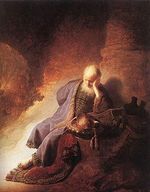
All Gita quotes in this essay come from Eknath Easwaran’s translation of the Gita, with embedded hyperlinks to a translation by the Bhagavad Gita Trust, which also presents every verse in Sanskrit, transliterated, commented on, and sung beautifully. Other online translations abound. The artwork in this essay was found via Google Images but the artists’ names were unfortunately not available.
Part 1 of this essay appeared on 05 Dec 2011. “The Context of the Mahabharata” section was added later.
More writing by Namit Arora?
_________________________________________________________________