by Madhu Kaza
In the borrowed apartment where I'm living for a while, on the top floor of a brownstone, a stone Buddha sits on a low table in front of a center window. The crowns of trees some thirty feet away float in the window; they belong to the park across the street. Many of these trees are rooted near the street below, and the park slopes up behind them, so that through the canopy I sometimes catch flashes of figures moving inside the park at the top of the hill. Through my window I hear the squeaking of swings, and though I don't see them, I hear the squawking of children throughout the afternoon.
One afternoon this summer – it had been dark and humid all morning—I was sitting at my desk working, when suddenly I heard a boom of thunder, immediately followed by the shrieks of children. I looked out the window at the swaying branches of the trees and imagined the scared and thrilled children leaping out of the swings and scattering home before the rain came down. I watched the trees long after the voices emptied out of the park and the rain began tapping the leaves.
I love looking out of windows. I have spent whole afternoons watching the light change inside a room and watching the movements of the world outside. I lived for nearly fifteen years in a studio apartment in Manhattan, where ninety percent of my waking hours at home were spent sitting in a chair by the window, where I worked, ate, read, talked on the phone and idled. I think of the years racked up looking through glass, listening to the muted sounds of the city.
Looking through a window has always felt akin to looking at art. Painters have long made the connections between the canvas and the window. In his 1435 essay, “On Painting,” the Renaissance artist Leon Battista Alberti wrote, “Let me tell you what I do when I am painting. First of all, on the surface on which I am going to paint, I draw a rectangle of whatever size I want, which I regard as an open window through which the subject to 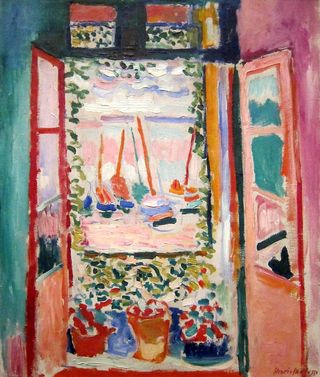
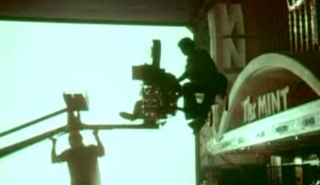
Even if paintings sometimes open up views onto the world, I recognize that it doesn't necessarily follow that looking out a window is like looking at art. Features that brings these two experiences together for me, however loosely, include the frame and the distance– my position apart from the action. When gazing out a window I am more still in my looking than when I am out in the world. I find myself slightly abstracted from my body and in the position of a spectator. It's great if a window looks out onto a street or a meadow where horses roam, but the view needn't be spectacular or even beautiful. It certainly helps if the view is not of a grim shaftway, if instead it's of a dynamic space where people or animals or clouds come and go, where vegetation comes into leaf, flowers, and dies – anywhere where you can watch things change throughout the day. Through a fixed frame viewed over time the scene becomes cinematic.