“Well, I haven't been there yet, and shall not try now.”
~ Conrad, Heart of Darkness
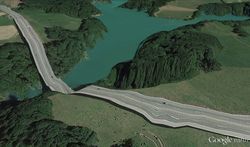
There are no more places where cartographers must write terra incognita, or where myths and rumors were recruited as phenomenological filler. For just as nature abhors a vacuum, a map is a canvas that demands to be crammed with seemingly confident observations, and it would appear that every nook and cranny of the planet has already had some physical characteristics reassuringly assigned to it. Thus when maps fail us, we are left to decide whom to blame – the map, or ourselves.
I will give you a hint: we never blame ourselves. Rather, it is the map that is inadequate. But what this really implies is our refusal to abandon the conviction that there will be some future map that will capture the truth. Correlating directly with its pervasiveness, it becomes too easy to pass over the obvious fact that, like anything else, the practice of cartography is a fundamentally social practice. Consider not only how immersed we are in maps, as with the example of GPS, but also how extensively, constantly and surreptitiously we ourselves are mapped. Every time you allow an app on our smartphone to “Use Your Location,” indeed with every swipe of a credit card, you are effectively performing an offering of yourself, or rather some quantifiable aspect of yourself, to some kind of mapmaking project, the vast majority of which you will never be aware, let alone see. We are, in fact, subjects of a distinctly cartographic flavor of what Michel Foucault called clinical gaze.
When we are thus swaddled in information that provides so much convenience and in turn seems to ask so little in return – in fact, what is merely a bribe, but an exceptionally effective one – the occasional failure of maps can be galling (or sometimes entertaining). Because we are convinced that a better map is always already right around the corner, this anxiety does not last. But what comfort is there when we are confronted with things that resist mapping?