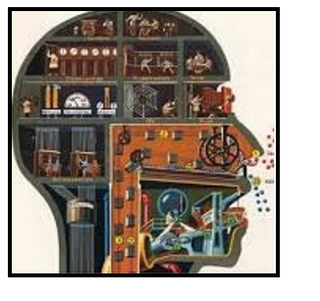
Try to see it this way: You’re up in the attic of your own body, there where the thoughts are stored. The vaulted ceiling of your cranium slopes gently down to the two windows through which you view the world and let the sun shine in. Left and right, two speakers pump in sounds from somewhere else. And down below those two front windows, is the front door where you let the cat out, through that orifice which allows a few of those thoughts to wander out into the ether as articulation. There are no bars on your windows, and no locks on the door, but make no mistake, you are in solitary confinement. You’ll never get out of there. And no one will join you up there in that attic, ever.
Solitude is not for the faint of heart. That said, we all experience solitude nearly all the time. Whether we enjoy it or not is another question. Even if we’re never alone for a minute, even if we talk our heads off, or spend hours interacting with others, we are trapped inside our heads. We’re alone up there, in solitary, imprisoned by the cranium and our singular perspective. (Social interaction kindly provides the illusion that we are not alone.)
Take a look around and it’s surprising how much space there is to store things. Somewhere near the back are shelves piled high with memories, experiences, thoughts, knowledge, dreams and music. Behind these shelves is the operating system. We don’t go there. It just hums along of its own accord, allowing us to function in blissful ignorance of its machinations.
Many phrenological illustrations portray the brain as a tightly packed oval of small cubicles, each with its own function—a corporate flagship, or musty old factory, with every cogwheel doing its part to keep the enterprise afloat. It’s very crowded in those pictures, claustrophobic.
Not my view at all. There’s infinite space up there, plenty of room to have an alchemist’s laboratory where thoughts are put together from different elements in the cellular database. I don’t know how you see your brain, but I see mine as a spacious atrium with good natural light from above (no eureka lightbulbs). In the center, there’s a long old refectory table where I work and play. At one end there’s music, at the other, painting. In the middle, where the light shines brightest, is where I craft my ideas and observations from the contents of the infinite number of drawers and cupboards that line the room. This is the point of departure for travels far and wide across the geography of the imagination.