by Jalees Rehman
We live in an era of exhaustion and fatigue, caused by an incessant compulsion to perform. This is one of the central tenets of the book “Müdigkeitsgesellschaft” (translatable as “The Fatigue Society” or “The Tiredness Society“) by the German philosopher Byung-Chul Han. Han is a professor at the Berlin Universität der Künste (University of the Arts) and one of the most widely read contemporary philosophers in Germany. He was born in Seoul where he studied metallurgy before he moved to Germany in the 1980s to pursue a career in philosophy. His doctoral thesis and some of his initial work in the 1990s focused on Heidegger but during the past decade, Han has written about broad range of topics regarding contemporary culture and society. “Müdigkeitsgesellschaft” was first published in 2010 and helped him attain a bit of a rock-star status in Germany despite his desire to avoid too much public attention – unlike some of his celebrity philosopher colleagues.
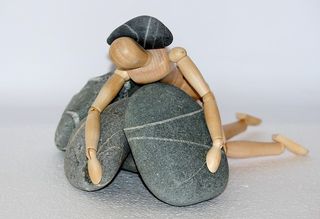
The book starts out with two biomedical metaphors to describe the 20th century and the emerging 21st century. For Han, the 20th century was an “immunological” era. He uses this expression because infections with viruses and bacteria which provoked immune responses were among the leading causes of disease and death and because the emergence of vaccinations and antibiotics helped conquer these threats. He then extends the “immunological” metaphor to political and societal events. Just like the immune system recognizes bacteria and viruses as “foreign” that needs to be eliminated to protect the “self”, the World Wars and the Cold War were also characterized by a clear delineation of “Us” versus “Them”. The 21stcentury, on the other hand, is a “neuronal” era characterized by neuropsychiatric diseases such as depression, attention deficit hyperactivity disorder (ADHD), burnout syndrome and borderline personality disorder. Unlike the diseases in the immunological era, where there was a clear distinction between the foreign enemy microbes that needed to be eliminated and the self, these “neuronal” diseases make it difficult to assign an enemy status. Who are the “enemies” in burnout syndrome or depression? Our environment? Our employers? Our own life decisions and choices? Are we at war with ourselves in these “neuronal” conditions? According to Han, this biomedical shift in diseases is mirrored by a political shift in a globalized world where it becomes increasingly difficult to define the “self” and the “foreign”. We may try to assign a “good guy” and “bad guy” status to navigate our 21st century but we also realize that we are so interconnected that these 20th century approaches are no longer applicable.