by Katrin Trüstedt
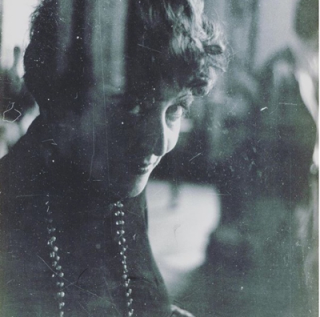
The title of this film The Rest I Make Up seems to perfectly capture a feature of her art essential to this relation. It points to a making up of stories and theater worlds that was the work of this writer, as well as to a practice as part of her now dealing with dementia: If she can't remember, she makes it up. Behind the charm and nonchalance with which she graces the screen, one senses an abyss of an unknown, terrifying darkness. It makes its presence felt in silences, glances, or the state that her kitchen is in. When Michelle and Irene return from their visit in Cuba, they stop in Miami to see Irene's sister; Irene cannot tell her about having just visited their family. She does not remember. But the title also seems to address the way Fornes's avant-garde theater used to work in the niche of the Off-Off-Broadway scene (and "Off-Off-MoMA," if you will): improvised and without support, institutionally or financially, it was experimentally "made up" as the productions moved along. Besides writing and directing the plays, Fornes would, for instance, also often do the costumes, with whatever happened to be there. And ultimately, the title also seems to speak to the filmmaking project itself. When I first met Michelle in Berlin about 15 years ago, she was not sure what exactly to do with her life. How to make money. Where to go. What to make. But she knew she was captivated by this playwright Irene Fornes (it was how I learned about her), and wanted to, in some way, do something with her, about her, for her. The rest she was going to make up "as we went along". It turned out to be this film, and she turned out to be a filmmaker in the process.