We are now less than a year away from the scheduled release of Disney’s live-action remake of Dumbo, the studio’s fourth animated feature. It is in some ways dark and sinister–animals jaded from the daily grind of performing and being on display; cruel, exploitive, and drunken clowns; and the snobbish elephant matrons who ostracize Dumbo and his mother. But let’s set that aside–I’ve covered it all, and more, in my working paper on Dumbo. By the time the film had come out, 1941, there’d been a substantial history of cartoons centered on animals. If anything, cartoons were more likely to center on humans than animals. Why animals and why elephants? Read more »
Give me a break I mutter. I text—and I text. Incessantly I text. Send money. Now. Send money. More money. You don’t reply. You will. It is Spring and I am young. Everyone around me on the beach is around my age or younger. We are young.
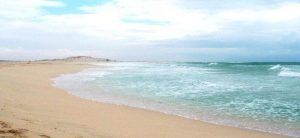
I offer: Let’s chat. Then I wait. Stretching out leisurely I see stretching before me powdery pristine white sand, waves gently furling and unfurling, nibbling at the beach as far as my eyes can see—a cloudless blue sky mirroring a gentle ocean to my right. A gentle ocean—its blue so blue against the sky and the white that I cannot even give it a name—this blue—this blue of abundance. This blue of calm and peace. This blue of happiness. This combination of blue and white—this perfect sweet air, a fresh ocean breeze. And I am high, feeling the buzz—of this intoxicating time. The beach vibrates—undulates and shivers—trembles with life, the shells, clams and crabs– alive. On the distance horizon over the ocean I can make out cargo ships, probably Chinese and Dutch and trawlers, probably Japanese, netting the big fish. Our fish. Read more »
I’ve always been a big fan of logic puzzles, especially Japanese ones (heyawake, nurikabe, gokigen naname, hashiwokakero), but I recently ran across another kind of puzzle which has been driving me crazy. So I thought I would share it with you, so maybe you also may be driven crazy. You’re welcome!
I do this puzzle (called “Guess” in this version) on my iPad, and I got it as part of large collection called Puzzles, which means that if you search for it on the App Store, you’ll get a bazillion hits and never find this particular one. Luckily (or not), Guess is easily available under another name, Mastermind, the name of the board game it’s based on. I don’t remember ever playing this game, but the only difference, I take it, is that when it’s played by two humans, one player chooses the tokens while the other guesses, and one scores better or worse based on how long it takes to get the answer (or fails to do so). Guess doesn’t give points, but one naturally tries in any case to solve the puzzle in as few steps as possible — which involves figuring things out rather than simply guessing randomly. Read more »
In 1320, Giovanni Mauro da Carignano, the rector of a church in Genoa, made a map of the Mediterranean world that marked near the Nile Valley a land called Terra Abaise inhabited by “Christiani Nigri”. Terra Abaise or Abyssinia was apparently inhabited by black Christians. How did Carignano know this? Apparently, he met them. A 15th century text says that in 1306, a group of 30 ambassadors from Abyssinia travelled to Italy to meet the Pope Clement V and talk diplomacy. The historian Matteo Salvadore writes that if this group is accepted as an embassy, they would be “the first recorded African embassy to a European sovereign.”
Abyssinian King Yagbea-Sion and his forces (left) battling the Sultan of Adal and his troops (Le Livre des Merveilles, 15th century)
This was the first of a series of attempts by the Ethiopian empire to make contact with the Christian nations of Europe based on their common religious identity. While it is of little moral solace that those ages were more divided based on religion than race, Salvadore makes a great case for the Ethiopians being welcomed as Christian allies without any derogatory assertions around their colour or allegations of barbarism.
In 1402, another group of Ethiopians showed up in Venice. This group was led by an Italian who had travelled to Ethiopia as a trader but had there been commissioned by the Ethiopian negus or emperor Dawit 1 to lead a diplomatic mission back to Italy. The main aim of the mission seemed to be religious. They came back with chalices, crosses, holy relics and other sacred objects. It also seems to be the case that, as a result of this mission, a fragment of the True Cross (the one that Jesus died on) was sent to Ethiopia by the Doge of Venice. But along with these pious requests were also more pragmatic ones – requests for artisans and technologies to help aid in the expansion and development of the empire. Read more »
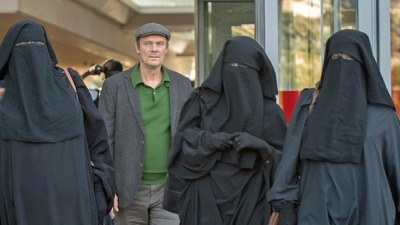
Political debates in Europe these days seem to have only one subject. At one point or another they all turn to the issue of migration, Islam, and a danger to “the West”, which are presented as essentially synonymous. Germany’s political future seems currently to hang in the balance over the so-called “migration master plan” by German secretary of the interior Horst Seehofer. The polemical campaign of the CSU to win back voters from right wing parties threatens to blow up the German government and thereby endangers the future of Europe. In a time when it is increasingly difficult to deny the immense scale of suffering both in the places from which a majority of the refugees escape to Europe, and in the border areas they find themselves in, the construct of a “Fortress Europe” is being strengthened not only by physical and political, but also by rhetorical barriers. Returning to stereotypes of foreign invasions overrunning a weakened West, mainstream debates are drawing on old images already used in anti-Semitic propaganda of the early 20thcentury.
Michel Houellebecq’s novel Submission, which recently re-entered the German discourse in form of a movie adaptation, seems to offer the apt allegory for the current phantasma. Perhaps its biggest accomplishment lies in foregrounding the strong but mostly implicit connection of this type of xenophobia with issues of gender and sexuality. The weakened West is depicted here in terms of the decline of the male, bored, and sexually frustrated protagonist who shows uncanny features of an Incel, and to whom the Islamic Other taking over France seems to offer a model for a renewed masculinity putatively under attack in post-feminism Europe. Ultimately, the only solution for the protagonist is a submission to the spreading Islam in order to restore patriarchy and repair his unsettled and offended masculinity with the vision of underage virgins. In all its absurdity, the novel points to an implicit thread of the new right wing discourses presently targeting Islam as the privileged enemy: that of a threatened masculinity. Informed by images of young Islamic men overrunning a decadent West unable to protect itself, the European discourse on refugees is deeply gendered and sexualized. Read more »
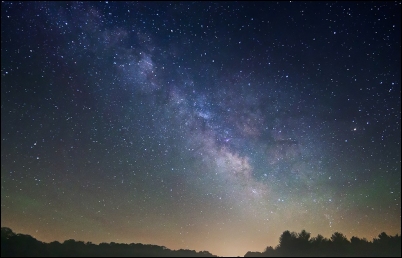
“…shimmering through the leaves and out beyond the black lines of her neighbors’ chimney pots were the stars, beacons whose light left them long before there were eyes on this planet to receive it…” …………………………………………….. — archeologist Jacquetta Hawkes
Tripping on Curbs
we who live in deep space and trip on curbs looking up at stars bound in a mesh of interstices of lightyears through which seas of breath and blood pass, in which muscles are bound by mystic ligaments to armatures of bone . . . we’re always mystified by what seems a phenomenal disconnect, mindsparks shine here and there, filaments of personal matter, electric turns of tissue and dreams, tiny conscious blips to which oldest light comes, goes, scatters and everything is it. so it may not matter if shimmering it will or will not shatter .
“In receiving this award, I thank my parents, Zsa Zsa Gabor and Mr. T.”
This is my twist on the importance of the serial or Oxford comma, the comma that should follow “Gabor” and precede “and.” I was indoctrinated at a young age, which as we know is the best time for a spongy brain to take in nebulous rules that will dictate the rest of one’s life. The catechist was grammar and its incumbent style guide. Style guides rule the world. They frame the content you read, no matter if you notice it. You probably only become aware of it if the framing is inadequate or a convention is broken.
In a just and decent world, everyone would use the Chicago Manual of Style. That august association does not give me any money, but I would give (and have given) them some for the joy and clarity that publication and its website have bestowed upon me. If you’re looking for some syntactic comedy, check out their reader comments. It’s not a Chris Rock special on premium cable, but you might have a titter.
Chicago has everything. If you cannot find an answer in Chicago, either you did not phrase it correctly or it is not worth asking. Even a worthless question, the magnanimous souls at CMS will find a way to answer and give solace to the asker’s weary mind. Read more »
” … In the Fields of Empty Days explores the continuous and inescapable presence of the past in Iranian society. This notion is revealed in art and literature in which ancient kings and heroes are used in later contexts as paradigms of virtue or as objects of derision, while long-gone Shi‘ite saints are evoked as champions of the poor and the oppressed. Beginning in the 14th century, illustrated versions of the Shahnama or Book of Kings, the national epic, recast Iran’s pre-Islamic kings and heroes as contemporary Islamic rulers and were used to justify and legitimize the ruling elite. Iran’s adoption of Shi‘ite Islam in the early 16th century also helped to fix the past irrevocably in the present through the cycle of remembrance of the martyrdom of Shi‘ite Imams. Both of these strands—olden kings and heroes, and martyred Imams—carry forward, even sometimes overlap, in contemporary Iranian art, rendered anachronistically as a form of often barely disguised social commentary.”
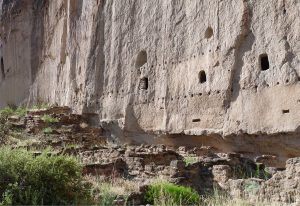
A Remains of multistory dwelling built into volcanic tuff wall. Bandelier National Monument, New Mexico
The hour was late, but it was still hot. Frijoles Canyon loomed to my right, showcasing its surfeit of stratigraphic tuff and igneous ash layerings and ponderosa pines. I was about a hundred and fifty feet up on the mountain face in a reconstructed cave with a ceremonial kiva or well. The cave was accessible by climbing a series of narrow steps and four ladders inclined against the steep rocks: not recommended for those with a fear of heights. On this particular day I was alone there; it was a hot weekend, and not too many hikers and tourists had scattered themselves around Bandelier National Park where the cave’s located.
It’s tough not to fall in love with the American Southwest. There is no other part of the United States which combines so uniquely and generously Native American, Spanish and Anglo-American culture with spectacular desert and mountain expanses as far out as the eye can see. Our trip had started with the Grand Canyon, whose first display of infinite recesses and a blaze of colors is sufficient to stop almost any conversation for a few seconds. It had then continued through Indian reservations spread across three states – albeit still crammed into nooks and crannies relative to their original seemingly limitless expanse – which took us through the incredible towering structures of Monument Valley to New Mexico. Read more »
Mother leans against the island in the nanosecond kitchen at Farouk’s home in New Rochelle, marveling at a Miracle Icemaker as half-moons tumble into a glass bowl. She spins
a Lazy Susan with glee, clicks the fire fountains on & off. “Atomic food makes stomachs ache,” she warns, alarming the microwave. “I remember,”
she says, “squatting in front of a clay oven blowing my lungs into a slim steel pipe to light a fire, my smoke-singed eyes, your father’s anger— She pulls out
an empty tray from the oven, whispers, “For 50 years I created a home only to see your father’s new wife inherit it.”
I live in a flyover state, Indiana, USA. You know, one of those states that you fly over but you don’t stop in, as you travel East Coast to West Coast or the post-industrial Midwest. You know, the vast prairies where no one important lives, mostly rural and small town. Where the people are mostly white, socially conservative highly religious and staunchly Republicans. Where there are too few people to influence national politics. You know, the ones who put Donald Trump in office.
This May, I was the Election Inspector for the primaries in our precinct, Pine 2, of Porter County, Indiana. Porter County is not exactly flyover country–we’re more of a hybrid flyover/northern city. We are tucked into the northwest corner of Indiana, a region filled with heavy industry and a few large cities on the shores of Lake Michigan. Our population, 166,000, is only 3% that of Chicago, and is 93% white.
Pine 2 is only 60 miles from Chicago and is filling with Chicago expatriates seeking lower property and sales tax, cheaper houses, or wooded country retreats an easy hour commute to Chicago. Pine 2 itself has no industry, but it includes my little town of Beverly Shores, which houses a high proportion of artists, intellectuals, Chicago commuters and retired University of Chicago professors. Democrats outnumber Republicans three to one. The other 132 precincts of Porter County, though, are truly flyover country. Forty percent is farmland; it is is dotted with small towns and small industry. It is socially and politically conservative, strongly religious, and staunchly Republican. Read more »
Long before it ever even occurred to me to be a writer, I accidentally adopted the quirks and habits of one…
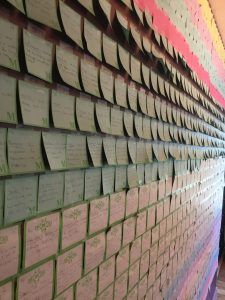
If one sits in my dining room, they can see it. There is literal writing on my wall. What once stood empty, with its deep red paint, is now plastered with Post-Its. My dining room features a Word-of-the-day wall. It took over five years to complete and started as many things do, by chance, during a drunken game of Scrabble.
Word-of-the-day-wall aside, there’s another writerly habit this column pertains to.
I can’t honestly tell you when I started my notes. Soon after college is all I’ve really got. Many moons ago I began highlighting passages in everything I read and typing them up. It’s a labor of love born in hopes of retention.
I learned at university that if I wanted to commit something to memory I needed to do more than simply read it. Remembering, for me, requires an action element. So, in the name of not forgetting everything I was learning from books, I started my notes.
Weighing in at damn near three-quarters of a million words, over 1,500 pages, and spanning 200 different entries, my notes are the closest thing to a life’s work I’ve got.Read more »
Yazd, one of the big three Tourist destinations in central Iran, has a rather challenging climate. With summer temperatures often exceeding 40C and hardly any precipitation at all (49 mm per year), water is a major concern. The city is rightfully famous for its wind towers (بادگیر) and qanats (قنات). While the former were and sometimes still are used for cooling houses, water reservoirs or storage rooms, the latter used to provide the city with water. Walking through the city, located in this rather inhospitable environment, one is constantly reminded that question of water dominates many aspects of life: from the garden and parks to agriculture and industry, from housing location to food storage and cooling. For many of these, the ingenious use of qanats provided an answer.
Diagram of a Qanat [2]A qanat is an underground aqueduct, which uses gravity to direct water from a well or aquifer to the surface. In distinction from wells, this feat of engineering allows to transport water over great distances to places where it might be difficult to access. Moreover, because the channels run underground, there is not too much loss through evaporation or danger of pollution. The first qanats are thought to have been constructed in today’s Iran, sometime between the 10th and 8th centuries BCE. [1] The concept was so successful that it spread far: initially spreading beyond the core area of the Iranian plateau with the expansion of the Persian Empire in the Achaemenid period (5th – 3rd century BCE), the technology spread eastwards to Afghanistan, Pakistan, and to the Indus river; westwards to the Levant and the Mediterranean shore, and south to Egypt and Saudi Arabia. In a second wave, the technology spread with Islam to Cyprus, and across North Africa to Spain and the Canary Islands. [2] There are even qanats found in Japan [3] and in Latin America, in Mexico, Peru, and Chile, which appear to pre-date the Spanish invasion, thus becoming “(…) an additional item in the continuing pre-Columbian trans-Pacific diffusion controversy”. [2]
Writing in 1968, Paul English [2] states that in Iran alone 15 million acres (roughly 6 million hectares, or 60.000 km2) of cultivated land are watered by 37.500 qanats. This, at the time, corresponded to between one-third and a half of the total cultivated land. Historically, they provided up to ¾ of the water used in Iran. [1] Being such an important feature of Iranian cities, it is worth looking at some of their technical details. Read more »

 Give me a break I mutter. I text—and I text. Incessantly I text. Send money. Now. Send money. More money. You don’t reply. You will. It is Spring and I am young. Everyone around me on the beach is around my age or younger. We are young.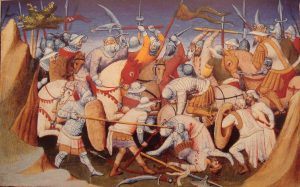
 Political debates in Europe these days seem to have only one subject. At one point or another they all turn to the issue of migration, Islam, and a danger to “the West”, which are presented as essentially synonymous. Germany’s political future seems currently to
 “In receiving this award, I thank my parents, Zsa Zsa Gabor and Mr. T.”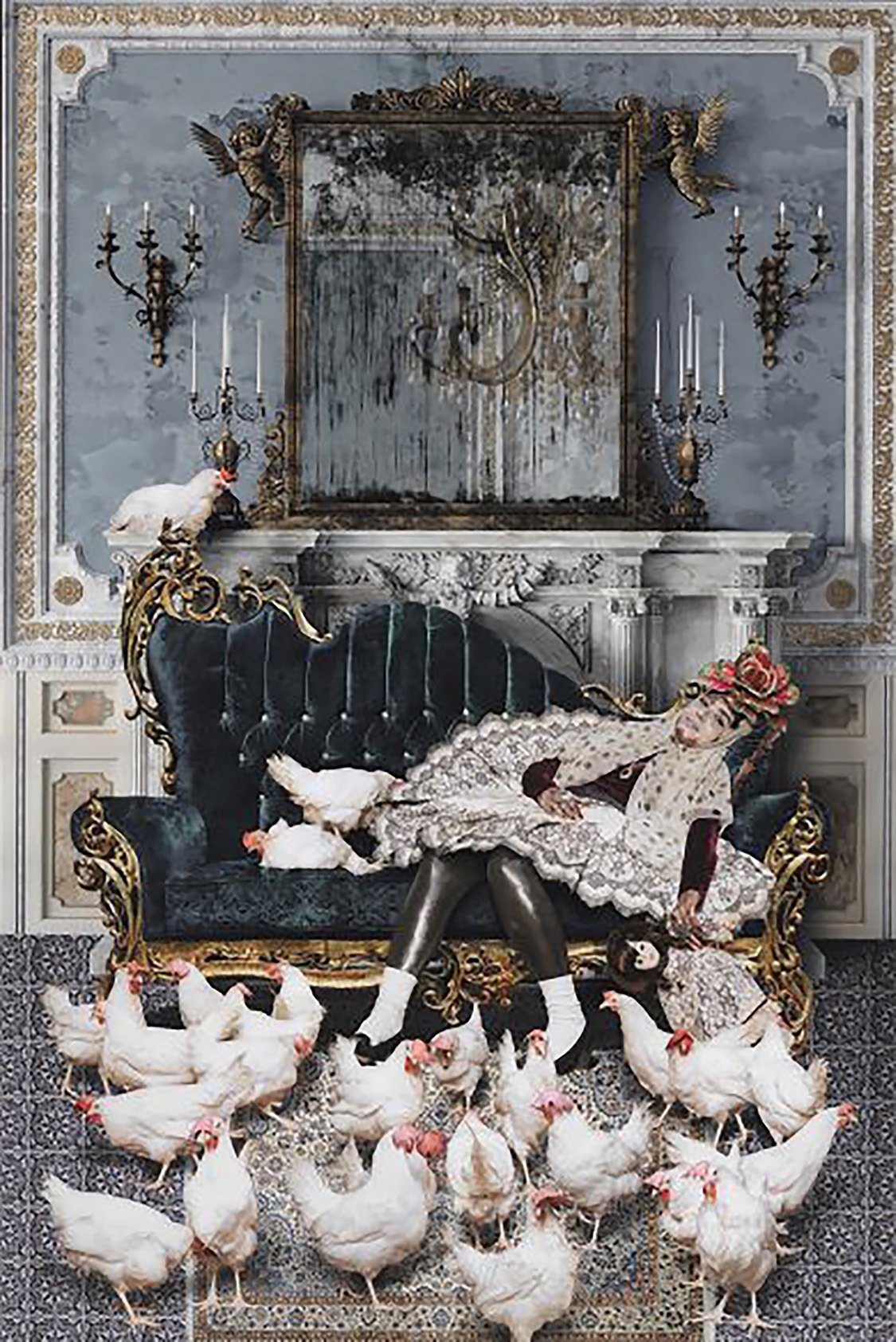
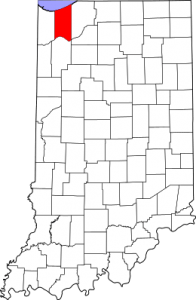 County, Indiana. Porter County is not exactly flyover country–we’re more of a hybrid flyover/northern city. We are tucked into the northwest corner of Indiana, a region filled with heavy industry and a few large cities on the shores of Lake Michigan. Our population, 166,000, is only 3% that of Chicago, and is 93% white.