A Poem About The Service Area

by Amanda Beth Peery

In the service area
where a handful of the families of New Jersey
have pulled off the highway,
the trees are surprising me
with their thickness—
the edge of a secret
or rather forgotten forest
running beside the turnpike.
A small animal occasionally waits,
then breaks
from the velvet shadowed elms.
They press the delicate imprints of leaves
against the broiling sky
as a storm tentatively begins
and one dark-eyed girl, bored with her parents
watches the rain start by the food machines
and swings her arms in loose arcs
like the trees that are now swaying
in the rain and in the wind.
She is just as foreign to me
as these particular trees.
I will never see any of them again.

My Swat Valley Story

by Shadab Zeest Hashmi

The most stunning memory of Swat valley that remains with me since my first visit as a child is the euphoria of the headstrong Darya e Swat, the luxuriously frothy river, like fresh milk churning and churning joyfully. That, and the first time I heard the pristine and full silence of wilderness, meandering along languorous brooks and spotting the smallest wild flowers I had ever seen. Like any child, scale impressed me: the mountains were the highest, the river the fastest, the silence of the trails the deepest I had yet experienced. If there was anything subtle I may have observed, the awe of scale and novelty eclipsed it completely.

On my visit to Swat this year, I tried to recapture that spirit of childhood, trying to set the senses free as well as refining them with the subtlety that was beyond the capacity of my younger self, wrestling furiously against the disquiet and frustration Swat evokes due to recent political events. It struck me that subtlety still eludes the perception of Swat as far as the global psyche goes, dominated as it is by narratives of scale: the most unsafe place in the world, the worst place for women and education, home of the youngest person to receive the Nobel prize, etc. Read more »

Shared Responsibilities for Climate Change Mitigation

by Jalees Rehman

The dangers of climate change pose a threat to all of humankind and to ecosystems all over the world. Does this mean that all humans need to equally shoulder the responsibility to mitigate climate change and its effects? The concept of CBDR (common but differentiated responsibilities) is routinely discussed at international negotiations about climate change mitigation. The basic principle of CBDR in the context of climate change is that highly developed countries have historically contributed far more than to climate change and therefore need to reduce their carbon footprint far more than less developed countries. The per capita rate of vehicles in the United States is approximately 90 cars per 100 people, whereas the rate in India is 5 cars per 100 people. The total per capita carbon footprint includes a plethora of factors such as carbon emissions derived from industry, air travel and electricity consumption of individual households. As of 2015, the per capita carbon footprint in the United States is ten times higher than that of India, but the discrepancy in the historical per capita carbon footprint is even much greater.

CBDR recognizes that while mitigating carbon emissions in the future is a shared responsibility for all countries, highly developed countries which have contributed substantially to global carbon emissions for more than a century have a greater responsibility to rein in carbon emissions going forward than less developed countries. However, the idea of “differentiated” responsibilities has emerged as a rather contentious issue. Read more »

Painful and Inevitable Dissonances

by Niall Chithelen

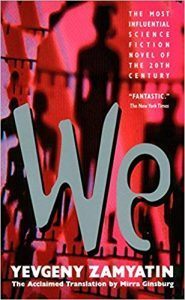
A number of scenes in Eugene Zamyatin’s dystopian novel We (1921) echo moments from Alexander Bogdanov’s utopian Red Star (1908). Bogdanov was a Bolshevik when he wrote Red Star (he was expelled from the party some years before the Russian Revolution), and his “red star” was a socialist, wonderfully technocratic Mars whose residents are preparing to export revolution back to Earth. Zamyatin, also once an Old Bolshevik, wrote in the disturbing aftermath of the Russian Revolution, and his We takes place on a future Earth, ruled over by the United State. It is possible to read We as a response to Red Star and its intellectual moment, with Zamyatin flipping Bogdanov’s Bolshevik idealism to reflect the fright of Bolshevik reality. Bogdanov sought a sort of Communist technocracy, and Zamyatin sensed its enormity, feared it. But, while the two books do offer different political conclusions, the authors seem to share an important belief in humanity and its imperfections, as they provide rather similar answers to a fundamental question of their genre: what kind of freedom do we really need? Read more »

Digital Art?

by Nickolas Calabrese

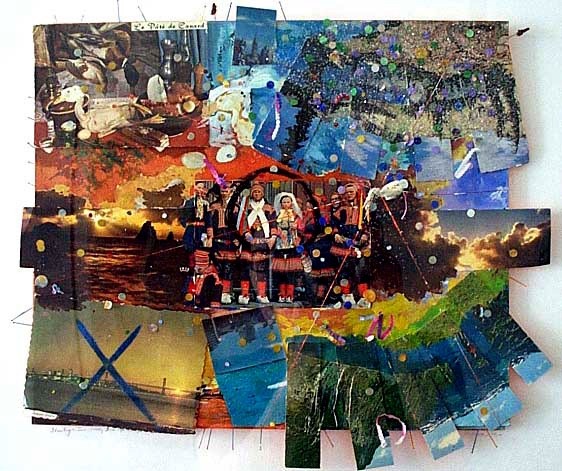
The subject of digital art is unclear. Work that was new five years ago can look ancient now because of the constant changes in technologies. The term “digital art” itself is an umbrella term that applies to a variety of names for art that is produced with the aid of a computer including, but is not limited to, “new media art”, “net art”, and “post internet art” (for a fuller linear history of the various terms that denote art made with or assisted by computers, see Christine Paul’s terrific introduction to A Companion to Digital Art reader, which she edited). The decision to use “digital art” is twofold. First, some of the alternatives only denote a temporal category while not actually referring to the form (new media can only be “new” for a brief period; it makes little sense for a “post internet” when it hasn’t significantly evolved from “net art”; put more brusquely, in the words of critic Brian Droitcour in Art in America magazine “most people I know think “Post-Internet” is embarrassing to say out loud”); and second, because I regularly teach an undergraduate visual arts course at NYU named Digital Art (a title I did not choose).

The upshot of digital art’s classification is that it might not actually exist as a category. Read more »

Monday, September 3, 2018

A Return to Philip Roth

by Adele A. Wilby

The link to Charles McGrath’s ‘No Longer Writing, Philip Roth Still Has Plenty to Say’ which appeared in the New York Times in January, only a few months prior to Roth’s death in May this year, was forwarded to me by a friend who thought I might find the article interesting. How indebted I am to my friend that he thought of me in those terms, for the sending of that article rekindled my acquaintance with Roth; life’s events and circumstances had left my reading of his work to the margins.

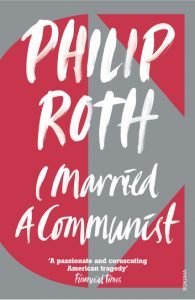
After reading that January interview, I was surprised and saddened to hear the announcement that Roth had died; despite his eighty-five years there was no suggestion of ill health on his part in the interview. However, the numerous critical and appreciatory obituaries propelled me into reflection on what I might have missed over the years by failing to read this major twentieth century literary figure that has now left us, and that it was time I returned to Roth to discover for myself what all the praise and criticism of his literature was all about. All that remained of my reading of Roth’s Portnoy’s Complaint and Human Stain forty years ago was the impression that they were good books. Fired up with a renewed enthusiasm to ‘return’ to the Roth I had left behind, unsure of what to select from his numerous writings, but armed with my own life story and political history, I chose his I Married a Communist to start reading him again.

I married a communist in the political heyday of the Cold War seventies and eighties, and we could be thought of as politically active in the decades that followed. Thus, with the value of hindsight, of having at least temporarily succumbed to a socialist ideology and politics, and the development of a healthy skepticism of all ideologies, I have to admit to a curiosity as to how Roth would present politically engaged persons, and the socialist politics of the era, albeit in the United States, and I was not disappointed.

My first reaction after reading the final sentence, closing the book and resting it on my lap was to heave a heavy sigh of great satisfaction. Roth, I felt, had written a great book. Read more »

The Eye’s Mind

by Joshua Wilbur 

I would never call myself a birdwatcher. I’m confident—arrogant even—about blue jays and cardinals, but everything else is a crapshoot. I identify finches as sparrows, sparrows as hawks, hawks as starlings. I’m more often wrong than right.

That said, I do like to watch birds. In college, I would go to the Boston Aquarium to see the African penguins. Peering over the central railing, I would pick out a single penguin from the group and follow its (his? her?) every move for as long as possible. Into the water, out of the water, into the water again…

These days I spend a lot of time in Central Park, where countless pigeons roam the paths.  When I’m not in a rush, I’ll find a bench and read for awhile, and, inevitably, the legion arrives. Again, I like to pick out one member of the group and see what it does.  Whether penguin or pigeon (or finch or sparrow or gull), what fascinates me about watching birds is how contingent—how utterly arbitrary— their actions can seem.

Why does the bird take three steps this way instead of that way?

Why does it fly to that tree in particular?

Why does it return to the ground at my feet, turn a few circles, and continue its march along the sidewalk?  

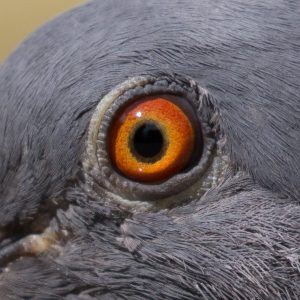
I understand, of course. It’s looking for food. But there’s a wide gulf between a pigeon’s world and mine. And I feel that divide most strongly when I look into a bird’s eyes. I’ll stare down at a pigeon, focus on the red and orange and black of its vigilant eye, and think about a very old question: “Is anyone in there?” Read more »


Letters in the Age of Science: A 19th-century Case for Optimism

by Jeroen Bouterse

The past years have seen many debates about the limits of science. These debates are often phrased in the terminology of scientism, or in the form of a question about the status of the humanities. Scientism is a notoriously vague term, and its vagueness can be put to the advantage of either side. If you position yourself among the ranks of those fighting against scientific overreach, it helps to define scientism as the easily refuted view that there is no knowledge outside of science; don’t the humanities produce knowledge as well? If, on the other hand, you believe that the methods and results of science can still profitably be exported to new markets, you will need as harmless a definition as possible – scientism becomes nothing more, for instance, than the claim that science encourages us to make an effort to understand things.
Are we bound to talk past each other, then, adapting our language to fit our intuitions? Not necessarily. Scientism can be the label for a well-defined philosophical position, and several articles in a recent volume on the subject manage to prep it for conceptual analysis. This is never a waste of time. However, interesting discussions can also take place in the grey zone between philosophical analysis and vague intuitions.

My favorite example of this comes from the 19th century. It concerns an exchange between Thomas Henry Huxley and Matthew Arnold. Neither of them use the term ‘scientism’, or provide a formal definition of the issue, but both manage in a delightful way to have a productive debate about the reach of science.

Huxley is now most famous as ‘Darwin’s bulldog’: the enthusiastic promoter and exegete of Charles Darwin. Darwin himself took care not to go beyond defending the content of his new theory of evolution, which was radical and controversial enough as it stood. To his friend Asa Gray he confessed that he found his knowledge of the more gruesome phenomena in nature hard to square with belief in a good and omnipotent God; but when he received letters from eager theology students asking him to clarify the implications of his theory for divinity, he tended, ever-politely, to evade them. Read more »

Cultural Divides, from Snow to Snowflakes

by Thomas O’Dwyer

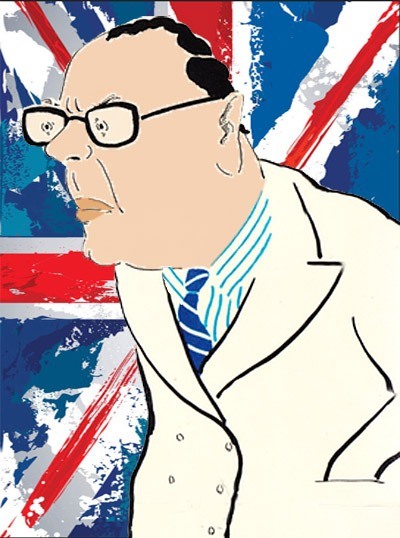
Kenneth WidmerpoolThe career of Kenneth Widmerpool defined an era of British social and cultural life spanning most of the 20th century. He is fictional – a character in Anthony Powell’s 12-volume sequence, A Dance to the Music of Time – but he is as memorable as any historical figure. In the first volume, he is a colourless Eton public schoolboy. Across the series, he tunnels his way under British upper-class and bohemian society. A powerful and sinister self-made monster, he even gains a life peerage. In the final volume, the aged Widmerpool joins a hippie cult and dies naked while chasing girls in the woods. Widmerpool lived and prospered in the solid certainties of his acquired culture. He died in the midst of its fragmentation.
Widmerpool was an original snowflake – one who believed that he was so unique that greatness and adulation were his destiny. His lowly father sold fertilisers. His mother raised him to be this snowflake with an inflated uniqueness that would override his mediocrity. The metaphor then was poetic – snowflakes are lovely, and no two are alike.

Today, we have a “snowflake generation,” defined by British author Claire Fox in her 2016 book I Find That Offensive!: “It is a derogatory term for one deemed too vulnerable to cope with views that challenge their own, particularly in universities and other forums once known for robust debate.” With some irony, these delicate modern snowflakes are also called “new Victorians.”

The collapse of cultural certainties was most clear in Britain but rippled through all Western societies. The origin of certain culture-war debates, which erupt from time to time like temperamental volcanoes, is pinned on one Englishman, Lord Charles Percy Snow. A chemist and novelist, Snow in 1959 published The Two Cultures and the Scientific Revolution. He first delivered it as a lecture at Cambridge University. Snow observed that a group of educated people talking in a room would make allusions drawn from books and the arts. Not one of them would be expected to make, or understand, a reference to “the second law of thermodynamics.” Half of human culture – science – appeared to be non-existent for literary intellectuals.

Snow found this odd and alarming, and he considered it a problem whose solution was obvious. Read more »

Learning To Live Without A Car

by Mary Hrovat

It’s a Saturday in May. I’m 17, and I’ve spent the morning washing and waxing my first car, a 1974 Gremlin. I’m so delighted that I drive around the block, windows down, Chuck Mangione playing on the radio. Feels so good, indeed. I’ve successfully negotiated a crucial passage on the road to adulthood, and I’m pleased with myself and my little car. Times change, though, and sometimes even people change. Forty years later, with, I hope, many miles ahead of me, I sold what I expect to be my last car.

When I bought the Gremlin, I lived in Phoenix. I had walked to grade school, and my siblings and I regularly walked to the grocery store and the public pool; all of these places were within about half a mile of our house. However, my full-time job was 10 miles away. I’d been commuting by bus or riding with a friend who worked at the same place. I also took evening classes a couple of days a week at a community college (about 8 miles away), again riding with my friend. The college was not as easily accessible by bus as my job was, and I anticipated being a full-time student that fall. Buying the car was one step toward my goal of getting a degree.

I assumed, along with just about everyone else, that a car was necessary equipment for adulthood, or at least a necessary price you pay for independence. Buying the car was a way of beginning to separate myself from my parents. I was proud of myself for arranging and paying for my driving lessons, finding a car to buy, and writing a check to pay for it. These things represented initiative and independence (although I couldn’t have saved the money if I hadn’t been living at home). Read more »

Back Formations and Neologisms

by Gabrielle C. Durham

I like playing Scrabble, and part of the reason is creating new words. That and the smack talk. I played a game with the swain of the day decades ago, and he challenged my word, which was not in and of itself surprising. As you may recall, if you lose a challenge, you lose a turn. With stakes so stupendously high, you mount a vigorous defense. I ended up losing the battle (and probably won the war) and thought no more of it. The ex-boyfriend brought it up a few years ago; I think he has put that on-the-spot coinage next to a picture of me in his mind. It is a shame that the word he will forever associate with me is “beardful.”

My linguistic brain coined this neologism by merging noun + common suffix “ful,” as in words such as “youthful,” “fearful,” and “handful,” to create an adjective. Easy and legit, right?

A neologism is a new word or a new way of using a word and is not yet commonly accepted; it may never be mass-accepted, and it may stay new for decades. To survive its infancy, it needs to identify a durable, meaningful concept. The word or usage has to be relevant.

One form of a neologism is a back formation, which is typically shortening an existing word and changing the part of speech. An example is the verb “burgle” from the noun “burglar.” “Burglar” has been with us for centuries as a noun, and someone – let’s blame Shakespeare – realized that a verb would make the world shimmer that much more brightly. Thus was “burgle” begat. Read more »

A meeting with V. S. Naipaul

by Ashutosh Jogalekar

I met him at a Starbucks outside the Tower of London. It was pre-arranged. I had told him I was an independent blogger. He told me he preferred to talk to independent writers these days; the mainstream media was more trouble than what it was worth. It helped that I wrote for a site that he regularly read and admired.

The complexities of the London tube have thwarted me on more than one occasion, and this time was no different.  I was a full fifteen minutes late. He was sitting in a cafe, his signature fedora on his head, but still dressed inconspicuously enough so as to seem like one of the many people thronging the cafe.

“Mr. Naipaul”, I said, extending my hand. “It’s a real pleasure to meet you.”

“Oh yes, please, I was expecting you. Please, call me Vidia”

Taken a little aback by the very informal moniker I was supposed to address him by, I exclaimed, “Ok, thank you. And so sorry”, I said, “I have to admit that the tube, as wonderfully efficient as it is, challenges me every time I visit the city.”

“Indeed. It was difficult to get around the first time I visited too, more than fifty years ago. Often when I thought I had made it to my destination, I realized I was back where I started. Shall we?” Read more »

Poem

SCOFFLAW

There’s a lighthouse chasing us
just as I forewarned
when she jumped the queue
veered the red Renault
onto a prohibited bus lane
on New Kent Road.

We idle on the verge. A world tilts.
Bobby, rotund in blue,
knocks boldly on the pane.
She lowers the window.

“Well, then?” he asks,
“When I passed my driving test,
she says to the wheel,
“there were no bus lanes.”

“Young lady,” he says,
to her profile, “When
I passed my driving test,
there were no women drivers.”

“That’s sexist. Isn’t it?” she says.
“Getting cheeky, eh?” he says.
She giggles. He laughs, “Don’t
do it again, luv.” Nods.

I nod back. He plods
back to the lighthouse.
She shifts gears.
We give each other a high five.
In the rear view,
lighthouse appears closer than it is.

By Rafiq Kathwari / @brownpundit

What Your Child Learns From Trees at Story Time

by Liam Heneghan

No one warned me that after my children finally left home when I secured the doors at night I would, in effect, be locking them out.

People deal with the mild trauma of being an “empty nester” in different ways, I suppose. Some handle it with quiet grace, some move cocktail hour to the early afternoon, some repurpose the bedrooms into a karaoke lounge, a discotheque and so on. I took the quieter route and reread all their childhood books—from nursery rhymes to the Hunger Games series and other novels for young adults.

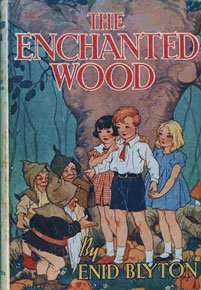
I was first struck by the prevalence of animals themes in these books. For example, in Eric Kincaid’s superb collection of Nursery Rhymes (1990)—a favourite of our two boys—over forty percent of rhymes concern animals. However, a word search of a book I subsequently wrote on the topic of nature in children’s books called Beasts at Bedtime (2018) showed that I might just as well have called it “Trees at Bedtime.” In addition to the innumerable references to “beasts”, there are almost 200 references to trees in the book.

Trees are represented in these stories in all their remarkable forms: magical trees in fairy tales to trees like JK Rowling’s compellingly violent Whomping Willow at Hogwarts.

It is clear that many writers of children’s stories—especially the so-called classic writers—did not accidentally stumble onto such themes. Beatrix Potter, JRR Tolkien, Ursula LeGuin and many others, had a keen eye for nature, and often had an acute awareness of its devastation. The destruction of trees was a point of moderate obsession for Tolkien who famously wrote, “I take the part of trees as against all their enemies.”

What, I wonder, should we make of this veritable forest of arboreal allusions in children’s stories? Read more »

It’s Gonna Be A Good Day

by Max Sirak

This month, in the midst of my grief and loss, I decided to self-medicate.

No, not like that. I didn’t go on some sort of drug-fueled bender.  Nor did I delve the depths of the bottle. Instead, I took some of my own medicine.

What I mean is, throughout my life, whenever a person I cared about was down in the dumps, my go-to move was to make them a mixtape. In high school this was because a friend was going through a breakup. Until last week, the most recent mix I made for a friend was over the loss of a pregnancy.

However, a handful of days ago, I decided to do for myself what I’d always done for others. Meet “It’s Gonna Be A Good Day,” the music-baby I made for me. 

It’s 53% hip hop.

There’s some language that may offend.   

But, should you happen to find yourself with an open mind and the desire to have a good day, I encourage you to give it a spin. Who knows? You might like it. And it might work.

It did for me. Read more »

Where do you live: Conducting Electricity

by Christopher Bacas

In the Municipal building on Livingston Street, two floors are reserved for Housing cases. In each court, dozens of people work and wait, a Bosch tableau with an international cast. HPD lawyers work the perimeter. They bring Respondents to the bench, confer with them in the hallway and negotiate with Petitioners on their behalf. HPD attorneys also lunch with landlord’s counsel. There is little ethical or proximate difference between Officers of the Court, save who signs their checks and the pay scales. To a person, they distribute a crushing weight, balancing malfeasance and negligence, plunder and systemic rot. The lasting effect of a day in Housing court isn’t the stipulation Management makes for repairs, nor the tenant’s payment (sometimes, less an abatement), it is feeling that force haul you down and watching others already borne off by it.

We arrived by scuffling shoes and creaking doors, then slid into crowded pews, all the grim mugs on a subway car faced in the same direction. The docket was packed; twenty or more cases in a six-hour work day. Some would resolve in a few minutes, others stretch to an hour or more. The judge cuts off ramblers and ranters. While you wait, you rehearse your statement.

The electrical system in our building was nearly 90 years old. Its central node, a rectangular graphite board the size of a medicine cabinet. Protruding from it, six paired brass claws held six shotgun shell 60-amp fuses, no covering nor shielding. To replace fuses, small plastic pliers hung on a hook nearby. Current flowed to smaller boxes with smaller fuses in each unit’s kitchen. Air conditioners, particularly older models, can continuously pull 20-30 amps. Entertainment and communications: flickering modems, cable boxes, charging stations and flat-screens add to the load. Multiply by twenty-five units… Read more »

Monday, August 27, 2018

The Passion of the Urban

by Shawn Crawford

Urban Frank Meyer III

Oatmeal for breakfast. Kale salad for lunch. Surely a slice of pie with dinner won’t ruin the diet after you’ve been so disciplined all day?

Welcome to Moral Licensing, the term psychologists and researchers use to describe the process by which we use a “good” behavior to later justify a “bad” choice. Example? I voted for Obama, so let the racist remarks begin! Obviously the strategy proves more subtle, from Fox News insisting we had entered a post-racial society after President Obama’s election, to the refrain, “I don’t want to hear about racial inequality; we elected a black president.”

Moral licensing occurs in research studies regardless of age, gender, or economic situation. But what happens when religion gets introduced into the mix? In a study conducted by the neuroscientist Jean Decety, 1170 children aged 5-12 years old, from six countries (USA, Canada, China, Jordan, Turkey and South Africa) were given 30 stickers and asked to share as many as they liked with a child of similar age and background to create a “generosity score”. Most kids came from households that identified as Christian (24%), Muslim (43%) or not religious (28%).

The children from secular homes had the highest generosity scores. When parents were asked to score the empathy of their children in the study, the religious parents rated their children as very moral, far beyond the scores of the test.

To see just how powerful moral licensing can be in shaping behavior, consider that in a poll conducted by ChristiaNet.com, 50% of evangelical men and 20% of evangelical women said they were addicted to porn (which they consider sinful). The time of highest viewing? Sundays, after they had gone to church. Read more »