
by Jochen Szangolies
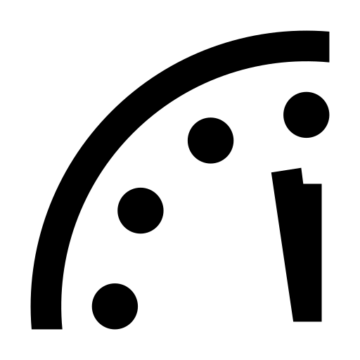
In 1960, the physicist and cyberneticist Heinz von Foerster, together with two co-authors, predicted that on Friday, November 13, 2026, doom would come. On this date, if the human population were to continue growing as it had for the previous 2,000 years, its hyperbolic growth would tend to infinity, and we would all be ‘squeezed to death’. Of course, this estimate for doomsday was not an altogether serious one, and ended up being off by about a month (Marvel really dropped the ball on the tie-in here).
But apocalypticism is certainly experiencing a boom. Climate change, AI, war, a new pandemic: all these and more stoke renewed millenarian fears. And rightly so, at least to some extent: the past half-century or so is the first in the history of humanity that we could feasibly broker our own demise. Our technologies have grown so powerful, our weapons so destructive, and our exploitation so disruptive that we today stand before the very real possibility of bringing about our end through hubris, malice, or simply negligence. In AI, we have created a technology that we can barely control in its current state, yet for which some have argued that ‘if anyone builds it, everyone dies’. In January, the Doomsday Clock, a measure brought into being in 1947 by the Bulletin of Atomic Scientists to quantify the likelihood of global catastrophe, was set to a record 85 seconds to midnight, with the main driver of risk being the increasingly aggressive, adversarial, and nationalistic demeanor of the ‘Great Powers’ USA, Russia, and China. The recent UN Emissions Gap Report now sees exceeding the Paris goal of limiting warming to below 1.5°C as unavoidable, occurring within the next decade, and urges drastic measures to limit the extent and duration of overshoot.
Moreover, these risks are not independent. As the climate changes, resource wars, population displacement, and weather catastrophes further destabilize global security, while maintaining and deploying a large military apparatus both actively harms the climate further and drains resources from necessary mitigating projects, such as energy transition or renaturalization efforts. Taking the lead in the ‘AI race’ is seen to be of critical importance, to the detriment of safety, alignment, and control. Entire forests are illegally felled to make room for data centers, while illegal gas turbines pump cancerogenous nitrous oxide into the air and leak highly climate damaging methane.
In short, even though the doomsayer is (thankfully) historically the profession with the worst track record, it is true that we’re living in times of unprecedented uncertainty about the future. Take this recent chart from the Dallas Fed, forecasting the possible future development of living standards (as measured, somewhat imperfectly, by GDP):
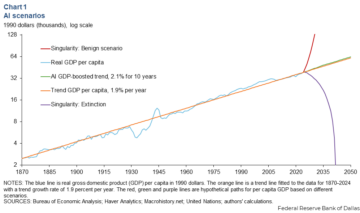
What is striking is not so much the prediction as the lack of it: as of today, both paradise and purgatory, as well as a modest correction to business-as-usual, seem equally supported options.
Yet, I still think there is something deeply misleading about the apocalyptic picture being painted. If you think of the end times, after a glut of films depicting resource catastrophes, zombie uprisings, alien invasions, or simply ecological collapse, what is the image you have in mind? If your cultural background is at least a little similar to mine, it’s probably not too far from what author Jason Pargin has his protagonist Abbott Coburn say in his novel I’m Starting to Worry About This Black Box of Doom:
Uh, terrified people scrounging for food and running from bandits. Rampant disease, infrastructure breakdown. All the stuff from the movies, I guess.
The book goes on to mention lack of internet, electricity, running water, hospitals; one could add a breakdown of social institutions, of government, and the collapse of any kind of meaningful economy. Against this, the novel’s other main character Ether holds that by these lights, most of their lives have been spent in a reverse apocalypse: entire populations, billions of people, have gained access to the amenities of civilization, toilets, clean water, electricity, and so on.
I have previously argued that this paints a kind of misleading picture, but for the moment, let’s take this claim at face value. Because then, while a certain segment of the world population has experienced an apocalypse in reverse, for another, the apocalypse isn’t a point at whatever distance in the future, a coming cataclysm, but a lived reality: a growing percentage of the people in developed nations are living in precarious or destitute conditions, being cut off from the wealth of their nations, and with it, all too often, from any meaningful social institutions, security, shelter, and medical care. Some of them you may see every day: people begging on street corners, experiencing homelessness, perhaps marked by untreated addiction and other disease. In 2025, driven largely by the affordability crisis in housing, homelessness in the US increased by 18% as compared to the previous year. Others you may pass without notice, with their day-to-day struggle for existence and recognition being little more than a fleeting expression of worry or a hurried walk from one job to another in the hopes of not having to choose between making rent and feeding their children. These people effectively live in apocalyptic conditions, right here, right now: they do not have secure access to means to meet their basic needs, much less opportunity to enjoy civilizational amenities most of us take for granted. The apocalypse isn’t coming, it’s here—just unevenly distributed.
Our K-Shaped Reality
When we think about the apocalypse, we imagine it as an event: something—maybe robot uprising, maybe a pandemic, maybe war—happens, which disrupts society sufficiently to shatter the institutions intended to keep us from lapsing into the ‘war of all against all’, as Hobbes painted the specter of what might await us should state power fail. As long as this event hasn’t happened, we can keep working to perpetuate the status quo, to keep staving off social collapse by our collective toil. The economy must grow to keep us all happy, healthy, and wealthy—yet hewing to this narrative has seen German chancellor Friedrich Merz, with his repeated refrain of working more and longer, drop to a historic low in approval.
The message doesn’t seem to land anymore. Increasingly, people are becoming skeptical of the promises of future wealth at the expense of today’s toil. Cost-of-living and housing affordability crises mean that many, especially young people see the course of their lives already bending downward, feeling left behind and betrayed by a world in which now 12 people—all of them men—hoard wealth equal to that of the bottom half, over four billion people. Increasingly, the promise of prosperity through honest work no longer applies to the majority; rather, while a tiny majority is elevated to near-godly levels of wealth, economic prospects for the many are dimming. Why should that same majority thus rally to the neoliberal call of more work, less social programs, when they have no reason to expect themselves to be the recipients of the wealth thus generated? Why listen to the dire litanies of economic doom that can only be averted by spitting in your hands and working yourself to the bone, when that same doom is already a reality all around you?
The closest we have come to the wide-spread experience of apocalyptic conditions was society grinding to a halt during the COVID-19 pandemic. In the aftermath, there was much talk of the ‘K-shaped’ recovery: while certain industries experienced a fast rebound, others have continued struggling, leading to a divergence between those who are back to, or even better than, before the pandemic, and those feeling a lasting impact. As Bloomberg titled in December 2020, that year had been ‘a great year for stocks and a bear market for humans’.
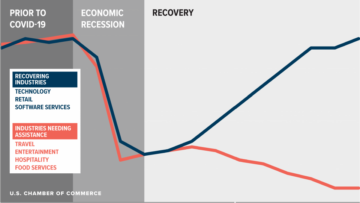
On a social level, I’m sometimes struck by the extent to which we have returned to normalcy in the relatively short time since, but perhaps there, too, recovery has been unequal. Apocalypticism, as it is conceived of in popular fiction, including that told by politicians, at least has a unifying aspect: we all go down with the ship. But in the ongoing slowpocalypse, what happens is that the rising tide simply no longer lifts all ships (to the extent it ever has), but that some are borne on the crest of high waves, while others are sunk beneath the flood. We’re no longer living in the same world; with economic prospects, lived realities are also diverging. The danger isn’t that distant (or perhaps not so distant) point in the future when the bombs fall, it’s the continuing drop of ever larger parts of society, first beneath the level of their parents, then into debt, into inability to buy houses, then groceries, and then, who knows. The apocalypse no longer looms before us, its maw gapes below, and we all hang on only by a thread of economic viability, and politicians and billionaires alike seem to be clicking their scissors. The fact that 50% of Americans now effectively spend more than they earn has made an escape from poverty a shaky prospect, at best. (If you haven’t seen the linked video, I’d highly encourage you to do so, just to get a better feel of how much of a life sentence income inequality is in modern society.)
In short, where the apocalypses of climate change, war, or AI takeover threaten the future globally, our present is suffused with the slowpocalypse of economic inequality, with the danger of falling into apocalyptic living conditions in the midst of societies producing wealth on levels unprecedented in human history.
Apocalyptic Policy
The 2013 science fiction film Elysium, directed by Neill Blomkamp, depicts this sort of stratified apocalypse most starkly: while the rich enjoy luxuries beyond compare in orbital sanctuaries, the rest of humanity lives on the ghettoized surface of the Earth, held in check by a robot police force, and mercilessly shot down if they attempt to flee their squalid conditions. As Blomkamp in an interview at the time of release stated, he doesn’t consider the premise to be science fiction: for him, it is just a depiction of present realities.
The insidious element of this depiction is that the apocalypse is neither accident nor impersonal catastrophe, as a pandemic or a meteor strike, perhaps even an AI takeover might be, but rather, a calculated matter of policy. The rich few ensure their lavish lifestyle by means of exploiting the impoverished many, and quell every attempt at overturning this situation with relentless force.
In these fictional depictions, there is never any question of whom to side with. The rich oppressors are the forces of evil, thus, the desperate actions of those trying to throw off their shackles are inherently justified. The destruction of the death star by the rebellion, to mix and match franchises for a moment, is portrayed as a moment of celebration—yet, among the thousands of deaths aboard the station (not to mention the Ewoks below), it’s hard to believe all were committed to and complicit in the Empire’s atrocities.
This is a matter of framing, of narrative: a clean division between the good and the bad guys for the sake of telling a feel-good story of overcoming great adversity to build a better future. (The show Andor, probably the best offering from the Star Wars universe, would then later complicate this narrative and introduce difficult questions about horrible acts in the name of a good cause.) As such, much of public discourse, of power legitimizing power, is devoted to shaping the narrative: of creating a means to overcome the ability of the immovable ground truths to interdict the exertion of power’s will, by my lights.
We’re seeing this in the present moment in a clash of two opposing social motions: one being the fear of falling into slowpocalyptic conditions underwriting our inability to question the ‘necessities’ of our current situation, and the other being the framing of those that do take to the streets and ask the questions the rest of us are too scared to raise as nothing but violent troublemakers, perhaps vehicles of left-wing and/or migrantic extremism.
To a certain extent, fear of falling into destitution is useful: what choice do you have but accept a minimum wage job if the alternative might be losing your home, or going hungry? If there were a comfortable floor beneath which none could drop, the danger of unemployment would lose much of its urgency. Better, thus, to keep us dangling above the abyss, such that the possibility of liberation comes with the threat of annihilation—if we cut the ties that bind us to our jobs, our social status, our economic prospects, we risk falling victim to the slowpocalypse.
This fear means that we live our lives not for the ostensible ends of doing a good job, for instance, nor of doing something we consider overall worthwhile, but out of the sheer need to ‘Just Survive Somehow’, as the character Enid puts it in the show The Walking Dead. This fear is also what keeps us at each other’s throats, rather than working together to better our station: in every apocalypse, it’s always other people that present the greatest threat—not the zombies, not the aliens, not whatever catastrophe has occurred. We always must suspect the other as ready to take our place, take the job we were not willing to do, leaving us without any means to negotiate for better conditions.
Fear of the slowpocalypse, of being left behind on Earth when the select few board their oddly phallic spaceships to depart for Elysium, or Mars, or wherever, keeps us from forming meaningful coalitions against those who engineered this fear, or the conditions it is aimed at, in the first place. But as Machiavelli noted, if fear boils over into hatred, any ruler becomes vulnerable.
Thus, in a time where it increasingly seems to many that there is nothing left to fear—that the maw of inequality seems poised to devour them no matter what—the old narrative loses its power. Those who find themselves with little to lose will rise up against the conditions that hold them down, and in want of bread, loudly demand their fair share of the cake. It is then the last desperate gap of embattled power to cast those as actors of the apocalypse instead: as being aimed, in their protest, at bringing down the lawful order and exercising their lust for wanton destruction. To the citizens of the Galactic Empire, recipients of a narrative shaped by those who see their power threatened, the rebels are nothing but terrorists. The cinema audience, external to that particular power dynamics, knows better.
Europe, right now, is experiencing a moment in which fear is ceasing to be an efficient motivator, because more people are noticing that those telling us the scary stories of economic ruin are also those creating (or upholding) the conditions that make those fears a reality in the first place. As a consequence, we are seeing widespread attempts at framing the narrative, casting those threatened by the slowpocalypse as its heralds. As the German Federal Minister of the Interior, Alexander Dobrindt, put it, whoever does not see that ‘left-wing extremists and a migrant milieu’ had united ‘for a joint struggle against the democratic system has not understood the situation’. Apparently, that includes French President Emmanuel Macron, who decried claims of a ‘migrant invasion’ of France as ‘stupid’.
None of this is intended as a justification of the violence and destruction in the wake of the protests. But to explain is not to justify, and these acts should be viewed in their proper context: that of a generation faced with the systemic violence of being consigned to increasing poverty and threats to safety and livelihood reacting by rising up against the structures of systemic inequality at its root.
It is becoming increasingly clear that it was never the case that the rising tide lifts all boats. Rather, the booster stage of the rocket bound for Elysium ascends to unprecedented heights, before it is depleted and thus, has outlived its use and can be discarded to fall back to the Earth. There will be those that, even on the way towards fiery reentry, will tell us how much better we have it, how much higher we have risen than almost anyone ever before. But the ascent of the booster is never more than a means of getting the payload to orbit, just like the wealth of the middle class that is now being siphoned off into billionaire’s pockets.
We should not let our fear of the—all too real—apocalyptic dangers of the future detract from a clear perception of the apocalyptic realities of the present. It is exactly the efforts of a tiny elite to secure their place on the life boat that is in danger of sinking the ship; thus, fighting for greater equality today also serves to address the looming catastrophes of the future. Less money funneled into AI and war machines means more money available for social housing programs, affordable green energy and lowered costs of living. A tax on wealth, and consequent prosecution of tax dodging among the ultra-wealthy, can both provide a safety net over the maw below us and curb the excesses of exploitation driving the planet to ruin. Fighting the slowpocalypse, bending the ends of our K-shaped reality into a C (Kapital to Community, perhaps?), may be the best way of safeguarding the future.
Enjoying the content on 3QD? Help keep us going by donating now.