
by Jim Hanas
When I interviewed the author George Saunders years ago, he told me that his work was an attempt “to figure out a way that the spiritual would not be full of shit.” A tall order in an age of spiritual materialism—where evidence in favor of actually existing religious institutions is discouraging—but it is an interest I share. Saunders is a practicing Buddhist, while I am merely a perennialist magpie, but I am always on the lookout for ways of looking at the spiritual life that are both profound and articulable. (E.g. not full of shit.)
I have already written about such attempts by René Daumal and Walker Percy, both of whom followed reason to its edge, where it spills into something larger that it is a part of, but for which it cannot account. Michael Pollan also arrives at this limit in A World Appears, which leads him to a consideration of “the view from within,” the phenomenological view, to which I am partial.
This view, of course, is anathema to neuroscientists and eliminativist philosophers. We don’t know yet how positive science can account for consciousness—and have so far lost one bet to David Chalmers about it—but this is a trivial inconvenience, according to this view. We’ll figure it out eventually, like air flight and DNA. This is the commonsense view of scientific progress today.
The best day of my life—my rebirthday, so to speak—was when I found I had no head.
So begins Douglas Harding’s delightful 1961 book On Having No Head, which provides one of the strongest and most accessible—if idiosyncratic—cases for the irreducibility of first-person experience ever written. It begins with this seemingly outrageous claim. “I found I had no head.”
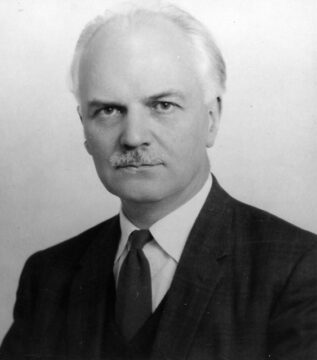
Harding dates this discovery to a walk in the Himalayas when he was thirty-three years old, relating it with a British straightforwardness that even Bertrand Russell might respect. He simply looked down and “to look was enough”:
And what I found was khaki trouserlegs terminating downwards in a pair of brown shoes, khaki sleeves terminating sideways in a pair of pink hands, and a khaki shirtfront terminating upwards in—absolutely nothing whatever! Certainly not in a head.
At this point, the unsympathetic reader is likely to think Harding is playing games or being cute, but he insists he is not. “This is not a literary gambit, a witticism designed to arouse interest at any cost,” he writes. “I mean it in all seriousness. I have no head.”
An architect by trade, Harding first articulated his views on headlessness in his 1952 book The Hierarchy of Heaven and Earth—A New Diagram of Man in the Universe. In 1960 he wrote two articles for The Saturday Evening Post, which had invited him to contribute, but he ended up sending On Having No Head to the London Buddhist Society, which published it in 1961. The book, which goes on to offer a thorough discussion of the principle of “no-self,” is explicitly Buddhist, but in a matter-of-fact, Anglophone register. Its subtitle is “Zen and the Rediscovery of the Obvious.”
Here is a man who claims to have no head—with a “straight face,” I am tempted to say—and claims further that his headlessness is the rediscovery of something obvious. How can the obvious be lost, let alone be rediscovered? This feels like Heidegger by way of Monty Python. (Which, I would argue, is its charm.)
For the ordinary reader, Harding’s claim is intuitive if one lets the book do its work. The first fact of experience is not that I have a body or a head, it is that “a world appears,” as Pollan’s title suggests. And this world appears in a space that I often call my head, but which never itself appears. And it never can. The obvious objection is that I can see my head in a mirror or touch it with my hand, but this does no good, because the experience of my mirror image then appears in the same empty space, the same headless nothingness.
While the unpersuaded reader will find Harding’s point merely fatuous, for the professional scientist (as in an advocate of “scientism”) a stronger response is needed. In his book Waking Up, Sam Harris recounts the ridicule reserved for Harding by Douglas Hofstadter in a 1981 anthology the latter co-edited with arch-eliminativist Daniel Dennett. Hofstadter fumes:
We have here been presented with a charmingly childish and solipsistic view of the human condition. It is something that, at an intellectual level, offends and appalls us: can anyone sincerely entertain such notions without embarrassment?
Harris, who is both a neuroscientist and a perennialist magpie, is amused:
This illustrates a very common phenomenon in scientific and secular circles: We have a contemplative like Harding who, to the eye of anyone familiar with the experience of self-transcendence, has described it in a manner approaching perfect clarity; we also have a scholar like Hofstadter, a celebrated contributor to our modern understanding of the mind, who dismisses him as a child.
I would addthat Hofstadter’s reaction is that of someone protecting their worldview, if not their very career. Because the simple fact is this: Third-person science may at some point account for first-person experience—at least in the manner of looking at our head in a mirror—but first-person experience already is the ground on which third-person science rests.
Harris, by recognizing this, manages to do science without indulging in scientism. And what does that entail? Accepting that science is valid, as far as it goes, but that it is but one possible point of view. This is not to endorse relativism. Third-person science and the hypothesis of a mind-independent reality have been incredibly successful, especially technologically, but in accounting for first-person experience, it may have met both its match and its ground.
In truth, neither system may be able to ultimately account for the other, because they are two different ways of considering the world that appears.
William James observed that “the breach from one mind to another is perhaps the greatest breach in nature,” but the ultimate discontinuity between the third-person, in which we have no consciousness, and the first-, in which we have no head, may be a close second.
Enjoying the content on 3QD? Help keep us going by donating now.