
by Rafaël Newman
 We went to the movies the other day, a rare occurrence. It wasn’t easy to find a film, since in Zurich at the moment most cinemas seem to be showing The Odyssey, which I don’t particularly want to see. This is for idiosyncratic reasons, some private red flags that were unfurled when the trailer evoked my last excruciating experience of a star-studded cinematic makeover, Kenneth Branagh’s 1996 Hamlet. (Anyone who remembers Billy Crystal’s cameo as the First Gravedigger may feel the same way.) My resolve was then strengthened by Emily Wilson’s attack on Nolan’s Odyssey in the London Review of Books, as equivocal and self-serving as that piece is; nor was it tempered by her fellow Odyssey translator (and erudite cineaste) Daniel Mendelsohn’s more even-handed appraisal.
The film we did agree on that evening, Tuner (2025), by the young Canadian director Daniel Roher, is quite marvelous, both for its performances and for its unexpected commentary on two contemporary issues of some urgency. I’ll get to that in a moment, but let me first say another word or two about the Nolan Odyssey, since my chief aversion to it—or at least, to its putative genre—is directly proportional to my admiration for Tuner.
My reluctance to spend time and money on Christopher Nolan’s film was ultimately bolstered by a review of the film’s soundtrack in The Guardian, which forced me to recall my only other viewing of a Nolan production, Oppenheimer. I found that atomic biopic unbearable principally because Nolan seemed unable to allow a single scene of dialogue to go without background music. And so if, as The Guardian’s reviewer reported, this latest film also insists on subjecting its audience to similarly relentless acoustic carpet-bombing, I could in good conscience object.
Now, given my taste for opera, this general distaste of mine for “non-diegetic music”—to the soundtrack grafted onto a movie’s action, audible only to its audience and not to the characters portrayed in it—is admittedly eccentric. After all, particularly in its 19th-century verismo instantiation, opera also famously features a continuous fabric of music, not all of which is “heard” by the protagonists of the work, but which may accompany their more prosaic exchanges as well as their obviously sung arias. So why can’t I enjoy traditional film music?
But my tolerance for opera’s version of non-diegetic or “non-source” music is due precisely to its appearance in opera, a theatrical form which is, like Nietzsche’s tragedy, “born out of the spirit of music,” one in which melody and harmony play a central, constitutive, inextricable role. Film, meanwhile, at least in my understanding of it, is a derivation of theater that instead privileges the visual, as well as (although of course not always: see silent film) the verbal. And thus, when a filmmaker elects to overlay scenes of narrative dialogue with music manifestly unheard by the film’s characters, this smacks to me at worst of an attempt at emotional manipulation, and at best of the filmmaker’s patronizing lack of confidence in the power of the spoken word to command a contemporary audience’s attention.
I am reminded, in the face of egregiously non-diegetic film music, of Albanian literary festivals I have attended, where poets are obliged to recite their work to the accompaniment of music, either performed live onstage or canned, which can make it difficult to concentrate on the text being performed. (This is not meant as a general criticism of such festivals, at which I have been a delighted participant on several occasions, in both Albania itself and, twice, in Kosovo.) Ironically, of course, given Nolan’s primary material for his latest film, this reflex on the part of certain Balkan festival organizers perhaps reflects the same ancient bardic tradition out of which an eastern Mediterranean Homer (or Homers) arose, as explored by Milman Parry and Albert Lord in their pioneering research, and may thus have its roots in a “legitimate” local custom. But what may be (debatably) appropriate, at a literary festival, for the staging of a lone “singer of tales” is today, in a cinematic context, a superfluous, even deleterious gesture toward turning film into a multisensory Gesamtkunstwerk, and in the process muffling its verbal narrative, while also underestimating its audience.
The paragon of the diegetic or source-music soundtrack is surely Nashville (1975), Robert Altman’s densely woven tribute to the Mecca of country music which is also a dystopian meditation on the violence immanent in American politics. Set on the eve of the US bicentennial in 1976, Altman’s film is a complex pastiche of vignettes in which music plays a central narrative role, with its characters composing, performing, or managing the products of a multi-million-dollar industry with ostensibly humble, folksy roots. Nashville is like a musical self-consciously staged by its characters—indeed, by its actors, many of whom wrote the (often broadly, sometimes subtly parodic) songs that their characters perform. Despite its bitterly ironic tone, in a post-Vietnam, post-Watergate America still shaken by the political assassinations of the sixties, Nashville suggests that a popular, grassroots revival may still be possible; and its diegetic soundtrack, which alienates neither its protagonists nor its audience from the music of reality, is an integral part of this message.
Nashville was sui generis; films these days, at least those in wide release, are likelier to feature a non-source soundtrack, a reflection, perhaps, of viewers’ increasing alienation and passivity. So on our recent outing to the movies, our options were limited; but we got lucky. At just 107 minutes, Tuner is the ideal alternative to Nolan’s nearly three-hour-long bombast. It is concise, plot-driven—and best of all, features exclusively source or diegetic music. Indeed, Daniel Roher’s film is centrally about music; in fact, its main protagonist’s exquisite difficulties with music supply the very motor of the plot.
Niki White is a piano tuner, the junior partner in a two-man operation serving wealthy clients in and around Manhattan. He had been destined for a brilliant career as a concert pianist until he was diagnosed with hyperacusis, a painful sensitivity to sound that has left his overly talented eardrums in need of constant protection, and their owner in a state of disappointed anomie. A chance encounter with a crooked security firm provides Niki with a lucrative sideline in safecracking, the proceeds from which he uses to pay his beloved senior partner’s hospital bills, thus retroactively justifying the amoral arrangement. When he then also becomes involved with a young composer, Niki falls afoul of his criminal partners, and the violence he suffers at their hands leads to an ironic dénouement reminiscent of O. Henry’s “Gift of the Magi”.
Throughout the film, viewers are given Niki’s auricular POV (as it were), since the soundtrack is made up of the sonic information that he hears: at work tuning pianos, listening to the radio as he drives from one job to another, subjected to unwanted audio interference in the noise-polluted city or at the hands of malefactors, and attending—without the aid of a stethoscope—to the clicking action of the tumblers in the safe he is currently cracking.
To protect himself from painful noise Niki wears earplugs, even when using his hypersensitive hearing at work; when there is a risk of exposure to extreme volumes, he covers his ears entirely with a bulky pair of ear-defenders. In this getup the young man is indistinguishable from the thousands of others surrounding him on the contemporary Manhattan streets through which he moves—except that, whereas those others are channeling sound into their ears, Niki is keeping it out of his.
Here The Odyssey—the poem—makes an unexpected appearance in Tuner, albeit in reverse. Whereas Odysseus, in the Sirens episode in Book 12, has his crew plug their ears with wax and bind him to the mast so that he alone can hear the beautiful, fatal music, Niki must defend himself against the sonic substance that is lethal to him, but irresistible to his addicted contemporaries. (And in fact, an actual siren—an airhorn—figures in the film’s nearly lethal crisis.)
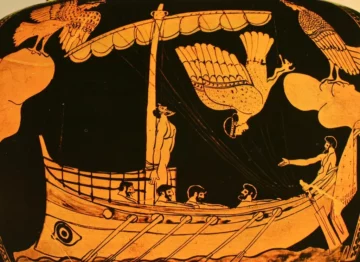
But of course, it is this very vulnerability of his that gives the piano-tuner-with-perfect-pitch-turned-safecracker his superhuman powers: Niki’s hyperacusis is a pharmakon, something that both harms and heals, exalts and annihilates. In this inversion of status, a subtle gesture at the present campaign to destigmatize the concept of “handicap” by replacing it with “difference of ability,” Tuner recalls The Tribe (2014), a Ukrainian crime drama that offers a counterpoint to Nashville, with its entirely diegetic soundtrack, by doing without soundtrack—indeed, without dialogue—entirely. Set among students at a school for the deaf, The Tribe’s characters, all played by deaf actors, communicate exclusively in Ukrainian sign language. There are no subtitles, and the actors rarely present their signing hands frontally to the camera, so that even an audience proficient in their language might struggle to “read” the dialogue—although the action, with its biblical themes of sexual exploitation and violent revenge, is ultimately not hard to follow, even for the illiterate, although they must nevertheless experience the sort of exclusion from society to which the hearing-impaired are routinely subjected in a world that privileges sonic information (and which is growing increasingly, generally illiterate).
Tuner performs a similar reversal in the interest of political protest. In an inversion of Adorno and Horkheimer’s Odyssean parable of aesthetic enjoyment confined to the dominant class while the proletariat, barred from the Siren song of high culture, must labor to sustain their overlord’s privilege, it is Niki who must defend himself from the dangerous technological lure of late capitalism in order to labor, while his ostensibly free compatriots willingly expose themselves to an exploitative system that presents itself as entertainment while colonizing its subjects’ consciousness and extracting their precious data. In this way, Niki resists a present age in which “companies have figured out how to harvest your attention through your eyeballs and your eardrums,” in the words of a contemporary critic of American socio-politics (emphasis supplied).
Tuner thus constitutes a surprisingly urgent exercise in critical theory wrapped in an otherwise conventional crime drama-cum-romcom. And there is another, even more timely critical strand in the film, so delicately woven into its narrative fabric that it has escaped mention in any of the reviews I have seen, but which emerges when read together with Tuner’s central theme of difficulties with hearing. The crooked security company for which Niki works as a safecracker is composed of Israelis, the grizzled foreman Uri and two younger colleagues, Benny and Yoni. The men’s provenance is never explicitly thematized; they are simply referred to as “foreigners”—but their accents, their names, their manners, and the Ivrit they speak among themselves, all of these are Shibboleths that identify them as immigrants from Israel. Niki, meanwhile, is just as evidently a non-Jewish American—although his last name, White, could as easily be an Ellis Island anglicization as a sly ethnic label—but his senior partner, in a hammy performance by Dustin Hoffman, is the very picture of an American-born Jew. And the conflict of interest that ultimately endangers Niki’s love life as well as his actual biological existence arises out of a family heirloom stolen on one of the security company’s heists, a “Holocaust watch” that the security company ultimately relinquishes, less out of piety than for fear of its bad juju.
The Shoah, in this parable, has thus become a pharmakon for the Israelis, something whose power resides in its poison, and vice versa. Israel, whose existence is routinely justified as a response to genocide, is currently under political attack for its prosecution of what looks like a reiteration of the same crime, as well as for its purloining of US taxpayer money to further its own imperial aims under the guise of providing the West with security against the encroachment of barbarians.
Set within the film’s narrative world of hearing, failure to hear, and superhuman hearing, this subplot of Israeli conmen who both covet and disavow the relics of the Holocaust inevitably recalls the Shema, a prayer central to Judaism, recited by Orthodox Jews in their morning and evening services:
Sh’ma Yisroel Adonai Eloheinu Adonai Eḥad
Hear, O Israel: the Lord is our God, the Lord is One.
Uri and his gang of thieving, violent “security guards” augment their “normal” hearing—whose weakness prevents them from cracking the safes in the homes of the wealthy clients they are ostensibly protecting—with Niki’s extraordinary ability: which they in turn use against him, when he refuses to continue as their accomplice, by subjecting him to noise that they can tolerate, but which is torture for him. As allegorical and actual representatives of Yisroel, however—of the legendary Jewish “folk” as well as of the modern state—they are as deaf to the Shema, with its admonition to recall the injunctions handed down in the desert, as are the current political and military leaders of Israel.
The Jewishness of Niki’s morally impeccable partner, as played by Dustin Hoffman, is presumably intended to inoculate Roher, who is himself Jewish, against specious charges of antisemitism. But it also reminds us that Judaism, whether religious or cultural, is not monolithic—and that the actions of the state claiming to represent Jews worldwide may in fact constitute a betrayal of the ethical principles on which Judaism is founded: Thou shalt not steal. Thou shalt not kill. And, in particular, as enacted in the Abraham and Isaac episode: Thou shalt not kill children.