
by Eric Schenck
 2025 was a good year for books.
One of my New Year’s Resolutions in 2025 was to read a classic novel each month of the year. And I’m happy to say I succeeded.
While I’ve learned quite a bit from these books, one of my “meta goals” with the resolution was to become a better writer. And I think I have. Below you will see each of the 12 books I read, and the main lesson that each book taught me.
Want to get better at writing? Curious what some of the best novels ever written can teach you about it? This article is for you.
A few notes before I start:
- I tried to include a mix of nationalities, genders, and “era written” in my picks. Are these the 12 best books of all time? I don’t know. But they are a good mix. You might disagree. And that’s alright.
- My interpretation of these books (and the lessons I took from them) are mine alone.
- I’ve tried not to include any spoilers.
With that out of the way-
Let’s get better at writing.
…
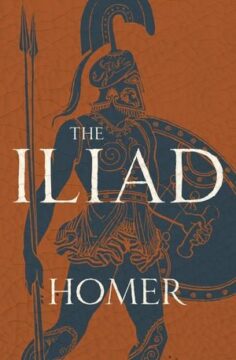
January 2025: The Iliad by Homer
The lesson: zoom in on people’s lives.
Before I started my first classic novel of 2025, I read the translator’s introduction. And there was a line that stood out to me:
The Iliad is not a story of glory, but one of grief.
This confused me. All I knew about The Iliad was that it was one of those “epic stories of conquest.” Battles. Violence. The quest for honor.
Sounds like glory to me.
But after reading it, I realized that the translator was completely right. So much death and destruction. So much sadness. And the way Homer shows it? By zooming in on a man before he dies, and telling you about:
- Who his parents are
- Where he comes from
- What he did for work and leisure
- His wife and children that are waiting for him at home
Real tragedy is not just “a bunch of people died”, but the story of each person as an individual. The men in The Iliad have families. They have interests. They have pasts. And its only by getting closer to them before their demise that we fully realize it.
February 2025: Pride And Prejudice by Jane Austen
The lesson: allow dialogue to do the heavy lifting.
About half of Pride And Prejudice is just people talking to each other. In the hands of a less capable writer, this could start dragging fast. But Austen wasn’t just any writer.
Elizabeth was charming and quick-witted to the point of genius. Mr. Collins was pompous and annoying. Mr. Darcy? Even if misunderstood, a bit reserved and cruel in his humor (Elizabeth is “tolerable, but not handsome enough to tempt me.”) Savage.
The impressive thing is that you learn all this through dialogue. Austen builds tension, humor, and character not with what she says about her characters, but with what they say. There is a massive difference here. And it makes for an interesting story.
I’ll admit: as a writer, good dialogue can be difficult to pull off. But speech is often so central to the pacing of a story, and adds flavor to your world in a way that description alone can’t. It pays to get better at it.
March 2025: Madame Bovary by Gustave Flaubert
The lesson: tell stories with tiny details.
Boy. Where do I even start with this one?
Full transparency: this is one of the best books I’ve ever read. And certainly my favorite of these twelve. When I look back on these classic novels, some are bad, some are OK, some are great…
And then there is Madame Bovary.
Rarely, if ever, do you read a book where every word feels important. Like if you ripped a page out of the book at random, it would cease to be the same story. But that’s what Madame Bovary was for me.
I could write a million (biased) words about why this is one of the best novels that’s ever been given to us. But where’s the fun in that? So I will just say this:
It struck me how a giant world was created with the smallest things.
Flaubert gives you tiny specifics. Your brain creates the rest. From the wedding scene and the description of the guests, to the somewhat dull habits of Charles, to the desires that start to consume Emma, this is a story told in details.
Read it. And then try to do the same in your own writing.
April 2025: The Grapes Of Wrath by John Steinbeck
The lesson: when things get really bad have something good happen, and when things get really good have something bad happen.
The Grapes Of Wrath is about the Joad family trying to make it to (and in) California. The story truly is a roller coaster. Just when you think things can’t get any worse – the family catches a break. And just when you think life is starting to look up – that break gets snatched away from them.
This is a great rule to follow if you want to keep people hooked. It’s almost like watching a car crash happen, but getting a nice palate cleanser every couple of pages.
People have no idea what’s going to happen next. Because of that, they pay attention.
May 2025: Lolita by Vladimir Nabokov
The lesson: don’t be afraid to be taboo.
Alright. This book is weird. But I’d be lying if I didn’t admit that it’s also quite compelling. Good? For me, not really. But compelling indeed.
In case you don’t know, Lolita is essentially about a grown man developing an obsession with an underage girl. Conveniently, she is also his step-daughter. They eventually start having sex. Things just get stranger (and more uncomfortable) from there.
Disclaimer: you kind of hate yourself for reading this book. But you really can’t look away.
Lolita made me squirm, and is probably one of the most “taboo” books I’ve ever read. But that’s kind of the point.
June 2025: Beloved by Toni Morrison
The lesson: make obviously unreal things real.
Beloved in a nutshell: the main character kills her baby daughter while escaping from slavery because that’s better than sending her back to the plantation. Years later, that daughter comes back to haunt her (AKA, live with her and her other daughter in their house).
The entire time I didn’t quite know what to make of this. Was the daughter literally back from the dead? Was she a particularly weird ghost? Or was this some kind of extended metaphor? Honestly, I didn’t really know.
But maybe that was Morrison’s point all along. The more you describe something as real and true, the more real it becomes. Obvious point here, but it’s worth thinking about.
Is grief a sad memory from your past? Or is it your daughter coming back in the flesh to live with you and mess up your life in the process?
Did I like Beloved? Not exactly. It felt a bit scattered, and the whole “daughter is kind of dead, kind of alive” thing started to get confusing. But the more you think about it, the more meaningful it all starts to feel.
July 2025: The Count Of Monte Cristo by Alexandre Dumas
The lesson: appeal to the base instincts and emotions of your readers.
Have you ever felt your stomach turn when something good happens to someone evil? Or how about that sick satisfaction with a long-overdue implosion of the bad guy?
These are the more “animalistic” emotions that we have. A good story shouldn’t ignore them.
The Count of Monte Cristo is a tale of revenge. Edmond Dantes gets thrown in jail for a crime he didn’t commit. He wastes away for years, but finally escapes (how he escapes alone is worth reading the book). By the time Edmond gets around to “righting wrongs”, you are practically begging for it.
And when he does? There’s a kind of deep satisfaction that comes with it, because our base emotions are being satisfied.
But here’s the ingenious part of the writing: that revenge takes awhile. Edmond escapes prison, disappears for a decade while his enemies flourish, and only then starts to work his ultimate revenge. Edmond working through the entire list of those that wronged him is really just Dumas delaying that ultimate satisfaction that he knows his (animalistic) readers want.
August 2025: The Bell Jar by Sylvia Plath
The lesson: show somebody’s gradual downfall.
I can’t think of many things that are as sickly compelling as watching somebody implode. Maybe this is why we watch trash television (my favorite is 90 Day Fiance).
And so it goes with The Bell Jar. What starts as a cynical but charming account of a college-aged woman, quickly gets self-deprecating, until the central question becomes a dark one:
Will she or will she not kill herself?
Is this a bit depressing? Most definitely. (I learned after reading The Bell Jar that Sylvia Plath actually did commit suicide in real life, which now makes perfect sense.)
But depressing can be compelling. And even if suicide is not a central theme in your writing, people falling apart can be addictive to read.
Which brings me to my next novel…
September 2025: Things Fall Apart by China Achebe
The lesson: make your characters multi-dimensional.
Here was my experience reading Things Fall Apart: at the beginning, I hated the main character. Okonkwo was an overbearing husband and father. He beat his family, worked them to the bone, clearly had favorites, and embodied some cruel and twisted version of masculinity.
By the ending? I didn’t necessarily like him. But I did understand him.
His entire way of life was disappearing right in front of him. Okonkwo’s homeland had banished him, he wasn’t as strong as he used to be, and even the very root of his existence (his tribe’s religion) was changing.
Was he an asshole? Definitely. But by understanding him as a victim of things out of his control, he suddenly becomes if not loveable – at least interesting.
Something that oddly comes to my mind is Breaking Bad. I was slow to watch the show, but I finally checked out the entire series in 2025. It was amazing. But what I found so ingenious was the evolution that the main characters went through.
Walter White started loveable, charming, and innocent. If you’ve seen the show, you know he certainly doesn’t end that way.
Here’s something to remember: a predictable character is a flat character. All bad people have moments of good. And all great people can be terrible. Things Fall Apart is a reminder to make your characters more complex. That’s compelling – because it’s how real people are.
October 2025: Don Quixote by Miguel de Cervantes
The lesson: describe people through their opposites.
To me, Don Quixote was not a book about adventure. Or honor. Or the stories of people that Don Quixote came across. Or even an insufferable old man with some severe mental problems pretending to be a knight and smacking anybody on the head that disagreed with him.
(Maybe that sentence gives you an idea of what I thought about this book.)
For me, this 1,200-page novel is simply an extended conversation between Don Quixote and Sancho Panza, his sidekick. This is what I will remember from this book. And thank God for that!
Don Quixote was one of my least favorite classics. I found the Don distasteful, and there were too many side stories that didn’t really drive the plot (although check out the December book for my thoughts on side stories that work).
But one thing I could appreciate? The juxtaposition that Cervantes created with Don Quixote and Sancho Panza. Was Don Quixote crazy? Most definitely. But the tragedy, humor, and ultimate futility of his “adventures” are really only put on display with the general confusion of Sancho Panza.
We only fully understand Don Quixote through Sancho Panza. Likewise, we only fully understand Sancho Panza through Don Quixote. That in it’s own right is something cool to see.
(I won’t compare the combo to Lennie and George from Of Mice And Men, but there is definitely some overlap.)
November 2025: The Picture Of Dorian Gray by Oscar Wilde
The lesson: go deep into a character’s ego.
Dorian Gray is obsessed with his looks. So obsessed, in fact, that he has an existential crisis about a picture that is painted of him. He is terrified as he gets older that people will compare his real aging body to the eternally young and beautiful painting of it.
His solution? Hide it away in an attic so nobody can get to it.
(As it turns out, this is not really how it all turns out.)
While this book didn’t quite do it for me, it’s a masterclass in crafting an example of self-obsession. Because it’s not just his looks. Dorian also lives a life of hedonism, and really only tolerates people dedicated to pleasing him.
Dorian is one of the more unlikeable characters from my year of classic novels. But still: next time I want to create a character with a gargantuan ego, he is certainly an example to look to.
December 2025: Anna Karenina by Leo Tolstoy
The lesson: never be afraid to take your reader down some side stories.
The central story of Anna Karenina is the love affair between Anna and Alexey Vronksy. But Tolstoy is brilliant enough to turn the novel into a true adventure. And he does that not by focusing exclusively on Anna and Vronsky, but by building an entire world around them.
His main method of doing that? What I call “side stories.” Here are just a few of them:
- Kitty’s initial infatuation with Vronksy (which she eventually overcomes, mirroring and contrasting Anna’s own story)
- Stepan’s serial infidelity (and the double standards of society which this represents)
- Levin’s obsession with agriculture (reflecting Tolstoy’s larger moral vision of the importance of peasants)
- Anna’s husband’s bureaucratic career (and his rigidity that deepens the tragedy of Anna’s cheating)
Anna Karenina is widely considered one of the best books ever written, and I agree. But I don’t think it’s just because of the central story. Rather, it’s because Tolstoy is smart enough to know that there is an entire world surrounding that story, and that they all contribute in their own way to telling it.
…
Reading these classic novels taught me a lot. But perhaps more than anything, they showed me how to craft a good story. And for that I’m forever grateful.
Take these lessons and use them as you see fit. I wish you a good year of writing (and reading) in 2026!
Enjoying the content on 3QD? Help keep us going by donating now.