
by Jochen Szangolies

It was while watching the unveiling video of 1X Technologies’ home robot assistant Neo that I was hit with a revelation of a fundamental truth of our current moment in time: the world is a lot as if my ten year old sci-fi nerd self had had many of his wishes fulfilled, but by a cursed monkey’s paw. You want robots? You got it, but they’re creepy, kind of useless, probably spying on you and nevertheless will displace human workers from their jobs. You want AI? You got it, but it frequently makes stuff up, traps people in parasocial relationships while isolating them from the real world, floods the social sphere with misinformation and bad art, threatens the environment and funnels power to the people least fit to wield it.
A widespread narrative is that today, we have it better than at any previous time in human history: we live longer, are healthier and wealthier, better educated, have access to more and better nutrition, and are less likely to die from war or through homicide than ever. At the same time, however, we are faced with widespread ecosystem collapse, having just blown past the first catastrophic climate tipping point leading to near-certain die-off of coral reefs around the planet, the 1.5°C-goal may already have been eclipsed with global warming hitting a possible inflection point, depression and other mental health issues are on the rise even in the richest countries, income inequality is increasing as the richest snatch up an ever bigger piece of the pie, and wildlife populations have declined by a staggering 73% in the past 50 years. As a result, we seem to have very wildly divergent perceptions of our current reality: in one, we’re essentially living better than kings in the past; while in the other, we’re about to drive off a cliff with the wholesale destruction of our living environment.
So what gives? Who’s right—the Pinkerish peddlers of Panglossian optimism or the Monbiotesque negative Nancies decrying the despoliations of the neoliberal order? And how can there be two so vastly contradictory narratives, each of which claims a mountain of charts, data, and analysis in its favor?
One answer is simple bias. The supporters of the ever-onward narrative point to a negativity bias that leads us to weigh negative news more highly than success stories, leading to the former selling better and outcompeting the latter on the market of attention. (Of course, the irony that this is an instance of market forces favoring the—allegedly—worse alternative is rarely noted.) On the other hand, the doom-and-gloom purveyors typically see a vested interest with their opposites’ emphasis on measures of progress. (The charts above are courtesy of Human Progress, which is a part of the conservative Cato Institute, which is aligned with a libertarian agenda.)
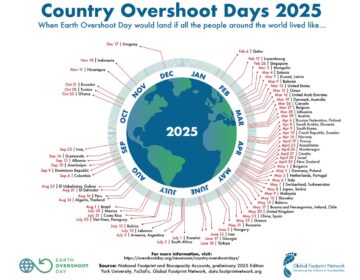
This line of reasoning is not without merit. On the subject of being wealthier, which is typically presented as support for the current style of (mostly) free-market capitalism in a ‘the rising tide lifts all boats’-fashion, one might note that a lot of the wealth of the countries of the Global North in fact has its roots in colonial exploitation, with Britain extracting in excess of 60 trillion dollars from India alone according to a recent Oxfam report. (How about the increase in wealth among the countries of the Global South? Well, ever since overt predatory colonialism dropped out of favor, local economies have indeed rallied in some places. But crediting that to the ‘rising tide’ is a bit like crediting the bully with increasing the standard of nutrition among his victims for taking only half their lunch money.) Additionally, we are simply living beyond our means, using up 1.7 times the resources Earth produces per year (five times if everyone were to live a life according to US standards). Would we call somebody who finances his lavish lifestyle by accruing increasing amounts of debt ‘wealthy’?
However, I believe there is something else at work, as well. I thus propose the Monkey’s Paw effect: whenever neoliberal capitalism grants you a wish, it does so in the way you’d least like to see it granted. That way, defenders of the current economic order can point to all the wishes that have indeed been fulfilled—health, wealth, education, instant access to cat pictures across the globe—and be perfectly justified in doing so; all the while the rest of us watches the world being pushed ever further into overlapping crises.
A Light Bulb Moment
Capitalism is an unparalleled engine of creation. As Marx and Engels put it in the Manifesto of the Communist Party:
[The bourgeoisie] has accomplished wonders far surpassing Egyptian pyramids, Roman aqueducts, and Gothic cathedrals; it has conducted expeditions that put in the shade all former Exoduses of nations and crusades. […] The bourgeoisie, during its rule of scarce one hundred years, has created more massive and more colossal productive forces than have all preceding generations together. Subjection of Nature’s forces to man, machinery, application of chemistry to industry and agriculture, steam-navigation, railways, electric telegraphs, clearing of whole continents for cultivation, canalisation of rivers, whole populations conjured out of the ground – what earlier century had even a presentiment that such productive forces slumbered in the lap of social labour?
Since their time, of course, wonders have been heaped onto wonders. But time and again, these wonders have come at a cost, and today we live in a world where the accrued debt threatens to come due. Capitalism markets itself as a perpetual motion machine, conjuring continuous growth from airy nothing. But as with all such demonstrations, a more careful glance reveals the hidden battery, the heat bath where excess entropy is dumped: we find them in the exploitation of resources, the despoliation of the environment, and the abuse of cheap labor. Like a living thing resists entropy by expelling it into the environment, it accomplishes something seemingly miraculous only by carefully projecting its internal contradictions outward. But thermodynamics can be fooled only so long.

The dominant imperative of the capitalist mode of production is growth, and as with trees in the forest, whatever fails to grow fast enough risks being cut off from vital sunlight. This generates a motive to maximize profits, or else, be outcompeted. In turn, there is an incentive to do the bare minimum, deliver the minimal viable product, put minimal effort into compliance with regulations, show minimal care for anything else. This makes the Monkey’s Paw effect a statistical likelihood: since there are many more ways a wish can go wrong than there are for it to have no negative consequences, but there is no incentive to care about such ‘externalities’, each new miracle arrives with a high probability of breaking something else down the line.
Indeed, to ensure profit, it can be beneficial to deliberately lower the quality of the product. An instructive case here is that of the Phoebus cartel, an association of light bulb manufacturers like Osram, General Electric, and Philips, which conspired in the 1920s and 30s to actively reduce the working lifespan of light bulbs to 1,000 hours (from 2,500)—manufacturers of bulbs with a higher lifespan would be fined by the cartel. You want safe and abundant light in your home? Sure, but you’ll have to keep giving us money to replace prematurely burnt out bulbs.
Enshittifying The Best Possible World
The Panglossian defender of the neoliberal order might point to the fact that there is nothing necessary about the Monkey’s Paw effect. Perhaps, they might say, we could get it right eventually, by using the (undeniable) wish-granting powers of capitalism in a wise and foresighted way. And that may indeed be a possibility. However, so far, nobody has seen how to formulate a wish such as to be save from all ill consequences.
The profit motive is not well aligned with the goal of delivering the best possible product. There are many more ways of reducing costs and improving margins while delivering slightly subpar goods. The gradient of maximizing profit thus typically points away from an improved product—at least, once a need has been met. Moreover, once we customers have found a new need fulfilled, we are very reluctant to renege on this and give it up again: we tend to get locked in to the new offering. This is part of the danger of Pinkerish narratives: the idea that we should be satisfied with the way our needs are met yields an easy excuse for not looking for better alternatives. What could we, after all, improve in this best of all possible worlds shaped by the invisible hand of the market?
This is the core of what author and internet activist Cory Doctorow calls enshittification: the continuous degradation of a product or service to maximize profit in such a way that the marginal perceived cost of forgoing it exceeds the pain caused by the degradation itself. Facebook is a canonical example: after you have connected to a substantial portion of your friends on there—especially people you might otherwise have a hard time staying in touch with—your needs become, at best, a distant secondary goal. Facebook, secure in the knowledge that you’re locked into their platform, can thus start to pander to new customers, selling targeted ads to businesses that make use of its vast knowledge base on its users habits, preferences, and goals. Once advertising on Facebook then has become a virtual necessity in turn, businesses are locked in, as well—and the third phase of enshittification starts, where the platform increases the profit margins for itself by squeezing the business customers it has attracted.
Moving away becomes a collective action problem, and furthermore needs a mutually agreed alternative—something that needs to exist in the first place. But like the Phoebus cartel penalizing deviators, modern platforms make sure to either buy or drive out of business competitors before they can become a threat—indeed, service providers such as Uber may operate at a loss for a considerable time just to ensure outbidding others, to then go and squeeze their customers once they have become the single viable option. Taken together, this leads to a ‘best of the worst’ dynamic: Google’s search results suck, because it’s more profitable to have you searching more often, and thus, be shown more ads and sponsored links. But you’re still not going to just Bing it.
Misaligned Incentives And Ethical Tunnel Vision
Another finger on the Monkey’s Paw curls: you can have a service that connects you instantly with friends (and complete strangers) all around the world, but we’ll also show you ads for lots of crap you don’t need and stories designed to keep you engaged by pumping your adrenal glands for all they’re worth. But hold on, it’s not out of tricks yet.
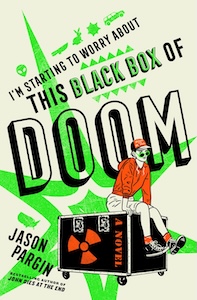
A mainstay of Pinkerish narratives is the steady drum of progress: more people today have it better than ever, and their numbers are slated only to grow. One may quibble with the details, and doubt the sustainability of the process driving this, but on the face of it, there is considerable truth here. As Jason Pargin, author of the horror/comedy series John Dies at the End, puts it in his (eminently readable, and often cuttingly insightful) recent novel I’m Starting to Worry About This Black Box of Doom:
[Y]our entire life span has been spent in a literal reverse apocalypse. I’m talking about billions of people who lived in what you would consider post-collapse conditions have had those conditions remedied, gaining roofs and lights and safety. A human’s chances of dying from famine or natural disasters are as low as they’ve ever been, ever, in the history of the species. It’s been nothing short of a worldwide miracle that makes everything Jesus supposedly did in the Bible look like party tricks. And people like you and me and others in our demographic describe that state of affairs as the world being ‘on fire.’
As far as the numbers are concerned, this is simply a factual account: around the world, populations have experienced what we would consider a ‘reverse apocalypse’ in the above sense. And to be sure, much of that is an unmitigated good. But there are two issues here: a fallacious baseline, and a parochial vision of what ‘the good life’ should look like.
Consider for the first the often-heard claim that it’s worth to suffer a few billionaires because of the jobs, and by extension wealth, they create. Amazon, for instance, has around one and a half million employees globally. Shouldn’t we thank Jeff Bezos for keeping that many mouths fed, even if his workers occasionally have to suffer the minor indignity of having to pee into a bottle to not exceed allocated pause times?
This implicitly assumes that the proper point of comparison is one where those jobs would simply not exist. But they were not conjured into existence by Bezos’ dark magic. Ultimately, like all jobs, it is the fulfillment of a certain need that justifies their existence. Bezos just managed to position himself between the need and its fulfillment, siphoning off a hefty excess for himself by playing the Monkey’s Paw’s min-maxing game. The right point of comparison would thus be a setting in which the same needs exist: could we truly not imagine a world in which they are met in a way that does not create vast amounts for the already wealthy few, while marginalizing the many? A world in which, perhaps, all the bookshops driven out of business by Amazon might still exist, and even be empowered in their role as local fulfillment of those very needs?
Likewise, the moral of such ‘reverse apocalypses’ is not obviously ‘therefore, capitalism works’. A proper point of comparison is not a world in which those people still live in abject misery. We may imagine a possible world in which hunger and disease and poverty are relieved without at the same time creating conditions of mass inequality and widespread natural habitat destruction. It is the discrepancy between our world and that one, not ignorance of the boons of progress, that drives doomish discourse.
The second issue is a little more subtle, but may be all the more pernicious for it. In characterizing an increase in housing, electrification, stable incomes etc. as a ‘reverse apocalypse’, we’re implicitly endorsing a certain value system. That’s not in and of itself a bad thing: I happen to think those are, by and large, good values. But still we should be weary of hasty universalization: these values are themselves appropriate to a culture which is already steeped in their widespread adoption.
Its implicit assumption is that life without the amenities of modern civilization is of necessity ‘nasty, brutish, and short’, in Hobbes’ phrasing. But modern anthropology has long painted a more nuanced picture of lifestyles associated with ‘pre-modern’ humanity, such as hunter-gatherers. In the 1960s, the Canadian anthropologist Richard Lee studied the Ju/’hoansi, a then still largely nomadic society in Nambia. He came to the conclusion that “the Ju/’hoansi not only managed to feed themselves better than many in the industrialized world, but that they did so on the basis of only around two hours foraging a day, and cheerfully spent the rest of their time on more leisurely pursuits such as napping, playing games, and making art”, eventually christening them “the original affluent society”.
While a more nuanced picture has since emerged, as detailed by James Suzman in a 2017 book titled Affluence without Abundance based on 25 years of field studies, we should still be weary of generalizing our values across distinct ways of living, and assuming that every move closer to them necessarily means progress. Indeed, modernity has moved in on the Ju/’hoansi, with mixed results. In his more recent book Work: A Deep History, from the Stone Age to the Age of Robots, Suzman speaks of their ‘often traumatic encounter with a relentlessly expanding global economy’, calling it an ‘often brutal story’. It is dubious whether they would see themselves as living through a ‘reverse apocalypse’.
We have become proficient at optimizing narrow measures for wealth, health, and well-being. But such measures are not universal goods: indeed, they may diverge widely from more nebulous judgments of a life well lived. This is what I like to call the proxy fallacy: finding a measure usually correlated with something more difficult to quantify, and then try and increase it. But, per Goodhart’s law, any measure that becomes a target ceased to be a good measure. Good research is often highly cited; but trying to increase citation counts does not necessarily produce better research. (See also this essay on the topic.)
Again we see that we must take greater care in formulating our wishes. Does being wealthier than ever before really ensure a greater quality of life? How are we doing for human connection? Do we find more meaning in our daily activities? Does our increased connectivity really foster better social bonds? Does living longer mean living better?
The Flatness Of Met Needs

Now say you want out of the game. Unnerved with the steady worsening of this best of all possible worlds, you reject the dictum for growth with the simple rallying cry of ‘enough’. There is, after all, enough for all to go around and live lives of dignity. This, too, the Monkey’s Paw readily grants you. And its final finger curls: you can wear your jeans until they tear in a gesture of rejection of the steady churn of money and commodity. In fact, we’ll make it easy for you and sell them already ripped!
The commodification of any critique is the greatest trick of late-stage capitalism, its ‘postmodern’ condition in Fredric Jameson’s insightful analysis, rejecting modernist narratives of progress and substance in favor of form and pastiche. Here, the recent ‘scandal’ around comedians performing at the Riyadh comedy festival is a good case study: despite their often strongly presented pro-free speech and anti-authoritarian leanings, comedians including Jimmy Carr, Bill Burr, Dave Chapelle, Louis C.K. and Aziz Ansari accepted a hefty salary to perform at a show widely considered to be an effort by the repressive Saudi regime to ‘whitewash’ its image in the global public eye.
But those who see a discrepancy between the proffered views of these performers and their accepting this gig are still mired in an outdated paradigm: that when we pay to see their performance, what we get is a window onto their private opinions, that we’re seeing something with substance and depth, presented in a cutting and entertaining manner. But in reality, it is all entertainment, all surface (the ‘flatness’ of a postmodern aesthetic): the critique offered is itself the product, and its purveyors do what one does with one’s products—sell it to the highest bidder. The form of their critique is just that of the particular market niche they find themselves occupying, and it is this form that is selected for, rather than any substantial, deep-rooted conviction. Critique of the market is itself a marketable product.
It is tempting, here, to return to the initial thermodynamic metaphor. Recall the popular gloss of its celebrated three laws: you can’t win, you can’t break even, and you can’t get out of the game. But the important part here is that the laws of neoliberal capitalism aren’t natural laws: we have decided on a particular way the world works; we can decide on a different one. However, doing so will require, first and foremost, a clear-eyed look at the current systems features—and its faults.
Enjoying the content on 3QD? Help keep us going by donating now.