
by Ashutosh Jogalekar
In every generation, young people find causes to champion. Today’s students rally against wars in foreign lands, the environmental record of large companies, the entanglement of Silicon Valley with the Pentagon and China, or the human rights policies of nations like China. These are important causes. In a free country like the United States, protest is not only permitted but celebrated as part of our civic DNA. In fact in a democracy it’s essential: one only has to think of how many petitions and protests were undertaken by women suffragists, by the temperance and the labor movements and by abolitionists to bring about change.
The question is never whether one has the right to protest. The question is how to protest well.
In recent years, I have watched demonstrations take forms that seem more interested in confrontation than persuasion: blocking officials and and other civilians from entering buildings, occupying offices, shouting down speakers, harassing bystanders on their way to work, even destroying property. These actions may satisfy the passions of the moment, but they rarely strengthen the cause. More often they alienate potential allies, harden the opposition, and give critics an excuse to dismiss the substance of the protest altogether. The tragedy is that the cause itself may be just, but the manner of advocacy makes it harder, not easier, for others to listen.
A historical parallel makes the case well.
Eighty years ago, a group of scientists faced a question that dwarfed in scale any political controversy of our time. They were the physicists and chemists of the Manhattan Project, who had created the first atomic bombs. As the war in Europe ended in May 1945, they knew that Japan was nearing defeat. They also knew that the weapon they had built could annihilate entire cities in a single stroke. Most importantly, they knew that because the road to the bomb depended on knowledge of science and engineering, what the United States could do almost any other country could, given enough time and resources.
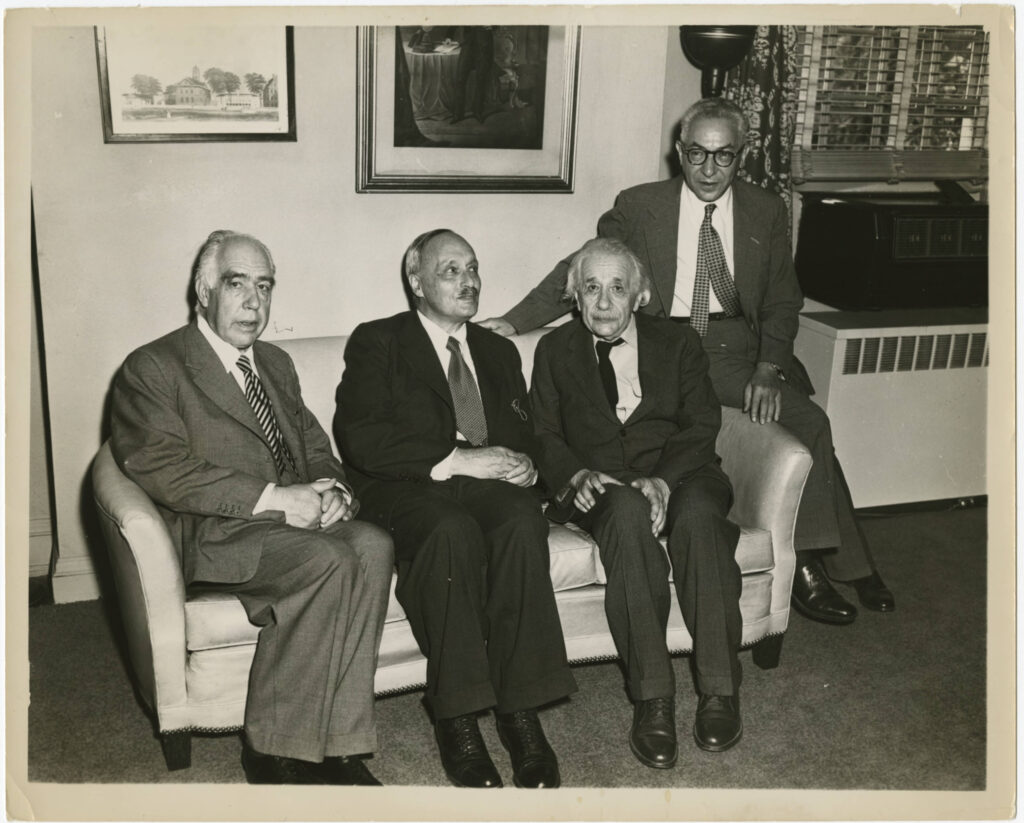
Some of these scientists felt a profound moral obligation to speak out. The most famous expression of this came in the Franck Report, named for the German-born physicist James Franck. The report was penned by Franck and six other scientists, among them Glenn Seaborg and Leo Szilard. These were men of distinction and accomplishment. Franck was a Nobelist for confirming a key prediction of quantum theory. Szilard had written a letter to FDR with his friend, Albert Einstein, warning that the Germans could get a bomb; the letter had started the country down the road to the Manhattan Project. Seaborg was the co-discoverer of plutonium.
The Franck Report’s signatories advised against direct use of the bomb. Instead, it recommended a demonstration – an explosion on an uninhabited island, witnessed by international observers. Such a demonstration, they believed, might deter future wars while avoiding the slaughter of hundreds of thousands of civilians. The report accurately foresaw what came to be called mutually assured destruction and the need for some form of international control. It recognized the moral high ground that the United States would occupy if it were not the first to use this terrible weapon.
Another group of scientists, led again by Szilard, circulated a petition that gathered seventy signatures, mostly from colleagues at the Chicago Metallurgical Laboratory. It asked President Truman to make public the terms of surrender demanded of Japan and to give the Japanese government an opportunity to respond before using the bomb. It warned of opening the door to an age of devastation on an unimaginable scale if atomic weapons were used without restraint. Both this petition and the Franck Report fundamentally argued for openness, for a leveling between the scientists and the politicians and the politicians and the American public.
Neither effort succeeded; Hiroshima and Nagasaki were bombed. But the protests registered by these scientists mattered. As Szilard wrote to Oppenheimer, even if they did not work, their main function was to bear witness, to inform future generations that a minority of voices had proposed a different course. They entered the historical record as evidence that not all the scientists were silent or thought alike. They shaped the later debate about international control of nuclear weapons and helped build momentum toward arms control in the Cold War.
And there was another consequence: by protesting with dignity, the scientists preserved their influence. They were taken seriously because their words were framed with clarity, respect, and intellectual rigor. Leo Szilard, though often a gadfly, became a kind of patron saint of arms control, a persistent advocate for common-sense international cooperation in the nuclear age. Glenn Seaborg, for his part, went on to win the Nobel Prize in Chemistry for the discovery of plutonium and other transuranium elements, and later served as the chairman of the Atomic Energy Commission and a distinguished advisor to Presidents Kennedy and Johnson. His counsel shaped the Partial Test Ban Treaty of 1963 that prohibited nuclear testing in the atmosphere, underwater and in space. The very men who had spoken up against the hasty use of the bomb were trusted afterward to help guide America’s nuclear future. Their credibility endured because their protest had been principled, serious, and respectful.
The Franck Report and the Szilard petition impart twin lessons for today’s student protestors and tech company employees. The first lesson is that protest is never futile. Even if it does not work, it leaves a record in history that inspires future protestors. When everyone is saying “Yes” and yours is the sole voice saying “No”, it stands out for all time.Today when I feel inspired by Szilard or Franck, or by John Lewis and Rosa Parks for that matter, it is not mainly because their protests worked but simply because they had the courage to protest.
The other, equally important lesson is that the way you protest determines whether your voice carries or is drowned in the noise. The Manhattan Project scientists were not timid. They risked their reputations and their careers by speaking up at a moment when national security concerns loomed large and when the majority of opinion seemed overwhelmingly in favor of using the bomb. But they also understood that persuasion requires dignity. Dignified protest is a description that also encapsulates Rosa Parks or John Lewis.
By contrast, a protest that antagonizes bystanders often weakens its own cause. It is difficult to imagine Seaborg or Franck or Szilard blocking Truman’s path to the White House or General Leslie Groves’s path to the Pentagon and being taken seriously. When ordinary people are delayed by road blockades, when offices are forcibly occupied, when speech is met not with argument but with noise, the moral appeal is lost. The protest ceases to be an invitation to consider injustice; it becomes an inconvenience or a threat. History looks less kindly upon those kinds of protests. The dignified form of protests also recognizes their overarching goal, which is to invite others in rather than shut them out. Protests are strongest when they embody the very values they seek to promote: openness, fairness, and respect.
Especially in today’s age of social media and sensationalist news, it is easy to mistake disruption for impact. A protest that makes headlines may feel like a success. But a cause is not advanced by publicity alone. A movement that gains attention for its unruliness may give the illusion of progress while actually setting the movement back. In the long run, the credibility of a cause depends less on how loudly it is shouted and more on how persuasively it is argued. The scientists of 1945 understood this. They were neither silent nor reckless. They stood in the uncomfortable middle ground of conscientious protest, knowing that they might not be heeded, but also knowing that the dignity of their approach gave their words lasting weight.
There is little doubt that a free society depends on protest. Without it, grievances fester unspoken, and injustice goes unchallenged. But protest is not only a right; it is also a craft. It must be practiced with care, with a sense of proportion, and with respect for those whose minds one seeks to change. If today’s protesters wish to honor their causes, they might lift a page from the scientists of the Manhattan Project. Speak truth to power, but do so in a way that compels respect rather than resentment. Otherwise, the danger is not only that the protest will fail. The greater danger is that the cause itself will be diminished by the very manner in which it is defended.