
 by David J. Lobina
Just as Donald Trump fires the commissioner of the Bureau of Labor [sic] Statistics because he didn’t like the data they reported, I am reminded of two things: Michael Gove’s infamous quote about experts during the lead up to the so-called Brexit referendum, when he was Lord Chancellor in the UK government, and my own attitude regarding experts.[i]
‘I think the people of this country have had enough of experts with organisations with acronyms saying that they know what is best and getting it consistently wrong’, said Gove then, and as in the case of Trump, the remark was in the spirit of dismissing data and analyses that didn’t fit his policy positions. In this case, what Gove did not like was the prediction that the UK would be worse off outside of the European Union – a rare win for economists, in fact, as it happens.
Indeed, economists tend to be many people’s idea of a bad expert, including mine, though not because (some) economists fail so often with their forecasts, but on account of how conceptually shaky I have always found economic modelling in general. This brings me to my own attitude towards experts, which is basically an anarchist take on the issue. In short: show me the details of the conclusion for this or that claim and I will attempt to understand the logic of it to the best of my ability in order to then make up my own mind about it.[ii]
The devil is in the details, of course. When it comes to climate change, for instance, the science is too foreign and the details too complex for me to come up with a reasonable conclusion, and in this case at least I have to go with the scientific consensus of 97% of the field – namely, in case anyone is unaware, that the Earth has consistently been warming up since the Industrial Revolution, that the rate of this warming-up is unprecedented, and that this is mostly the result of human activity (in particular, the burning of fossil fuels; see here).
This is not to say that some orbiting issues around the consensus on climate change cannot be evaluated by lay people. It doesn’t take an expert to realise that most of the scepticism around whether climate change really is human-induced tends to come from sources and firms that have a stake in the fossil fuel industry, even if many of these firms have known about climate change and their own contribution to it since the 1950s, with quite accurate forecasts to boot (see here and here). The very last point has been particular significant for me: it isn’t the case that the actors most responsible for climate change didn’t know about it!
That being so, it just so happens that the general public considerably underestimates the significance of the consensus on climate change, and thus something is clearly going amiss with the messaging. I’m writing from the south of Europe at the moment, where it is around 38 degrees outside (centigrade, of course!), and for most people this is just a normal summer – and some don’t really understand all the talk about climate change. I do not find this particularly surprising. I myself remember growing up in Italy and Spain and these temperatures seemed normal then too. The issue now is that we are actually seeing record high temperatures and record fires too, and this is information that is readily available and indeed is being repeated again and again in the news, but to little effect, it seems.
Still, I myself find some of the messaging troubling. It is one thing to conclude, as many scientists have done, that climate change makes extreme weather events more likely; it is another question whether every extreme weather event is the result of climate change. In this vein, I couldn’t help noticing that in The Guardian, for instance, most articles about extreme weather events tend to include a kind of disclaimer somewhere, almost an afterthought, where it is stated that “such climate events are exacerbated by the climate crisis” (or a similar phrasing), and in a way this is to confuse deduction with induction (don’t ask!). I certainly recognise the sentiment behind such messaging, though I am not sure regular journalistic pieces should actually include such afterthoughts as a matter of fact, and I can see that most people don’t react well to some of this kind of thing, which can be perceived as a bit preachy – people in general are keener to see experts make their case, to have complex data and analyses explained to them, than they are to have journalists drill opinions into them in non-opinion pieces, with little actual argument.[iii]
In the case of other topics, one can become more engaged with the details. I have written quite a bit on these pages (and in an academic paper) about fascism and orbiting issues, even though I’m clearly not an expert, but in this case the analyses from experts are more accessible – and, more importantly, one can certainly judge the merits of various positions.[iv]
One can also easily tell experts apart and act accordingly: Tim Snyder and Jason Stanley are certainly not experts on fascism, whatever the US press says about them (or what they say about themselves; this particular interview of Stanley is especially embarrassing), and in fact they have done quite a bit of damage to the popular discussion of Trumpism and the like, with their crude analogies to historical fascism and their sweeping generalisations (this novelist’s recent take on current events is even cruder); Emilio Gentile, on the other hand, is clearly an expert, but sadly he is hardly ever consulted, especially outside of Italy.
As I intimated last time around, though, the current craze around fascism is mostly an American phenomenon and it hasn’t travelled all that well outside of US political discourse. The Guardian, nominally a UK newspaper, is an exception here, but I think it is fair to say that ever since they branched out into the US, they have been more susceptible to US political currents than used to be the case. The greatest disconnect from a European perspective is probably the frontpage of the 50th anniversary issue of the Boston Review, just released, and titled The Responsibility of Intellectuals in the Age of Fascism and Genocide, which one could be forgiven for believing that this is a reissue from the 1940s or 50s (the contents of the issue are much better than the unfortunate title).[v]
I won’t repeat why I believe that fascism is a historical phenomenon that has long ceased to be relevant to the understanding of current politics and that Trumpism is a modern American phenomenon that bears little resemblance to the Fascism and Nazism of the 1920-40s (but see here and here, where I explain why I capitalise the word fascism in this case).
But let me be clear that my discussion so far is not really about expert credentials per se, though these are important, as I shall explain below. Indeed, I’m not criticising people like Jason Stanley because of his lack of credentials; the problem with Stanley’s writings on fascism is that they are the result of poor scholarship and bad analyses. The problem, that is, is what Stanley has said about fascism, not his credentials. This brings me to the anarchist take on experts and expertise.
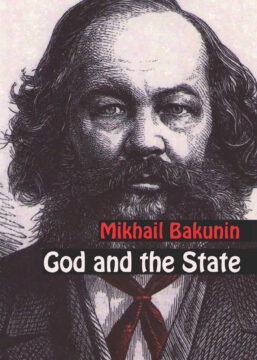
The right place to start here is a classic quote from Mikhail Bakunin’s God and the State, an unfinished manuscript, where he discusses the pernicious role of authority in general for the anarchist, and in particular the authority of experts such as bootmakers:
Does it follow that I reject all authority? [the discussion hitherto has centred around the anarchist rejection of authority – DJL] Far from me such a thought. In the matter of boots, I refer to the authority of the bootmaker; concerning houses, canals, or railroads, I consult that of the architect or the engineer. For such or such special knowledge I apply to such or such a savant. But I allow neither the bootmaker nor the architect nor savant to impose his authority upon me. I listen to them freely and with all the respect merited by their intelligence, their character, their knowledge, reserving always my incontestable right of criticism and censure.
One’s own ‘incontestable right of criticism and censure’; a phrase I wish I had come up with, and one that is close to what I have in mind in this post. In the manuscript, Bakunin draws a distinction between artificial authority (that of the State, for instance) and the natural authority of the experts, emphasises the temporary acquiescence to someone’s natural authority, and outlines the lengths one needs to go to discern what the best advice is (for instance, by visiting various experts, remaining sceptical of claims of special expertise, etc.).
All well taken and accepted, and whilst it is certainly important to seek out the opinions of experts in many cases – experts as epistemic rather than natural authorities (see this relevant discussion by Brian Leiter) – I do want to stress that the main point for me revolves around the attempt to judge the contents of what one is being told with no reference to where the opinion is coming from. Or said otherwise, to judge what one is being told on the merits of the contents of the message and nothing more.[vi]
Easier said than done, of course, and it may just be a natural feature of human cognition to weave out opinions and claims on the basis of where they come from. Here I want to bring in Noam Chomsky once more, given that he’s discussed these very issues in many places, and he has quoted Bakunin’s well-known passage himself on occasion. Here’s the Chom talking about his own academic credentials, from an interview from 1983:
I do not have the usual professional credentials in any field, and my own work has ranged fairly widely. Some years ago, for example, I did some work in mathematical linguistics and automata theory, and occasionally gave invited lectures at mathematics or engineering colloquia. No one would have dreamed of challenging my credentials to speak on these topics – which were zero, as everyone knew; that would have been laughable. The participants were concerned with what I had to say, not my right to say it. But when I speak, say, about international affairs, I’m constantly challenged to present the credentials that authorize me to enter this august arena.
Chomsky clearly exaggerates on various fronts here, starting with his lack of credentials, and in particular his lack of credentials to give lectures on mathematical linguistics and automata theory, considering that in the 1950s and 60s he published work that is now regarded as foundational (indeed, this would have been the very reason for the invitations). Still, the attitude Chomsky is describing is the correct and proper one and in fact the work he published at the time would have been accepted on the basis of the content of his papers, and not of any credentials. Indeed, this is how (it is hoped) academic publications work – not a matter of your affiliation, but of the quality of the work submitted (I insist: this is the hope).
Much like Chomsky, I’m not advocating for an anti-intellectual position of any kind here. There are limits in terms of what one can say and do regarding a specific topic. The UK, where I live, is a curious case, for amateurism is explicitly supported and accepted, which I have always found curious.
Take the House of Commons, composed of the actual people voted in during a general election (one Member of Parliament per constituency)[vii]. Given that a cabinet government is typically populated by MPs only, a Prime Minister is to select from the stock of his elected MPs, and the result is often curious to say the least. Consider Michael Gove once more. A journalist by training, over the years he has been in charge of the ministries of Education; Justice; Environment, Food, and Rural Affairs; Intergovernmental Relations; and Housing.
Gove is not an expert in any of these fields, and that’s just a bit too much to take. The joke in Private Eye used to be that Gove was a journalist, and thus he knew about everything!*
* Or: ‘No ideas and the ability to express, that’s a journalist’, as Karl Kraus said.
[i] He was what? The Minister of Justice in England and Wales, basically. The Brits love these quirky but also basically obsolete titles; the bigger problem lies in equally obsolete but manifestly corrupt and undemocratic institutions such as the House of Lords, the whole honours system (Sir this, Lord that, Dame the other), and the reigning royal family of Saxe-Coburg and Gotha (the House of WindsorÔ since 1917, to hide the fact that they are German in origin).
[ii] On economists’ models, I personally find these far removed from real conditions (they are too abstract, that is) to be regarded as proper social science, and moreover oftentimes the results and conclusions are presented as if they were exclusively scientific and had no ideological basis – vide any issue of The Economist, which has been confusing ideology for analysis since 1843.
[iii] There may be the usual distrust some people feel towards journalists and government sources at play here (and, if Gove is to be believed, sometimes towards experts as well), but I also think that many people are not particularly open to changing their lives significantly because of climate change – or, at least, people do not want climate change to become an individual problem when it is clearly a general, societal one; every little helps, as some self-serving British advertisement has it, but climate change requires an industrial solution.
[iv] Another such topic is the contemporary discussion around biological sex and gender. Here too it is easy to discern that there is such a thing as biological sex, that the consensus in evolutionary biology is that it is binary (male and female, depending on gamete size and mobility), and that it is not reducible to gender identity. I will eventually write a full post about this, as mentioned before.
[v] This debate between two French historians as to whether Trumpism is a form of fascism, one fully educated in French, one partly educated in the US, is also illuminating in this respect.
[vi] I once confronted the headteacher of my daughter’s school after a rather negative meeting between parents and the headteacher, as parents’ questions and comments had been routinely dismissed, and when I told him that he needed to answer each question on its own merits, he said he didn’t have to and asked me if I had ever been a headteacher. Not helpful, and precisely the opposite of my take.
[vii] In the UK, one votes for the representative of your area in a general election, and not, technically speaking, for the Prime Minister per se; in addition, the first-past voting system means that many votes don’t count at all in such a system.
***
Enjoying the content on 3QD? Help keep us going by donating now.