
by Ashutosh Jogalekar
After World War II ended, there began a running debate between American scientists and the American government about how to properly wield the fearsome nuclear power that America had discovered and unleashed. The government believed that this power could be hoarded and used by the U.S. to play geopolitical games in which they held all the cards. The scientists argued that the power that the government thought it possessed exclusively depended on discovering the basic laws of physics, chemistry and engineering, laws that were accessible to scientists in any country.
The scientists were right. Estimates of when the Soviet Union would get nuclear weapons ranged from three to twenty years, revealing a gulf between the scientists and the political and military establishments, with the latter betting on the longer timelines. As it turned out, the Soviets detonated their first bomb in August 1949, a little more than four years after the bombs fell on Hiroshima and Nagasaki. In 1955 they detonated their first thermonuclear bomb. While the Soviet fission bomb was aided by espionage, the discovery of the critical Teller-Ulam mechanism that makes thermonuclear weapons possible was an independent discovery, attesting to the ubiquity of scientific know-how. Britain, China and other countries followed with their own atomic and thermonuclear tests. The Soviet event marked the beginning of an eternal struggle between science and politics in which the government tried to use science for their national interests and the scientists, while sympathetic to this goal, tried to use their expertise to tell the government what was wishful thinking and what wasn’t.
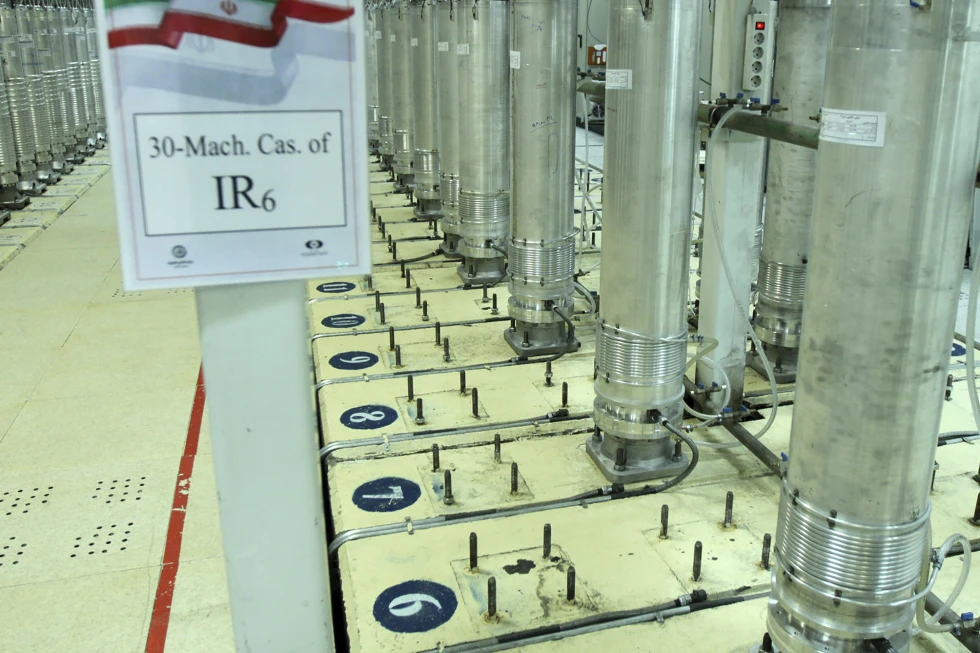
That debate continues to this day and ignores a fundamental truth about science and weaponry that is so deep, fundamental and simple that it seems to be easily misunderstood and misused. That truth is the sheer inevitability of science in enabling the construction of weapons of mass destruction. The latest example of this misunderstanding is the U.S. strike on Iran’s nuclear facilities on June 21, 2025. The military used 14 “bunker busters” (Massive Ordnance Penetrators) to destroy Iran’s nuclear facilities at Natanz, Fordow and Isfahan. These bombs are designed to destroy targets that are 200 feet deep and were targeted at Iran’s uranium enrichment facilities.The enrichment facilities contain centrifuges that can enrich uranium to both reactor grade (4%) and weapons grade (90%) levels.
The U.S. and Israeli government hope that the strikes will disable Iran’s nuclear program or at least set it back ruinously. Immediately after the bombing a debate erupted, with each side interpreting the results according to their political convenience and beliefs. Estimates for how long the strikes set the program back ranged from a few months (albeit with low confidence) to two years. Exact assessments will be difficult, both because of the inherent uncertainty of assessing this kind of damage from the outside and because predictably, Iran has now denied the IAEA access to its sites. There are other major uncertainties, most notably regarding the 400 kilograms of 60% enriched uranium that Iran possesses, which could very likely have been moved in advance of the strikes or dispersed across many sites. There are also other sites, including a new one that Iran was building before the bombings.
But all of this should not obscure the fundamental fact at the heart of the Iranian nuclear program, which is that if Iran wants to make a bomb, it will make a bomb. Centrifuge technology is old and proven, and Iran has used centrifuges for uranium enrichment for decades. The 2009 Stuxnet attack that disabled the centrifuges, the recent bombings and targeted assassinations are deterrents and setbacks, but they won’t destroy Iran’s nuclear capabilities because the basic know-how to build a bomb is a matter of science and technology, not of wishful political thinking. Perhaps Iran can be prevented from having a bomb for a year, two years or five, but eventually, while the capability can be stalled by political and military action, it cannot be stopped. As Richard Rhodes memorably put it in “The Making of the Atomic Bomb”, “Nuclear fission and thermonuclear fusion are not acts of Parliament; they are levers embedded deeply in the physical world, discovered because it was possible to discover them, beyond the power of men to patent or to hoard.”
Many of the questions that underlie the important political decisions about Iran and nuclear weapons are scientific and technological, not political. The question of how many centrifuges of a certain kind can enrich how many kilograms of uranium in how much time is scientific. Secretary of State Marco Rubio – one of the few officials to offer concrete details about the impact of the strikes – surmised that Iran’s program has been set back by “years” because the strikes destroyed a conversion plant that can reduce uranium hexafluoride – the compound of uranium that is used in the centrifuges to enrich the element in uranium-235 – to uranium metal. But the question of how long it would take to uranium hexafluoride to enough uranium for a few bombs is again a scientific and technological question and not a political one, and as it turns out and contrary to Rubio’s opinion, this process which was first developed for the Manhattan Project is not particularly hard. Politicians often mistake scientific questions as political ones, and that mistake often hobbles their judgment and decisions.
The advent of nuclear weapons made it clear that some political decisions simply cannot be made in a fair, unbiased manner without scientific input. The scientists who worked on the Manhattan Project and who tried to stop the postwar arms race from developing understood this fundamental truth about the scientific basis of political action. They understood that any country with competent scientists and resources could build these weapons if they wanted to, not just because of the inevitability of the laws of science and technology but also because in the grand scale of things, nuclear weapons are cheap. They are cheap financially in relation to the cost of building and maintaining huge armies, and they are cheap politically because they enable poor countries like Iran and North Korea to wield an effective deterrent against rich and powerful countries like the United States and Israel. That asymmetry is why military action would likely make a vulnerable country even more determined to get nuclear weapons, as it is now feared it will make both Iran and North Korea. Iran still possesses competent scientists, and centrifuge technology is cheap relative to many other technologies for uranium enrichment. They might take a few months or a year to assemble new centrifuges, but given that they already possess 60% enriched uranium and because of the way the energy economics of enrichment works, enriching further to 90% will be cheaper and easier than initial enrichment from 4% to 60%.
One reason why the current posture toward Iran’s nuclear capability is frustrating is because we had a deal, the 2015 JCPOA, that actually froze Iran’s nuclear enrichment and allowed one of the strictest regimes of monitoring and inspection in arms control history. While the deal was not perfect since it had sunset clauses, those would not have kicked in fully before 15 years. U.S withdrawal from the deal in 2018 gave Iran a convenient excuse to enrich to 60%. The bombing has now created new uncertainty about whether Iran will postpone further enrichment, blend the uranium down to reactor-grade or forgo its uranium stocks completely until 2028.
The reason why deals and treaties are better than military action is not because of some idealistic pacifist outlook; it’s simply because deals are smarter and pragmatic and almost always work better than military action. The best thing about the 2015 deal was that it gave the world open access to Iran’s nuclear facilities, with the IAEA certifying Iran’s compliance with the deal in multiple reports that were endorsed by countries like the U.S. and China. Unsurprisingly, the best way to make an adversary mistrust you and close off communication channels, as Iran is in the process of doing, is to bomb them. Even if they now come to the negotiating table, they might be engaged in the same negotiations that we had with them in 2015.
Not just scientists but a few far-seeing politicians also understood that because you cannot keep countries from possessing nuclear weapons and because there is no real defense against them, negotiation and diplomacy are the second-best tools against nuclear proliferation (complete abolition is the best tool). American presidents of both parties including JFK, Lyndon Johnson, Richard Nixon, Ronald Reagan, George H. W. Bush and Barack Obama negotiated treaties with the Soviet Union that collectively drastically reduced the nuclear arsenals of the two countries and reduced the risk of global conflict. They appreciated that even having a few thousand warheads and hundreds of metric tons of fissile material around raises the risk of a nuclear war or a terrorist attack from accident, miscalculation or misunderstanding. Unfortunately, leaders in the U.S. and the Soviet more recently have rolled back these practical measures, finding false security in nuclear supremacy.
What the politicians understood, the scientists understood even better. During the war, the Danish physicist Niels Bohr tried desperately to meet with FDR and Churchill and convince them to share the fact of the existence of the bomb with the Soviet Union. Churchill dismissed him as a communist sympathizer or worse. But Bohr saw before anyone else that you cannot keep fundamental science and technology secret. The 1946 Acheson-Lilienthal proposal, largely written by Robert Oppenheimer, proposed exactly what deals like the JCPOA accomplished: to open up a country’s nuclear facilities to an international body to ensure that it could not develop nuclear weapons in secret. But that kind of proposal will only truly work when we don’t apply it selectively only to countries we don’t like. To have a chance of truly reducing the risk from global nuclear conflict, the entire world needs to be opened up. Of course, this opening up needs to be balanced with economic and national security interests, but erring toward being open will always be better than erring toward being closed if we want to reduce the risk of mutual annihilation. Otherwise we will be caught up in an endless loop of diplomacy and military action, trying to prevent nations from acquiring technology and weapons whose acquisition is guaranteed by the laws of physics and engineering. The process will speed up and slow down and speed up again, and the risk of a nuclear accident will hang over our heads like the proverbial sword of Damocles.
That is why, using Iran as the latest example, it is more important than ever to assert the powerful early lessons of the nuclear age, lessons that were intimately understood by the first generation of nuclear scientists and statesmen who came of age during World War II and the Cold War. These lessons, as hard as they might be to implement because of geopolitical complexities, are simple enough to be written down on a napkin: Making nuclear bombs is a function of science, not politics; you can stall but not stop a country that wants to develop these weapons; a nuclear war can never be won and therefore must never be fought; and to truly prevent countries from acquiring and using these weapons, you must open the system up as much as possible. Niels Bohr who understood the reality of these weapons better than anyone else once uttered these truths in one simple, profound statement: “We are in a completely new situation that cannot be resolved by war.”