
by Mark Harvey
All the territorial possessions of all the political establishments in the earth–including America, of course–consist of pilferings from other people’s wash. —Mark Twain, Following the Equator
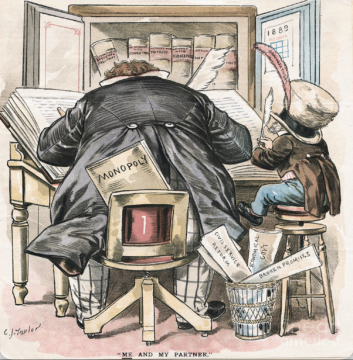
There’s a wonderful story from Paul Bunyan Swings His Ax about how a heat wave in Iowa made all the field corn pop until the whole state was covered in ten feet of popcorn. Then a terrific wind blew all the popcorn over to Kansas, where cattle mistook it for snow and froze to death. Somehow that story captures the absurd myths about the West that drew settlers into a dry forsaken land. Myths about the West and how it was “won” abound and some of them were meant for the movies before movies existed. But much of western mythology has to do with square-jawed cowboys fighting for what’s right, and one day meeting a bonneted school mistress transplanted from the east. After a gunfight or two defending the lass’s honor, a golden life on the prairie begins.
The real history of the West is far more colorful and much less savory. It has a lot of graft, fraudulent misrepresentation, speculative puffery, and truly clever schemes to outwit the government and the gullible. If cinema truly captured the Wild West, it would be less John Ford and more Steven Soderberg. Where to begin?
The tools of western conquest in the cinematic version are six shooters, covered wagons, and fleet horses. There was some of that, but much of what moved thousands of people to the western states and made some men rich and others desperate had more to do with stuffy laws written in Washington, The General Land Office, survey chains, and crooked speculators. Start with the Homestead Act of 1862.
The Homestead Act promised a simple bargain: any adult citizen could claim 160 acres of public land, and after living on it for five years the property was theirs. In a progressive twist for the time, the law allowed women and Black Americans to claim land alongside white men. The act had stalled in Congress for years because Southern legislators feared it would create new abolitionist states and upset the balance of power in the Senate. It finally passed only after the South seceded from the Union. Read more »