
by Gary Borjesson

Last year my wife and I went to the circus when it came to town. I expected I’d enjoy it, but I was shocked by how much I enjoyed it. I was thrilled and inspired by the whole intimate spectacle, under a tent with a high top, facing the central ring and our fellow spectators across the way. It was moving in some of the same ways a great musical or theatrical performance is. But the circus had something extra.
I left the tent looking forward to next year, when The Flynn Creek Circus would be back in town. This year we went again, and loved it. At the risk of breaking the spell, of disenchanting the marvel by speaking of it, I want to say a few words about what makes a circus great. The kind folks at the Flynn Creek Circus have given me permission to publish photos from their show. (Visit their website if you want to see more, or find out where you can see them perform.)
1. History
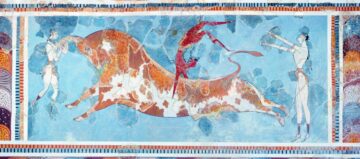
Years ago my wife and I visited Knossos on the island of Crete. This was the center of the ancient Minoan civilization. (Settlement there began as early as 7000 BCE.) Among the ruins were frescos that once adorned the walls of the palace. One depicted a circus-like scene, in which two youths surrounded a bull while a third launched themselves over it. At the time it struck me as extraordinary that this image should have endured so long in so prominent a place. Looking back, I imagine it endured because it is humanly compelling and instantly relatable, depicting as it does a kind of glorious play, as daring as it was virtuosic.
In Egypt at Beni Hasan, 4000-year-old tomb paintings show women juggling. In the middle ages, jugglers, minstrels, tightrope walkers, and animal handlers traveled to different fairs and market towns. They were widely admired, but lived on the often seamy margins—an association that has followed circuses ever since. The sometimes grotesque and transgressive spectacles made the shows that much more riveting. I’m reminded of Robertson Davies’ absorbing novel, World of Wonders, where a young boy runs away to join the “World of Wonders,” a traveling carnival that is at once seedy, grotesque, and wondrous. Read more »