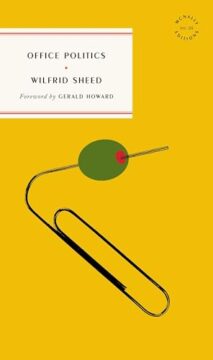
Dwight Garner in the New York Times:
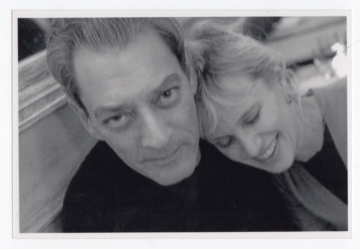 She was blond and he was dark-haired; they were almost photonegatives. She looked as if she’d been in Bergman films. He was, visually, America’s Camus — wary, heavy-lidded, wreathed in cigarillo smoke, an intellectual turned out in black Levi’s and sheepskin-lined leather jackets.
Hustvedt and Auster’s double-barreled impact could prompt strange reactions. Before their wedding dinner, Hustvedt writes, a poet friend of Paul’s lifted a glass and said, “To the bride and groom, two people so good-looking I’d like to slice their faces with a razor.” Hustvedt wasn’t surprised when he slowly faded from their lives.
More here.
Enjoying the content on 3QD? Help keep us going by donating now.
 In 1931, the Austrian logician Kurt Gödel pulled off arguably one of the most stunning intellectual achievements in history.
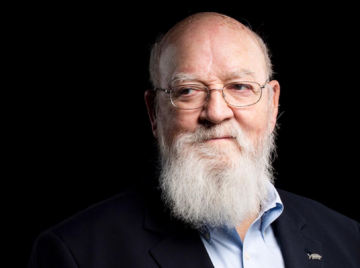 Complementarily to his multiple drafts theory, Daniel Dennett proposed that the self — that character we refer to when we say “I” — is a “narrative centre of gravity”. Just as the centre of gravity of an object is a useful fiction (it is not an atom of the object, but a virtual point that allows physical predictions to be made), the self is a useful fiction that the brain produces to organize conduct and communication.
 A
A O
O It was just over three decades ago that the Hall of Fame third baseman Wade Boggs did something remarkable, possibly unmatched in baseball history. For much of his career, Boggs’s routine for bouncing back after games — his preferred postgame recovery modality, in the parlance of modern sports science — was pounding cans of Miller Lite. And according to Boggs, during one flight from Boston to Los Angeles in 1994 (or possibly 1992 or 1989; the dates are understandably fuzzy) he drank 73 beers.
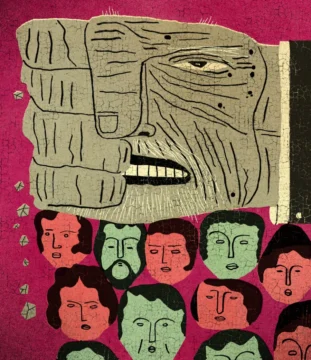
 For decades, prediction market optimists — and I count myself among them — have argued that once we build better markets and increase the supply of bettors, accuracy will improve, and we’ll all be able to benefit from a new level of societal foresight.
 I now believe we are living in the time that AI research will be end-to-end automated. If that happens, we will cross a Rubicon into a nearly-impossible-to-forecast future. More on this later.
 I
I T
T A young woman arrives unannounced at the unresponsive door of a Tokyo apartment belonging to an older relative. She sits down outside and waits. Like the girl herself, the viewer is unsure of her welcome. We know the apartment’s inhabitant to be solitary, taciturn, a person who struggles to communicate and make connections with others. How will she be received? And how will this development impact the protagonists as we follow them through a slice of their lives in Japan’s largest city? These are the identical plot points of two recent films that share a setting but in many other respects could not be more different. To explore how depictions of the lived experience of a range of city spaces are used to drive plot and develop characterization, I use the architectural concept of “habitation” to think beyond buildings and characters’ relationships to those structures, analyzing instead how inhabited spaces incite plot developments and bring characters together, in a trope that I call “habitation as storytelling device.”
 Is testosterone the next miracle drug? That seemed to be the