
Enjoying the content on 3QD? Help keep us going by donating now.
Category: Recommended Reading
Why, Exactly, Orbán Lost: Hungary offers big lessons for those hoping to defeat populism—including the Democrats
Charles Lane at Persuasion:
 After 16 years in power, Hungarian Prime Minister Viktor Orbán has suffered a decisive election defeat, one so overwhelming and undeniable that the self-styled tribune of “illiberal” politics conceded to his opponents—the Tisza party led by 45-year-old Péter Magyar—with no effort to resist or overturn the results.
Orbán’s defeat is also a setback for the two foreign leaders who had backed him: President Trump had made support for right-wing populists in Europe a key element of his national security strategy and dispatched Vice President Vance to campaign for Orbán days before the election. Russian President Vladimir Putin, meanwhile, had depended on Orbán to defend his interests within the European Union, most notably by vetoing a pending 90 billion euro aid package for Ukraine. Now Putin’s lost his lawyer in Brussels.
It is a watershed moment that opens new possibilities for a more united European front against both Trump and Putin—as well as a fresh start for Hungarians themselves after 16 years of increasingly corrupt and overbearing Orbán rule.
More here.
Enjoying the content on 3QD? Help keep us going by donating now.
How George Washington Weaponized Smallpox Inoculation
Matt Kaplan in Undark Magazine:
 It was June of 1775 and the British army was in control of Boston. George Washington had only recently become the commander of the colonial army and, while he had not fought at Bunker Hill, he arrived there shortly thereafter. He and his soldiers hid in the woodlands around the city watching and waiting for an opportunity to take Boston back. There were several problems with that plan, though. First, Washington did not have the weapons on hand for a siege. Second, even if the weapons had been available, they wouldn’t have done him much good since he didn’t have enough troops to actually lay siege. Yet both of these problems paled in comparison to the third. There was a smallpox outbreak in the city.
More here.
Enjoying the content on 3QD? Help keep us going by donating now.
Inside the labs where chemists engineer luxury perfumes
April Long in Scientific American:
 On the 11th floor of a nondescript office building on 57th street in Manhattan, pipette-wielding technicians in white lab coats hunch over glass vials and digital scales, carefully concocting perfumes. This is the Experimental Lab at Givaudan, one of the world’s largest fragrance manufacturers, and the work these technicians are doing is as meticulous as that of engineers layering silicon on a microchip. Their job is to produce trial batches of perfumers’ scent formulas—typically as many as 250 a day—which will be evaluated, tweaked and made again until one version is finalized. The walls are lined with thousands of jars and containers, each holding a unique aromatic substance—and in the room beyond sit another 50,000 trial vials, stacked on shelves that seem to recede into infinity.
“You come in, and it just looks scary,” says Givaudan vice president perfumer Stephen Nilsen. “But each bottle is a secret, a mystery. There’s a story in each one.” For thousands of years perfume ingredients were simply distilled from flowers or extracted from plants. Then, in 1868, the first organic scent molecules were synthesized, opening a panorama of new olfactory possibilities. The market may celebrate a perfumer’s artistry, but innovation in the luxury-fragrance industry is ultimately driven by the chemists whose experiments bring new aroma molecules into existence.
More here.
Enjoying the content on 3QD? Help keep us going by donating now.
Thursday Poem
Let Them Not Say
Let them not say: we did not see it.
We saw.
Let them not say: we did not hear it.
We heard.
Let them not say: they did not taste it.
We ate, we trembled.
Let them not say : it was not spoken, not written.
We spoke,
we witnessed with voices and hands.
Let them not say: they did nothing.
We did not-enough.
Let them say, as they must say something:
A kerosene beauty.
It burned.
Let them say we warmed ourselves by it,
read by its light, praised,
and it burned.
by Jane Hirshfield
from Poets.Org
Enjoying the content on 3QD? Help keep us going by donating now.
Wednesday, April 15, 2026
Are we the conflicted heirs of the world according to Francis Bacon?
Ed Simon at The Hedgehog Review:
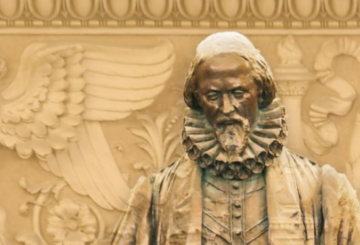 This April marks the quadricentenary of Bacon’s death, the man who, though his own scientific innovations were middling, was arguably the philosopher most responsible for championing the empirical technocracy that our world has largely become. “I open and lay out a new and certain path for the mind to proceed in,” Bacon wrote in his 1620 Novum Organum, “starting directly from the simple sensuous perception.” Bacon’s method was inductive, the careful tabulation of observation and experiment, the methodical calculation of possibility and the invention of models to describe nature, the models themselves ever-contingent and shifting based on the reception of new and better data.
Science (though that word wouldn’t be used in this way yet) had certainly existed before that English philosopher, but his genius lay in his ability to properly describe just how its methods worked.
More here.
Enjoying the content on 3QD? Help keep us going by donating now.
Anthropic’s warning about its own product is bigger than other AI problems we’ve been worrying about
Anita Chabria at the Los Angeles Times:
 The San Francisco technology company Anthrophic announced Tuesday that it wasn’t releasing a new version of its Claude AI super-brain — because it is so powerful that it has the ability to hack into just about any computer system, no matter how secure, in a matter of days if not hours.
“The fallout — for economies, public safety, and national security — could be severe,” Anthropic said in a statement.
AI worry isn’t anything new. We are worried about artificial intelligence taking jobs, about toys that seem too real to our kids, about mass surveillance of our every move. But Anthropic’s warning about its own product is bigger than any of those singular problems. It is a call from inside the house that disaster is hiding right around the corner. That sounds awfully dire and overblown, I know. But here’s the thing — it’s not.
More here.
Enjoying the content on 3QD? Help keep us going by donating now.
Malala Yousafzai: What I Got Wrong About Changing the World
Enjoying the content on 3QD? Help keep us going by donating now.
Venomous Snakes Represent a Serious Public Health Problem, Scientists Are Biting Back
Ari Daniel at Smithsonian Magazine:
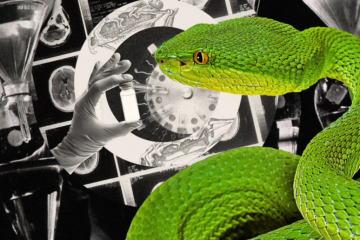 Snakes bite five million people each year, killing some 125,000 and disfiguring or blinding three times as many. Antivenoms aren’t always readily available where the problematic snakes live. They also can be deadly themselves, as they could induce life-threatening allergic reactions.
Within the last couple years, however, researchers have made substantial progress toward creating safer antivenoms, reducing the chance of anaphylaxis. Some dream of a universal remedy, but venom is a complex brew, and many of its most dangerous components remain unknown to science.
More here.
Enjoying the content on 3QD? Help keep us going by donating now.
Death Before Parade
Enjoying the content on 3QD? Help keep us going by donating now.
William H. Gass Newly Reissued
Greg Cwik at the LARB:
 WILLIAM H. GASS, the portly pontiff of English prose, felt for literature an intense ardor that imbues his audacious fiction and his studious, poetic criticism with almost frightening virtuosity—labyrinthine syntax, a vast vocabulary comprising many arcane words, brilliance achieved through obsessive revisions, every sentence worked and reworked over and over. And yet, as obvious as his love for the written word was, he famously said, in a 1977 interview, “I write because I hate.” How does someone who writes out of hate write so beautifully? He makes you wonder what hate really means and begin to appreciate the profound creative power, and beauty, of that emotion we consider so ugly.
No subject evaded Gass’s lucid gaze. His astute and eccentric ideas explore 19th-century Christianity, the color blue, Jorge Luis Borges, Malcolm Lowry, his own corpulence, his own underwhelming penis, the structure of the sentence, the architecture of the sentence, the soul of the sentence, the American Midwest, Nazis, time, memory and its myriad illusions, and Botticelli. His prose has a rarefied and unsavory intelligence, tinctured with a donnish, esoteric wisdom that mingles gracefully, ecstatically, with the lowbrow and the vulgar.
more here.
Enjoying the content on 3QD? Help keep us going by donating now.
Israel is losing US support – even among Republicans
Enjoying the content on 3QD? Help keep us going by donating now.
The air is full of DNA — here’s what scientists are using it for
Aisling Irwin in Nature:
 Ryan Kelly is in awe of what floats invisibly in the air.
“It is completely mind-blowing,” says Kelly, who studies environmental DNA (eDNA) at the University of Washington in Seattle. “We are absolutely surrounded by information in the form of DNA and RNA, at all times.”
Scientists have long pulled DNA from water and soil, but they have only just started to see the air as a source of genetic information. Over the past decade or so, researchers have been learning how to measure airborne DNA, study its abundance and use it to put together a picture of an ecosystem’s inhabitants and health. Airborne DNA is being used to monitor individual species, and being trialled as a way to detect invasive species or attacks with biological weapons. It is also being tested as a way to judge the success of conservation efforts.
More here.
Enjoying the content on 3QD? Help keep us going by donating now.
Lithuania’s Greatest Poet
Michael Casper at Poetry Magazine:
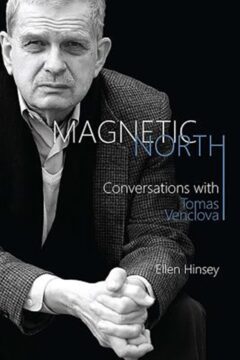 When Joseph Brodsky left the Soviet Union for good in June 1972, he flew to Austria, where his first order of business was meeting W.H. Auden at his summer house in the small town of Kirchstetten. Brodsky arrived bearing a bottle of trauktinė, a strong, sweet Lithuanian liquor presented to him for the occasion by Tomas Venclova, a Lithuanian poet and translator of both Auden and Brodsky. The gift was more than a way to win over the hard-drinking Auden, who, Brodsky reported, downed his first martini at 7:30 in the morning. It was a symbol of international and interlingual fraternity, and a reminder of the high level of poetic life that persisted behind the Iron Curtain. A few years later, Venclova himself would go into exile after being blacklisted for his dissident activities.
A cerebral poet with a meditative sensibility and meticulous attention to form, Venclova belongs more naturally on the shelf next to his acquaintances Brodsky, Czesław Miłosz, and Anna Akhmatova than among other Lithuanian poets. Rejecting both official Soviet aesthetics and the pastoral folkways typical of Lithuanian verse, he draws much of his inspiration from the classical tradition.
more here.
Enjoying the content on 3QD? Help keep us going by donating now.
Wednesday Poem
The Great Hall of Mirrors
Once I wrote, “On the mule of time
we sit backwards. It carries us forward
anyway, though things appear a little askew.”
Now I walk into a room with a hundred
rearview mirrors from lost and forgotten
vehicles and think, “At my age, I’m on no mule,
but in a fast car, on a freeway, exceeding
the speed limit,” and think again, “Even the sun
is eight minutes ago,” and think again,
“Consciousness is a rearview mirror.
Whatever you see has been already.”
by Nils Peterson
from from All the Marvelous Stuff,
book by Nils.
Enjoying the content on 3QD? Help keep us going by donating now.
Tuesday, April 14, 2026
Jed Perl: “Morgan Meis’s Three Paintings Trilogy is the most exciting new writing about the visual arts to appear in a generation”
Jed Perl in the New York Review of Books:
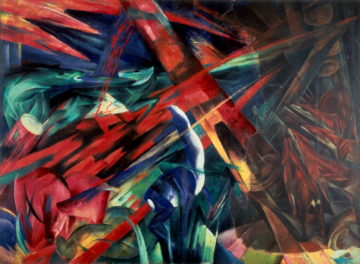 Morgan Meis will say anything. He jump-starts complex philosophical ideas with slangy turns of phrase, referring to a “shitshow from start to finish,” a “fuckfest,” and “a real Fuck You painting.” He can also be perfectly sober, inviting discussions of “the operation of fate” and “the fear of God.” All this comes from Meis’s Three Paintings Trilogy, three books about three artists from three times and places: The Drunken Silenus (on Peter Paul Rubens), The Fate of the Animals (on Franz Marc), and The Grand Valley (on Joan Mitchell). Meis’s intellectual juggling act includes digressions on the work of Virgil, Jung, Hofmannsthal, Degas, Monet, D.H. Lawrence, Gertrude Stein, and others. It all adds up, but just barely, in a funky kind of way. This is the most exciting new writing about the visual arts to appear in a generation.
More here. [Registration required.]
Enjoying the content on 3QD? Help keep us going by donating now.
Vikings
Enjoying the content on 3QD? Help keep us going by donating now.
Steve DiBenedetto’s Cosmic Sense of the Absurd
John Yau at Hyperallergic:
Steve DiBenedetto, who began exhibiting in the 1980s, has become one of the best painters of his generation. A bundle of contradictions, restlessly moving between figuration and abstraction, he loves to push the paint around in his work — adding, scraping, changing — as he seeks links between the body and visionary states. The otherworldliness we encounter in his work is comic and unnerving, the perfect combination for these upside-down times.
The title of his current exhibition at Derek Eller, Spiral Architect, brings together two of his ongoing preoccupations — a line that winds around a center and the designer of a functional environment. Together, they underscore DiBenedetto’s conception of a painting as a search for a functional structure, a talisman that can aid viewers amid our collective sense of traumatic crisis. In contrast to artists such as Hilma af Klint and Forrest Bess, who believed they were conduits transmitting messages from a higher power, DiBenedetto wants to unlock the viewer’s own psychic unconsciousness and tap into the mind’s capacity for attaining visionary states. In this way, he is constantly reaching toward a cosmic sense of the absurd.
more here.
Enjoying the content on 3QD? Help keep us going by donating now.
The Mystical Nietzsche
Mark Higgins at Aeon Magazine:
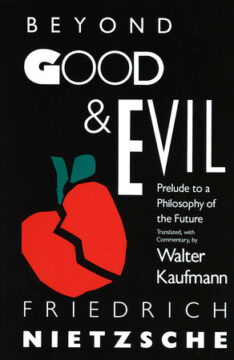 Friedrich Nietzsche said a great deal about himself. He was the self-styled ‘Antichrist’, the herald of the ‘death of God’, a thinker who prided himself on disclosing the ‘human, all-too-human’ origins of morality, the soul and religious belief. He despised Platonism, regarded himself as history’s most formidable opponent of Christianity, and often wrote with a fiercely materialist agenda. Given these credentials, Nietzsche appears to be one of the least likely figures to merit the title ‘mystic’. But he was precisely that.
One reason it might seem odd to call Nietzsche a mystic is that he himself went to great lengths to oppose certain forms of mysticism. Nietzsche contrasted his relationship to mystical thought with that of his predecessor, the German pessimist Arthur Schopenhauer. Whereas Schopenhauer idolised the mystic as someone capable of intuiting the secret, inner oneness of all things, Nietzsche considered such a train of thought to be deeply pathological. To even countenance the possibility of a deeper, truer layer of reality beyond appearances – as Schopenhauer did – is to deny the value of this world in favour of something imaginary.
more here.
Enjoying the content on 3QD? Help keep us going by donating now.
There’s a Future in Plastics
Bud Smith in The Baffler:
 We came in just before sunup and heard the plastic plant had to be shut down for emergency repair. The foreman drove us to the control house and then went in to talk specifics with the unit operator. We three mechanics remained in the work truck, cellphones lighting up our faces.
One of the guys was watching a video with the sound at a whisper. The other was scrolling. I pecked away at my phone, rewriting by memory a scene from my novel on my Notes app. Even though the book was out on submission, I was trying to make it better. Sometimes one of the guys would ask me who I was sending so many texts to, and I’d say, “My baby mama.” That was easier than explaining that during every hold point on the construction site, I didn’t want to do anything but work on my make-believe.
I’d written about three hundred words when the foreman opened the truck door and said it was the same ol’. We’d pop open the reactor manways after coffee break. I’d worked in this plant about fifteen years by then and had gone inside the polypropylene reactor thirty-something times to clean it out and repair whatever. This outage would be some variation on all those before it with just one thing for sure: heavy labor, the heaviest we knew.
More here.
Enjoying the content on 3QD? Help keep us going by donating now.