
Peter E. Gordon at the NYRB:

The German philosopher and social theorist Theodor W. Adorno died fifty years ago this week, in the late summer of 1969. Even at the time of his death, he was entangled in controversy. Student militants, many of them aligned with the so-called “extra-parliamentary opposition,” had once seen him as a political ally. But when they occupied the Institute for Social Research at the Goethe–University Frankfurt, where Adorno kept his office, he called in the police, an act that was seen as unforgivable by the student radicals: How could a theorist of anti-fascism side with the authorities?
Adorno’s decision opened a bitter divide between the so-called Frankfurt School and the more militant members of the student movement that would never truly heal. In late April 1969, when Adorno commenced the first of his lectures on “An Introduction to Dialectical Thinking,” two students rushed the podium, demanding that Adorno engage in a public act of self-criticism.
more here.
 In novels spanning several hundred years of history, Toni Morrison used her historical imagination and her remarkable gifts of language to chronicle the horrors of slavery and Jim Crow, and their continuing fallout on the everyday lives of black Americans. Violent, heart-wrenching events occur in her fiction: a runaway slave named Sethe cuts the throat of her baby daughter with a handsaw to spare her the fate she suffered herself as a slave (
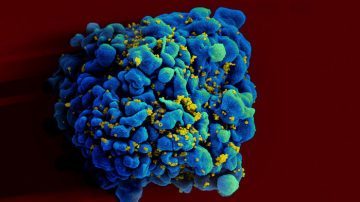 Drugs work stunningly well to control HIV—but not in everyone, and not without side effects. That’s why a small cadre of patients known as elite controllers has long fascinated researchers: Their immune system alone naturally suppresses HIV for decades without drugs. Now one team, inspired by success in mice, hopes to endow HIV-infected people with tailormade immune cells that target HIV, in effect creating elite controllers in the clinic. The immune strategy has risks, but it builds on increasingly popular cancer treatments with T cells engineered to have surface proteins, called chimeric antigen receptors (CARs), that can recognize markers on the surfaces of tumor cells and destroy the cancer. Such CAR T cells can also be tailored to identify and eliminate HIV-infected cells. This approach was tested in HIV-infected humans long before CAR T cells proved their worth against cancer, but it roundly failed. The field wants “to move what’s been learned from cancer back to HIV, completing the circle,” says Steven Deeks, an HIV/AIDS clinician at the University of California, San Francisco, who first tested a CAR T cell against the virus in the late 1990s.
 I think it’s very difficult to make the case for an objective morality if you’re using the word ‘objective’ in a strong sense, either to mean a universal morality or a foundational morality that all people everywhere understand and accept in a globalising world.
 Fiction shines a light on the human condition by putting people into imaginary situations and envisioning what might happen. Science fiction expands this technique by considering situations in the future, with advanced technology, or with utterly different social contexts. Seth MacFarlane’s show The Orville is good old-fashioned space opera, but it’s also a laboratory for exploring the intricacies of human behavior. There are interpersonal conflicts, sexual politics, alien perspectives, and grappling with the implications of technology. I talk with Seth about all these issues, and maybe a little bit about whether it’s a good idea to block people on Twitter.
 The mass shootings over the weekend in El Paso, Texas, and Dayton, Ohio, killed at least 31 people and wounded scores more. Those incidents were just the latest such deadly attacks in the United States, which has tallied more than 250 since Jan. 1, according to a new report by
  But there is a catch. This groundbreaking research is relevant
  F
F Today, many science books are full of detailed photos that reveal the intricate parts of plant life, but prior to the invention of photography (and macro photography), it was up to
 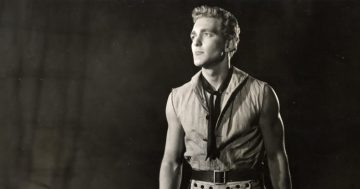 During the three years that Billy Budd took shape, Britten and Forster occasionally disagreed about just how brazen the piece should be. In one instance, Forster complained that one of Claggart’s arias was just not hot-blooded enough. “I want passion—love constricted, perverted, poisoned, but nevertheless flowing down its agonising channel; a sexual discharge gone evil,” Forster wrote. “Not soggy depression or growling remorse.” Britten—who had largely been circumspect about his own homosexuality, publicly avoiding the subject of his long relationship with the tenor Peter Pears—strongly disagreed, and as a consequence, a rift opened up between librettist and composer, the one a daring idealist, the other a more cautious realist.
 This past April, Mount Sinai oncologist
 DANIEL ELLSBERG
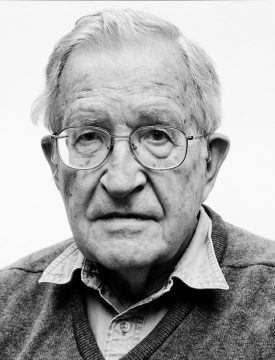 Noam Chomsky: Trump’s diatribes successfully inflame his audience, many of whom apparently feel deeply threatened by diversity, cultural change, or simply the recognition that the White Christian nation of their collective imagination is changing before their eyes. White supremacy is nothing new in the U.S. The late George Frederickson’s
  Born in an Ohio steel town in the depths of the Great Depression, Morrison carved out a literary home for the voices of African Americans, first as an acclaimed editor and then with novels such as The Bluest Eye,
 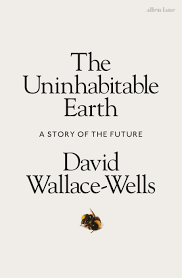 ‘We have already exited the state of environmental conditions that allowed the human animal to evolve in the first place,’ Wallace-Wells writes, ‘in an unsure and unplanned bet on just what that animal can endure. The climate system that raised us, and raised everything we now know as human civilisation, is now, like a parent, dead.’ He is not a climate scientist, so is perhaps less circumspect than he might be: the data here is designed to scare us. ‘I am alarmed,’ he writes. Who isn’t? We know exactly where we are, despite the continuous chatter of doubt and denial. Wallace-Wells is scathing about the oil industry, whose disinformation clogs public discourse and waylays political processes: ‘A more grotesque performance of corporate evilness is hardly imaginable, and, a generation from now, oil-backed denial will likely be seen as among the most heinous conspiracies against human health and well-being as have been perpetrated in the modern world.’