
Jay Griffiths in Lapham’s Quarterly:

The long-tailed macaques leap like embodied jokes, making the very trees laugh with their sense of swing. A baby monkey jumps from liana to liana, curls its fingers around a branch, and dives into a stream: aerial then aquatic acrobatics. A gecko runs up a buttress flank of mahogany and freezes, alert, silently glued to the trunk, its tiny tongue licking up termites. High in the trees, a Thomas’ leaf monkey, with its long white tail, whiskers, and mohawk, blinks and gazes, blinks and gazes. The Sumatran rain forest, filled with the jungle music of crickets and frogs, is home to all the creatures of The Jungle Book. I’d been invited to join an ecotourist trek to see orangutans, a critically endangered animal. The hope of seeing one was only a part of my delight: to put it simply, forests make me happy.
Academia demonstrates what the heart already knows: nature-connectedness is correlated with emotional and psychological well-being, from the Japanese shinrin-yoku (forest bathing) to the joy inherent in Norwegian friluftsliv (free-air life) or the rush of oxytocin in dog owners when gazing into their dogs’ eyes. It is easier, of course, to love one’s cat than to care about the chestnut clearwing moth or the rufous-fronted laughing thrush, but pets can be the ambassadors of the natural world, leading us by the paw into a world richer than we could ever know by ourselves.
When a wild landscape is lit with birds and ribboned with animal presence, it tells us that all manner of living things are well, and it draws us inextricably into a shared happiness, whether in a savanna or rain forest or the woodland humming with joy evoked by Tennyson’s lines of “doves in immemorial elms / And murmuring of innumerable bees.” Thus the giraffes who caress one another with low hums, a gentle evening song of the envoiced world. Thus puffins, clowns of the air, possibly the most visually cheering of all birds. Thus rats, who if tickled chirp like children laughing, while bonobos, if tickled, laugh until they fart. Laughter is a signal, a form of communication that tells others that the laugher is not only happy but wishes to spend more time with the laughee, welcoming the exchange as reciprocal. When we respect the fact that all species are necessary to the well-being of an ecosystem, this sense of shared happiness can potentially include everything, from baby elephants at play to the leeches that crawl up our legs as we walk through the forests of Sumatra.
More here.
 THE RÉSUMÉ
 Two decades ago, when I started writing about economic inequality, meritocracy seemed more likely a cure than a cause. Meritocracy’s early advocates championed social mobility. In the 1960s, for instance,
  In the booklet’s foreword, the Very Reverend W. R. Matthews, then the Dean of St. Paul’s, claimed that “the devastation of war has given us an opportunity which will never come again.” This optimism echoed sentiments expressed during the war itself. The country would turn bombsites into social housing and hospitals, with a few churches left as memorials to the carnage of the home front. (As Brian Foss has pointed out, it wasn’t until September 1941 that frontline casualties outnumbered civilian deaths in Britain.) The short booklet is full of halftone illustrations, architectural plans, and garden plans, showing how to transform destroyed buildings into “ruins.” In one article, Hugh Casson argued that “every stone—whether fallen or in place—is a fragment of the past, part of the pattern of history.” Churches such as St. Dunstan and Christ Church, Newgate Street, scarred by the Great Fire of London and the Blitz, are now living monuments not just to the bombs and fires, but to London’s long history of transformation. Casson worried about a time when “all traces of war damage will have gone, and its strange beauty vanished from our streets…and with their going the ordeal through which we passed will seem remote, unreal, perhaps forgotten.”
 L
L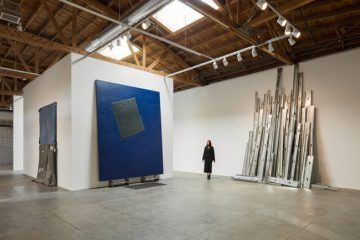 The difficulty of Hammons’s work is that it seems to preempt any possible critical response and offer up an implicit rebuttal. This was most evident in the centerpiece of the show, a grid of tents pitched in the gallery’s interior courtyard, which is located between the entrance to the gallery’s chic, industrial compound and the exhibition spaces. Each tent bore a stenciled threat: this could be u. My first reaction was dismissive; the installation seemed too obvious, too lazily reliant on a contextual friction that was intended to point to a larger one, since the gallery—a sign of advanced gentrification if ever there was one—sits just a few blocks from the homeless encampments of Skid Row. OK, we’re all complicit: now what?
 THE CATO INSTITUTE,
 Loss is a cousin of loneliness. They intersect and overlap, and so it’s not surprising that a work of mourning might invoke a feeling of aloneness, of separation. Mortality is lonely. Physical existence is lonely by its nature, stuck in a body that’s moving inexorably towards decay, shrinking, wastage and fracture. Then there’s the loneliness of bereavement, the loneliness of lost or damaged love, of missing one or many specific people, the loneliness of mourning.
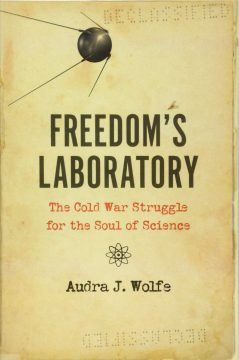 The word “science” typically evokes epistemic ambitions to explore the fundamental laws of the natural world. This is the stuff of philosophical reflection and documentary specials—and it is unquestionably important. This ethereal vision of science appears starkly divorced from the messy fray of “politics,” however you might want to understand the term.
 In 1915, Albert Einstein wrote a letter to the philosopher and physicist Moritz Schlick, who had recently composed an article on the theory of relativity. Einstein praised it: ‘From the philosophical perspective, nothing nearly as clear seems to have been written on the topic.’ Then he went on to express his intellectual debt to ‘Hume, whose Treatise of Human Nature I had studied avidly and with admiration shortly before discovering the theory of relativity. It is very possible that without these philosophical studies I would not have arrived at the solution.’
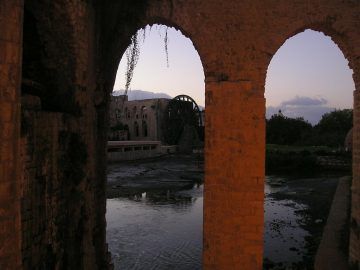 Women in loose robes dragged toddlers, babies propped upon their hips. Men carrying parents and grandparents on their shoulders stepped ahead, calling back for assurances as women collapsed in the heat. Flimsy plastic bags, crammed with clothes and other belongings, dangled off shoulders and wrists. In the midday glaze, as light shimmered off the desert like water droplets, the scene at the Syrian-Iraqi border seemed almost biblical. My Iraqi colleague Ali, who had already tasted the wrath of displacement from his own country, squatted in the shade of our car and cried.
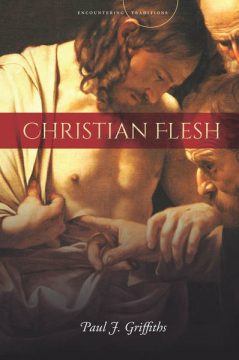 To put it mildly, Christianity has a complicated relationship with flesh. The same Paul who declared the Lord’s ownership of the body also bequeathed to subsequent Christian history a disdain for physicality through his—misunderstood, as most interpreters now think, but no less influential for being so—sharp contrast between the life of the flesh and the new life bestowed by and in the Spirit of Jesus. Stark affirmations such as the one he wrote to the Corinthians—“flesh and blood cannot inherit the kingdom of God”—at minimum lent confidence to later Christian denigrators of the body who imagined salvation as an escape from fleshly imprisonment and, at maximum, convinced generations of Christians that following Jesus ought to entail hating the body.
 For a brief moment,
 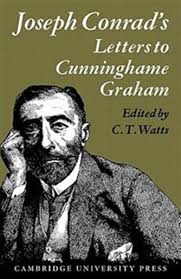 The eminent art historian Michael Fried has set out, in his own energetic and independent style, to answer this question—what was literary impressionism?—and to do so unencumbered by the general principles that have so far cohered around the term in the work of literary critics and art historians. This may bother some readers who expect a more direct engagement with the critical history of the term. Fried’s approach is to start the inquiry afresh, using detailed readings of passages in individual works to derive his own answer to his title’s question. “If my specific readings and my overall argument cumulatively gain traction on their own terms,” he writes, “I shall consider this book a success.”
 It consists of nothing more than an intermittent correspondence between two friends. Yet the epistolary form is deceptively efficient, supplying backstory, plot, character, dialogue and more than one narrative voice before a conventional novel might have cleared its throat. Within a page or two, we are in the world of Martin and Max, both German, the latter a Jew now living in San Francisco, the former now back in Munich – two men who have been business partners, friends and whose families have, as we shall discover, been intimately connected.
 Is there anything CRISPR can’t do? Scientists have wielded