
Richard Ford in Literary Hub:
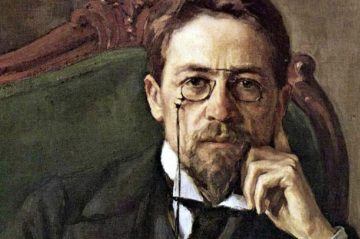 Until I began the long and happy passage of reading all of Anton Chekhov’s short stories for the purpose of selecting the twenty for inclusion in The Essential Tales of Chekhov, I had read very little of Chekhov. It seems a terrible thing for a story writer to admit, and doubly worse for one whose own stories have been so thoroughly influenced by Chekhov through my relations with other writers who had been influenced by him directly: Sherwood Anderson. Isaac Babel. Hemingway. Cheever. Welty. Carver.
As is true of many American readers who encountered Chekhov first in college, my experience with his stories was both abrupt and brief, and came too early. When I read him at age twenty, I had no idea of his prestige and importance or why I should be reading him—one of those gaps of ignorance for which a liberal education tries to be a bridge. But typical of my attentiveness then, I remember no one telling me anything more than that Chekhov was great, and that he was Russian.
And for all of their surface plainness, their apparent accessibility and clarity, Chekhov’s stories—especially the greatest ones—still do not seem so easily penetrable by the unexceptional young. Rather, Chekhov seems to me a writer for adults, his work becoming useful and also beautiful by attracting attention to mature feelings, to complicated human responses and small issues of moral choice within large, overarching dilemmas, any part of which, were we to encounter them in our complex, headlong life with others, might evade even sophisticated notice.
More here.
 Nuclear energy is controversial among politicians, environmental activists, and investors. But new reactor designs, the immense energy-density of nuclear fuel, and the lack of carbon emissions make nuclear power attractive, if not crucial, amid growing energy demands and a changing climate.
 There is a moment in Adrian Lyne’s film Lolita (1997) that is burned onto my memory. I was probably around 12, up late, watching it on terrestrial television. Lolita and her guardian, lover or captor have been moving between seedy motels, the romantic aesthetics waning until they wrestle on distressed sheets in a darkened room. The bed is covered with coins. Humbert has discovered Lolita has been stashing away the money he has ‘become accustomed’ to paying her, and he suddenly fears she is saving it in order to leave him, something that has not yet occurred to him. The shots are intimate, violent and jarring, ruptured by a later scene in which Lolita shouts: ‘I earned that money!’ We realise that Lolita has learned that sexual acts have monetary value.
 William Dalrymple’s
 Alyssa Battistoni in Dissent:
 Lea Ypi in The New Statesman:

 W
W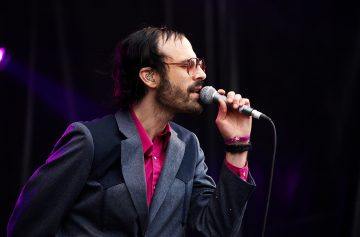
 When he’s doing his dance, Israil Ansari looks like a tornado. Keeping his feet pinned to the ground, he bends his elbows and knees and moves his arms and legs from side to side at such a high speed that his body and immediate surroundings dissolve into a blur. It’s a dance that divides opinion. His fans describe him as a “unique talent” and “the world’s eighth wonder”. He has more than 2m followers on TikTok, the video-sharing app that made his name. But his detractors don’t hold back: “I can’t bear to watch this”, “someone take this guy to a hospital”, “give us a break, bro”. Ansari says he is happy as long as people are watching. “Fifty percent of it is love, fifty percent of it is hate. I will take both.” Naturally, he prefers the love, although it can get a bit much. In Mumbai people stop him in the street. They ask for a selfie, then they ask him to do the dance. He always obliges, but when he’s in a hurry he wears a cap to avoid being ambushed. Without it, Ansari can be spotted a mile off because of his hair, which is almost as crazy as his dance. It’s currently green at the front and blond at the back, although it won’t be for long. He likes to dye it to match his clothes. “In one month I have changed my hair colour 27 times. No one else has done that in the world.”
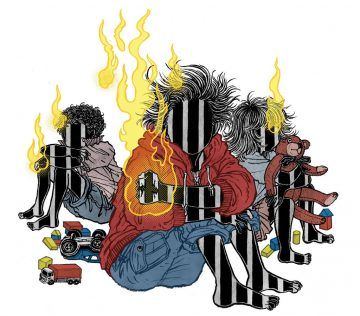 Stephen King’s protagonists have been hunted by all sorts of malevolent beings, from the demonic clown of “It” to the fiendish cowboy Randall Flagg in “