
Anabelle Johnston at The Baffler:
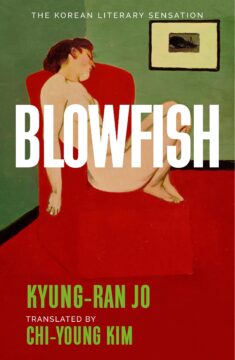 Seventy-five years after the outbreak of the Korean War, many Americans have come to recognize the country through its various cultural exports—KBBQ, K-pop, K-dramas, and K-skincare, to name a few. This association, and its contrived division between culture and politics, is no accident. In the 1990s, after decades of Japanese colonial rule followed by the ravages of American military intervention, the South Korean government established a series of initiatives to “enhance the image of Korea in the World.” As the country invested in communication and IT-based businesses to develop an internet-forward and skills-based economy, the Ministry of Culture turned to the West in a movement now known as the hallyu wave. Image supplanted reality. Decades of authoritarian rule, gender inequality, and limited economic mobility were ushered offscreen as the Wonder Girls, SHINee, Girls’ Generation, and BTS (among others) ascended the world stage. The runaway virality of Psy’s 2012 “Gangnam Style” was not a fluke but rather the fruit of years of premeditated cultural development, memorialized by a giant set of horse dance hands outside of the Starfield COEX mall in Seoul.
more here.
Enjoying the content on 3QD? Help keep us going by donating now.
 My desire to live in a city was not simply one of seeking like-minded people (other writers and artists, perhaps) and creating a smaller environmental footprint. I was also running from the lifeless suburbs of my childhood and what lay just beyond them: the dreaded sprawl.
 The latest ambition of artificial intelligence research — particularly within the labs seeking “artificial general intelligence,” or AGI — is something called a world model: a representation of the environment that an AI carries around inside itself like a computational snow globe. The AI system can use this simplified representation to evaluate predictions and decisions before applying them to its real-world tasks. The deep learning luminaries Yann LeCun (of Meta), Demis Hassabis (of Google DeepMind) and Yoshua Bengio (of Mila, the Quebec Artificial Intelligence Institute) all believe world models are essential for building AI systems that are truly
 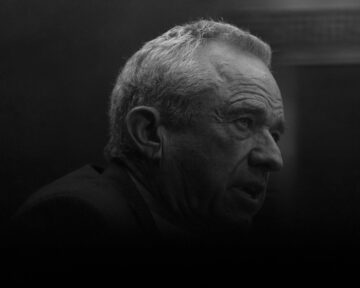 We have each had the honor and privilege of serving as director of the Centers for Disease Control and Prevention, either in a permanent or an acting capacity, dating back to 1977. Collectively, we spent more than 100 years working at the C.D.C., the world’s pre-eminent public health agency. We served under multiple Republican and Democratic administrations — every president from Jimmy Carter to Donald Trump — alongside thousands of dedicated staff members who shared our commitment to saving lives and improving health.
 Robert F. Kennedy Jr., the secretary of health and human services, is endangering the health of the American people now and into the future. He must resign. Mr. Kennedy and the rest of the Trump administration tell us, over and over, that they want to Make America Healthy Again. That’s a great slogan. I agree with it. The problem is that since coming into office President Trump and Mr. Kennedy have done exactly the opposite.
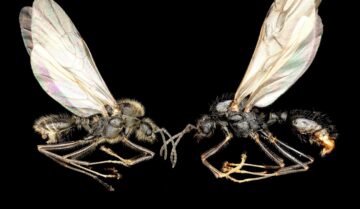 A common type of ant in Europe breaks a fundamental rule in biology: its queens can produce male offspring that are a whole different species. These queen Iberian harvester ants (Messor ibericus) are sexual parasites that rely on the sperm of males of the ant species Messor structor. They use this sperm to breed an army of robust worker ants, which are hybrids of the two species. Data now show that, in the absence of nearby M. structor colonies, M. ibericus queens can clone male M. structor ants by laying eggs that contain only M. structor DNA in their nuclei. The findings were published in Nature on 3 September
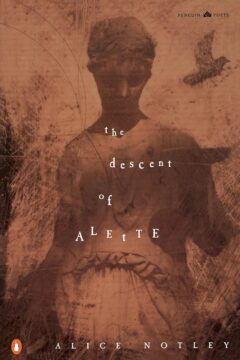 A few days before she died, I asked Alice if she would make me a list of her favorite folk songs, the ones she’d sometimes sing while we worked together in her apartment. She emailed me from her hospital bed with the subject line “probably illegible” and a photo showing her open notebook with two pages of handwritten song titles. “Careless Love,” “Wild Mountain Thyme,” “What is the Soul of a Man,” “Shady Grove.” At the bottom of the image, she arranged two figurines—a blue-eyed owl and little R2-D2—to weigh down the pages. “Baby, Please Don’t Go,” “Down in the Valley,” “Spanish Johnny,” “In the Pines.” There are no musicians, just song titles—these are folk and blues songs, after all—all written in her lush cursive. “Shenandoah,” “Black Is the Color of My True Love’s Hair,” “The Water Is Wide,” “See That My Grave Is Kept Clean.” This will be the last thing she says to me.
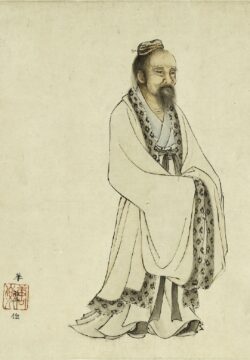 Zhuangzi’s view, as interpreted by Guo, is that when we seek a definite identity, we betray our true nature as fundamentally fluid and indeterminate. We end up pursuing some external model of definiteness. Even if the model is one of our own devising, it is external to our true indefinite nature. One story in the Zhuangzi tells of a welcoming and benevolent but faceless emperor, Hundun. Hundun has a face drilled into him by two other emperors who already have faces of their own. As a result, he dies. The story suggests that fixed identity always comes to us from the outside, from others who have already attached themselves to fixed identities and drive us to do the same, not usually by drills but rather by example. This peer-driven attachment to identity kills our fundamental nature, which is formless and fluid like Hundun (his name, 混沌, means something like ‘mixed-up chaos’, and each character contains the water radical signalling fluidity). Our true Hundun-nature is the capacity to take on many forms without being finally defined by any of them.
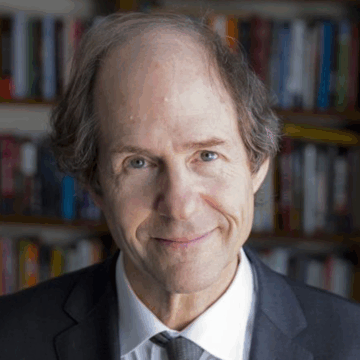 “Liberalism,” divorced from its particular connotations in this or that modern political context, refers broadly to a philosophy of individual rights, liberties, and responsibilities, coupled with respect for institutions and rule of law over personalized power. As Cass Sunstein construes the term, liberalism encompasses a broad tent, from Ronald Reagan and Margaret Thatcher to Martin Luther King and Franklin Roosevelt. But liberalism is being challenged both from the right and from the left, by those who think that individual liberties can go too far. We talk about the philosophical case for liberalism as well as the challenges to it in modern politics, as discussed in his new book
 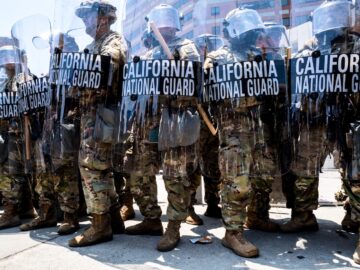 Fourteen years ago, Noam Chomsky
  Fragile quantum states might seem incompatible with the messy world of biology. But researchers have now coaxed cells to produce quantum sensors made of proteins. Quantum states are incredibly sensitive to changes in the environment. This is a double-edged sword. On the one hand, they can
  For women with breast cancer, stressors are associated with deleterious alterations to the systemic and tumor immune environment, according to a study
 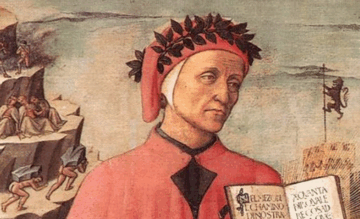 “Now he is scattered among a hundred cities,” W.H. Auden wrote in 1939, “And wholly given over to unfamiliar affections.” Auden was ruminating on the recent death of the Irish poet W.B. Yeats, but the words could serve as an epitaph for any great author. Poets like to imagine that their creations confer afterlives—for themselves and their subjects—impervious to the assaults of “wasteful war” and “sluttish time” so ruinous to monuments of marble or metal (see Horace’s Ode 3.30 and Shakespeare’s Sonnet 55). But as Auden recognized, the moment an author dies, his or her legacy is on the loose. Any chance those poems have of a future depends on what readers make of them: “The words of a dead man,” Auden continues, “Are modified in the guts of the living.”
 The modern concept of GDP was developed in the 1930s and became firmly established during World War II, as it served a national purpose. While Germany was working on its own methods for gauging economic capacity, the United States and the United Kingdom gained a decisive strategic edge by being the first to define total output and compile reliable statistics. This enabled the Allies to maximize production and manage the sacrifices required of their citizens more effectively.