
Izabella Scott in The White Review:
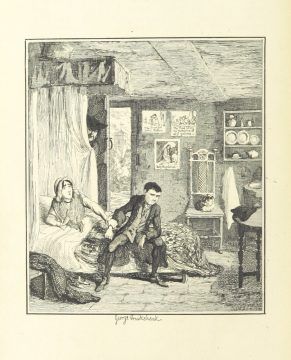 It’s hot as fuck, said the friend who handed me Confessions Of The Fox, a faux-memoir set in eighteenth-century London. I was a little sceptical. After all, this was Jordy Rosenberg’s first novel. A queer theorist and historian of this period, he has re-written an eighteenth-century life from a trans perspective – a fool’s errand, murmured the cynic in me, to claim a world dominated by heteropatriarchy. Yet I found that as well as being hot as fuck, it was also something of a masterpiece.
The novel poses as a lost manuscript, authored by an outlaw named Jack Sheppard, and only recently discovered by an academic. Sheppard was once a popular hero: a celebrity thief, famous for picking the pockets of the rich. Born into poverty in 1702, Jack was sent to the workhouse at six to become a cane-chair maker, and by and by, became a brilliant carpenter. But he remained trapped in a system of exploitative labour, indentured by merchants until he rebelled, becoming a thief and, when he got caught, a jail-breaker. After a series of fantastic escapes from the law, he was publicly executed, aged 22. Even in his own lifetime, Jack was fast transfigured into fiction. At his hanging, a pseudo-memoir was sold among the crowd. Soon afterwards, his life was dramatised in plays and operas, with casts that included his great love, Edgeworth Bess, and his nemesis, Jonathan Wild – creating a rich body of literature to which Rosenberg refers as ‘Sheppardiana’.
More here.
 Like most people on Earth, Greta Thunberg is not a climate scientist. She has no formal scientific training of any type, nor does she possess any expert-level knowledge or expert-level skills in this regime. She has never worked on the problems or puzzles facing environmental scientists, atmospheric scientists, geophysicists, solar physicists, climatologists, meteorologists, or Earth scientists.
 Karachi feels like a city without a clearly defined past, or at least not one that has carried over into the present. In the 1950s it was known as the “Paris of the East,” but that impression has not aged well. In 1941, before partition, the city’s population was about 51% Hindu. Now it is virtually 0% Hindu, obliterating yet another feature of the city’s history. It is currently a mix of Pakistani ethnicities, including Sindhis (the home province), Punjabis, Pashtuns, the Baloch and many more — indeed, Pakistan in miniature.
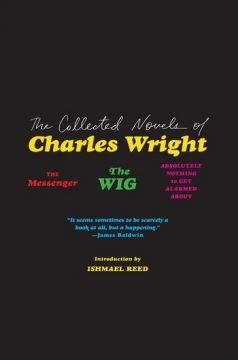 The decades of near-silence that came in the wake of Charles Wright’s trilogy of short novels seem almost as aberrant and disquieting as the novels themselves. Wright died of heart failure at age seventy-six in October 2008, one month before Barack Obama’s election and thirty-five years after the publication of Absolutely Nothing to Get Alarmed About, the last of Wright’s novels, whose 1973 appearance came a decade after his debut, The Messenger. Wright clawed and strained from the margins of American existence for widespread acknowledgment, if not the fame his talent deserved. Cult-hood was the best he got, but it’s been enough. Through the dedication and (even) fervor of his steadfast readers, Wright’s sardonic, lyrical depictions of a young black intellectual’s odyssey through the lower depths of mid-twentieth-century New York City have somehow materialized in another century, much as Wright once imagined himself to move through time and space: “like an uncertain ghost through the white world.”
 Gagliano concluded, in a
 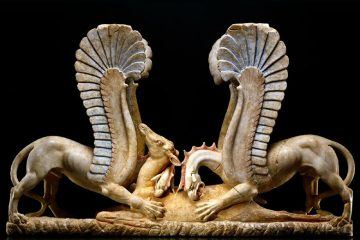 The truth about art theft in Europe – and Clerville is, among other things, a microcosm, or quintessence, of Europe – is less swashbuckling than most fiction. The exhibition halls at the Palazzo del Quirinale, spacious, sparsely decorated and a little flyblown, are exactly the sort of place where you can imagine Diabolik pulling off a caper, disguising himself as the President, say, or floating through the window on a jetpack. But the works on show in a minor blockbuster earlier this summer, all of it recovered by the TPC, had undergone various indignities that you’d struggle to turn into any kind of entertainment beyond a snuff movie. One masterpiece, a Hellenistic table support from Puglia in painted marble, representing two griffins lunching on a stag, had been hammered into pieces so it could be smuggled out of the country with a consignment of building materials. Three post-Impressionist paintings, smashed and grabbed from the Galleria Nazionale d’Arte Moderna twenty-one years ago, were destined for the bonfire, our guide said, if they couldn’t be consigned to their intended buyer. The “Senigallia Madonna” by Piero della Francesca, taken from the Palazzo Ducale in Urbino in 1975, was the subject of television appeals, like any kidnapping victim: “Please don’t touch her with your bare hands.” A stately, plump rococo cabinet had been cut down to fit a smaller space than that from which it had been untimely ripped.
 The contrast could not have been starker—here was one of the world’s most revered figures, His Holiness the Fourteenth Dalai Lama, expressing his belief that all life is sentient, while I, as a card-carrying neuroscientist, presented the contemporary Western consensus that some animals might, perhaps, possibly, share the precious gift of sentience, of conscious experience, with humans. The setting was a symposium between Buddhist monk-scholars and Western scientists in a Tibetan monastery in Southern India, fostering a dialogue in physics, biology, and brain science. Buddhism has philosophical traditions reaching back to the fifth century B.C. It defines life as possessing heat (i.e., a metabolism) and sentience, that is, the ability to sense, to experience, and to act. According to its teachings, consciousness is accorded to all animals, large and small—human adults and fetuses, monkeys, dogs, fish, and even lowly cockroaches and mosquitoes. All of them can suffer; all their lives are precious.
 Tucked away in Tokyo’s trendiest fashion district — two floors above a pricey French patisserie, and alongside nail salons and jewellers — the clinicians at Helene Clinic are infusing people with stem cells to treat cardiovascular disease. Smartly dressed female concierges with large bows on their collars shuttle Chinese medical tourists past an aquarium and into the clinic’s examination rooms.
 Since the upheavals of the financial crisis of 2008 and the political turbulence of 2016, it has become clear to many that liberalism is, in some sense, failing. The turmoil has given pause to economists, some of whom responded by renewing their study of inequality, and to political scientists, who have since turned to problems of democracy, authoritarianism, and populism in droves. But Anglo-American liberal political philosophers have had less to say than they might have.
 Using a processor with programmable superconducting qubits, the Google team was able to run a computation in 200 seconds that they estimated the fastest supercomputer in the world would take 10,000 years to complete.
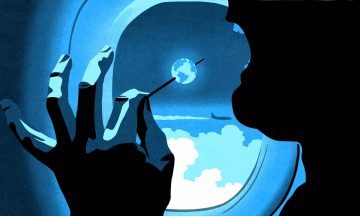 Perhaps we shouldn’t be surprised to learn that when Google
 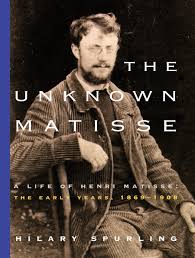 Even those of us who have loved Matisse’s work since we began to look at paintings as a serious interest could not have suspected what it had cost this great artist to persevere in his vocation. Pleasure had so often been invoked as the key to an understanding of his achievement—“Un nom qui rime avec Nice . . . peintre du plaisir, sultan de Riviera, hédoniste raffiné,” as Pierre Schneider sardonically described this mistaken characterization of Matisse—that it has come as a shock to discover the sheer scale of adversity that had to be endured at almost every stage of his life and work.
 If at the beginning of the crisis in Hong Kong, three months ago, it was hard for some to imagine how a supposedly democratic conclave within authoritarian China and the pride of imperial capitalists everywhere would soon become the undeclared police state it now is, it’s an even bigger challenge to imagine how the political crisis might be resolved without a dramatic redefinition of the relationship between the semi-autonomous territory and Beijing’s dictatorial central government. The movement—the revolution, the rebellion, the resistance, the terrorism, the uprising, whatever it is called, depending on who you ask—started as a protest against
 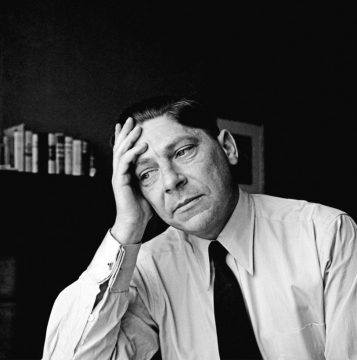 This new “Darkness at Noon” arrives in a very different world from that which greeted the original, and one important difference has to do with Koestler’s reputation. In 1940, he was thirty-five and little known in the English-speaking world. He had been a successful journalist in Berlin and a Communist Party activist in Paris, but “Darkness at Noon” was his first published novel. It transformed him from a penniless refugee into a wealthy and famous man, and was also the best book he would ever write. It was followed, in the forties, by an important book of essays, “The Yogi and the Commissar,” and several thought-provoking but less consequential novels of politics and ideas, including “Arrival and Departure,” which reckoned with Freudianism, and “Thieves in the Night,” about Jewish settlers in Palestine.
 “Plato once defined humans as featherless bipeds, but he didn’t know about dinosaurs, kangaroos, and meerkats. In actual fact, we humans are the only striding, featherless, and tailless bipeds. Even so, tottering about on two legs has evolved only a few times, and there are no other bipeds that resemble humans, making it hard to evaluate the comparative advantages and disadvantages of being a habitually upright hominin. If hominin bipedalism is so exceptional, why did it evolve? And how did this strange manner of standing and walking influence subsequent evolutionary changes to the hominin body?