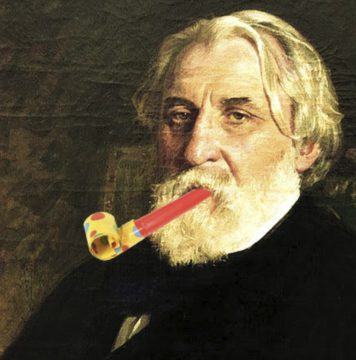
Massimo Pigliucci in Figs in Winter:
 Readers who have followed several incarnations of my blogs (like this one, and this one, and this one) will have easily figured out that, politically speaking, I lean left, though with a number of qualifications and caveats. But I make a point of reading conservative authors and columnists, for a couple of reasons: first, to keep up with what they say and how they think (so to sharpen my own opinions and arguments), and second because they too, at least some of the times, have something interesting or constructive to say.
A recent example is David Brooks, a regular New York Times columnist, who is defined by Wikipedia as a Canadian-born American conservative political and cultural commentator who writes for The New York Times. On April 15, he has published a column for said newspaper entitled “Five lies our culture tells us.” I’d like to examine each of the lies in turn, in order to stimulate a discussion that may help us all see why such lies contribute to (or even, as Brooks argues, are at the root of) our political problems.
Lie n. 1: Career success is fulfilling. Brooks suggests that this lie is most evident at the point of college admissions, which put a lot of pressure on students (and their families) by instilling status anxiety. I think he is far too modest in his claim. Status anxiety is built into the very fabric of American society from the moment people are born. I live in Manhattan, and I know parents who fiercely compete (and pay outrageous amounts of money, and sometimes cheat) so that their five-year olds get into the best elementary schools. And it only gets worse from there.
More here.
 There are at least four Robert Blys. One is the poet of pure lyrics like the ones I have quoted. Then there is Bly the political poet of the Vietnam War years. After his political and antiwar poetry, Bly turned to the self-help or human potential movement. His book Iron John: A Book about Men, was a best seller, and Bly became a guru of the men’s movement. And there is at least one more Bly: the polemicist. After service in the Navy, graduation from Harvard and Iowa and a few years in New York, Bly settled in rural Minnesota where, in the tradition of poets who used their magazines to advance their views, like T. S. Eliot with The Criterion and John Crowe Ransom with the Kenyon Review, he edited his fiercely polemical magazine, The Fifties (later, predictably enough, The Sixties and The Seventies). Warmly loyal to his friends, Bly was also ready to attack, sometimes viciously, those whose approach to poetry did not agree with his.
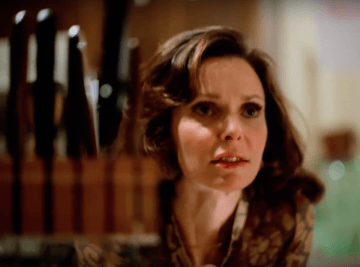 The claim to appreciate a film exclusively on pure merit has always been spurious, for it disavows how thoroughly the very notions of achievement and relevance are shaped by power, generally to the detriment of those who have historically been excluded from the practices and institutions that build canons and criteria. There are only five films by women out of some 150 titles in the BFI Classics book series, but not because women have made no great films. Echoing filmmaker Lis Rhodes, who asked “Whose history?” it is now vital to query, “Whose classics?”
 There are many conclusions to be drawn from the last seven months in France, but one seems unavoidable: a great many people—a majority, perhaps: silent, moral or whatever you want to call it—just don’t like Emmanuel Macron and the world he stands for. It’s only partially misleading to speak of this majority in the aggregate. There are certainly those who want to recreate the cultural makeup of some bygone France. Some of them hate immigrants and others are anti-Semitic. Still others just don’t like the cocky cosmopolitanism of a supposedly new type of elite that casts itself as modern and tolerant and is all the more self-assured because of it. But these are the shadow actors seeking to exploit a far more legitimate and widespread anger. One doesn’t need to be a pollster to pick apart what it really means when, in late December, 70 percent of people in a modern society supported a movement that for several consecutive weekends was rampaging through France’s well-off metropolitan centers and blocking critical road junctures, demanding more economic justice, redistribution, investment in public infrastructure and social services.
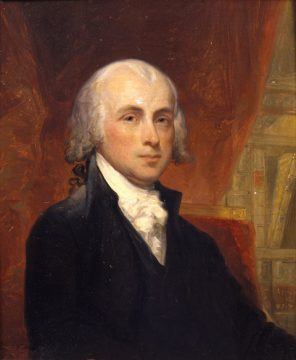 In the greatest of the Federalist Papers, Number 10, James Madison explicitly pointed out the connection between liberty and inequality, and he explained why you can’t have the first without the second. Men formed governments, Madison believed (as did all the Founding Fathers), to safeguard rights that come from nature, not from government—rights to life, to liberty, and to the acquisition and ownership of property. Before we joined forces in society and chose an official cloaked with the authority to wield our collective power to restrain or punish violators of our natural rights, those rights were at constant risk of being trampled by someone stronger than we. Over time, though, those officials’ successors grew autocratic, and their governments overturned the very rights they were supposed to protect, creating a world as arbitrary as the inequality of the state of nature, in which the strongest took whatever he wanted, until someone still stronger came along.
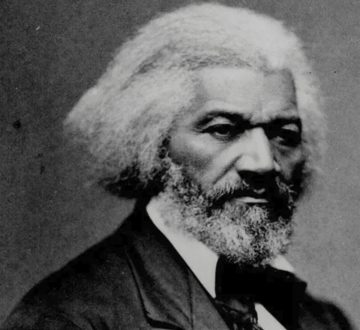 I am not included within the pale of this glorious anniversary! Your high independence only reveals the immeasurable distance between us. The blessings in which you, this day, rejoice, are not enjoyed in common. The rich inheritance of justice, liberty, prosperity and independence, bequeathed by your fathers, is shared by you, not by me. The sunlight that brought life and healing to you, has brought stripes and death to me. This Fourth [of] July is yours, not mine. You may rejoice, I must mourn. To drag a man in fetters into the grand illuminated temple of liberty, and call upon him to join you in joyous anthems, were inhuman mockery and sacrilegious irony. Do you mean, citizens, to mock me, by asking me to speak to-day?
 A few years ago the melody for this song came to me in a dream. I woke up from a nap, and as I took a stroll down a California beach, the song structure began to assemble itself. I was there to see a lover for the last time and say goodbye. But in that dream I had decided to move there instead, close to the ocean, abandoning my plans to attend graduate school in Islamic studies, back on the East Coast. In those days, I was consumed by Nusrat Fateh Ali Khan’s recordings. Melodies often dance across my dreams, and back then, each was steeped in the heat and hue of his music.
 On 20 July 1969, Apollo 11 astronauts Neil Armstrong and Edwin “Buzz” Aldrin landed on the Moon while Michael Collins orbited in the command module Columbia. “Tranquility Base here. The Eagle has landed” became one of the most iconic statements of the Apollo experience and set the stage for five additional Apollo landings.
 I once had a friend named Alice who suddenly decided to attain optimum physical fitness. She committed to a strict regime and almost instantly achieved extraordinary results.The trouble was that she spent so much time exercising that she neglected her friendships, abandoned her hobbies, and forfeited all occasions for socialising. She pursued health at the expense of everything else she valued.
 A Forest Service report published last year found that across the U.S., populated areas lost about 175,000 acres of trees per year between 2009 and 2014, or approximately 36 million trees per year. Forty-five states had a net decline in tree cover in these areas, with 23 of those states experiencing significant decreases. Meanwhile, urban regions showed a particular decline, along with an increase in what the researchers call “impervious surfaces” – in other words, concrete.
 The inhabitants of Westeros and Essos repeatedly face versions of a classic moral dilemma: When is it morally permissible to cause harm in order to prevent further suffering? Philosophers have debated moral dilemmas like this for over a thousand years. “Utilitarian” theories say that all that matters for morality is maximizing good consequences for everyone overall, while “deontological” theories say that some actions are just wrong, even if they have good consequences. The tension between deontological and utilitarian ethics can be seen in the origin story of Jaime Lannister’s sobriquet “Kingslayer”: When the “Mad King” Aerys Targaryen orders for the entire city to be burned, massacring the many thousands of citizens that live there, Jaime violates his sacred oath to protect and serve his lord and instead slits the king’s throat. Utilitarian theories would praise Jaime’s decision to kill the Mad King, because it saves many thousands of lives, while deontological theories would prohibit killing one to save many others.
 Now the raucousness begins in earnest, as Ives renders the Independence Day parade—a drunken, lurching revel with horses on the loose and church bells clanging and a fife-and-drum corps playing intentionally off-key (recalling those lusty if decidedly amateurish New England bands Ives knew so well from his youth). There are quotations galore, some 15 of them, from such popular tunes as “Battle Cry of Freedom,” “Battle Hymn of the Republic,” “Yankee Doodle,” “Reveille,” “Marching Through Georgia,” and “Dixie,” in addition to “Columbia, Gem of the Ocean,” which the trombones deliver with gusto, though many of the tunes are distorted, distended, or truncated. All of these fragments furiously collide with each other, creating an exhilarating swirl, a feeling of polyrhythmic, harmonic chaos. The underlying philosophy here is a democratic ideal, that everything has its place in a piece of music: high art and low, consonance and dissonance, simplicity and mind-boggling complexity—everything goes. So complicated is the score that a second conductor is needed (in some performances, even a third). And in truth, Ives himself never knew if he’d ever hear this work performed. As he later wrote, “I remember distinctly, when I was scoring this, that there was a feeling of freedom as a boy has, on the Fourth of July, who wants to do anything he wants to do. … And I wrote this, feeling free to remember local things, etc, and to put [in] as many feelings and rhythms as I wanted to put together. And I did what I wanted to, quite sure that the thing would never be played, and perhaps could never be played.”
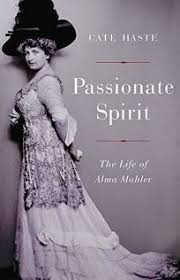 The Gustav Mahler industry, in particular, is vicious in its representation of Alma as a self-serving narcissist who exaggerated her own role in the life of the great man, massaged the facts and was even, on account of her affair with Gropius, responsible for his death at the age of fifty. She was, the legend goes, an artistic gold-digger in whose eyes a man’s sexual attractiveness increased in proportion to his artistic ‘greatness’. But in this, as in so many other matters, Alma didn’t help: during a three-year affair with Oskar Kokoschka, which became darker and stranger as time went on, she told him that she would marry him only when he had created a masterpiece (she never did). And why at the end of her life, after marrying three well-known artists, did she revert to the name of the first? Was it because she reckoned that Mahler was the most important, the ‘greatest’ of the three?