
Helen Briggs in BBC:
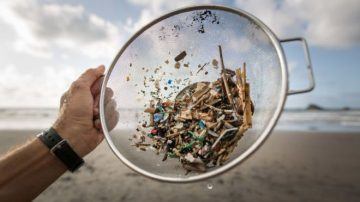 Daniella Hodgson is digging a hole in the sand on a windswept beach as seabirds wheel overhead. “Found one,” she cries, flinging down her spade. She opens her hand to reveal a wriggling lugworm. Plucked from its underground burrow, this humble creature is not unlike the proverbial canary in a coal mine. A sentinel for plastic, the worm will ingest any particles of plastic it comes across while swallowing sand, which can then pass up the food chain to birds and fish. “We want to see how much plastic the island is potentially getting on its shores – so what is in the sediments there – and what the animals are eating,” says Ms Hodgson, a postgraduate researcher at Royal Holloway, University of London. “If you’re exposed to more plastics are you going to be eating more plastics? What types of plastics, what shapes, colours, sizes? And then we can use that kind of information to inform experiments to look at the impacts of ingesting those plastics on different animals.”
Microplastics are generally referred to as plastic smaller than 5mm, or about the size of a sesame seed. There are many unanswered questions about the impact of these tiny bits of plastic, which come from larger plastic debris, cosmetics and clothes. What’s not in dispute is just how far microplastics have travelled around the planet in a matter of decades. “They’re absolutely everywhere,” says Hodgson, who is investigating how plastic is making its way into marine ecosystems. “Microplastics can be found in the sea, in freshwater environments in rivers and lakes, in the atmosphere, in food.”
More here.
 I honestly don’t know where to begin with this whole thing. But let me start by making clear what I am not saying. I am not saying that we should not read Handke’s literary work. My objection is not a version of the age-old question of whether we should listen to Richard Wagner. Go ahead and listen to Wagner. Go ahead and read Handke. My point is this: It is one thing to read him — it is quite another to bestow upon him a prize that delivers a great amount of legitimacy to his entire body of work, not just the novels and plays that are most impeccable and nonpolitical.
 I’ve received tenure at Harvard!
 Where in the pantheon
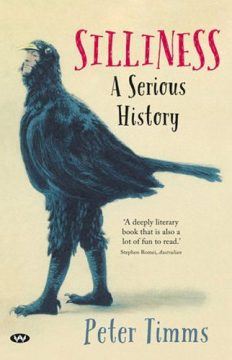 Terry Eagleton’s Humour and Peter Timms’ Silliness: A Serious History are two recent additions to the patchy field of humour studies. Both authors are hemmed into the Anglocentric comedy canon that sees absurdist comedy peaking with The Goon Show, Pete and Dud, and Monty Python, and going downhill ever since. They’re also both in their seventies. This puts you in the weird position of feeling unreasonable for expecting them to be up-to-date on their subject. But neither would you want their lukewarm take on, say, ‘meme commentator’ @gayvapeshark or the HBO series Los Espookys.
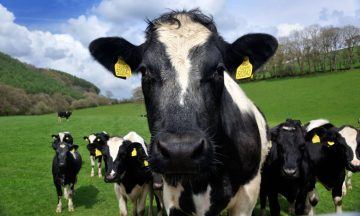 First, a warning: this is a life-changing book and will alter your relationship to food for ever. I can’t imagine anyone reading Safran Foer’s lucid, heartfelt, deeply compassionate prose and then reaching blithely for a cheeseburger. There’s some dispute as to precisely what proportion of global heating is directly related to the rearing of animals for food, but even the lowest estimates put it on a par with the entire global transportation industry. A well-evidenced
  An interview with Vinayak Chaturdevi in Jacobin:
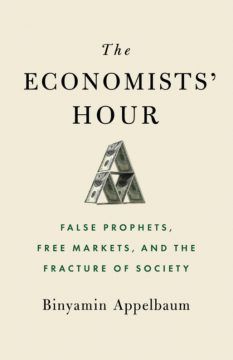 Robin Kaiser-Schatzlein in TNR:
 Gabriel Winant in n+1:
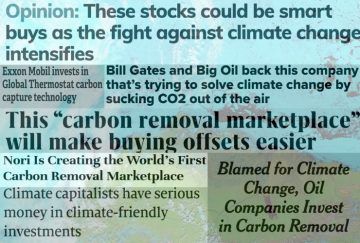 Troy Vettese in Boston Review:
 Consciousness of time passing seldom accords with what clocks and calendars tell us. The discord is especially acute in these days of Trump-induced, ever changing “breaking news.” Thus, it seems to me and I suspect to every other sentient being paying attention, that it was centuries ago that Donald Trump was still making an effort not to flaunt his ignorance and mindlessness. As far as the physics goes, it hasn’t been quite three years. It seems like centuries ago too when there were still “adults in the room,” trying, without much success, to keep Trump from acting out too egregiously or doing anything too transparently stupid. According to the calendar, it has not been much more than a year since most of that stable cleared out. Among those adults, there was a retired Marine Corps General called “Mad Dog,” an Exxon-Mobil honcho named “Rex,” and H. R. McMaster, a retired Army Lieutenant General. They were Trump’s Defense Secretary, Secretary of State, and National Security Advisor, respectively.
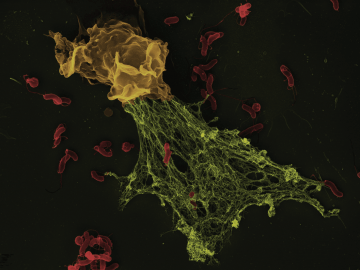 In the early 2000s,
 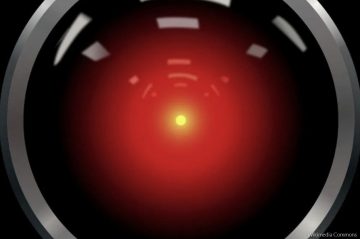 In 2017, scientists at Carnegie Mellon University shocked the gaming world when they programmed a computer to beat experts in a poker game called no-limit hold ’em. People assumed a poker player’s intuition and creative thinking would give him or her the competitive edge. Yet by playing 24 trillion hands of poker every second for two months, the computer “taught” itself an unbeatable strategy.
 Lord Byron, according to his dumped mistress Lady Caroline Lamb, was “mad, bad and dangerous to know”. Antony Peattie’s exploration of his personal caprices and intellectual quirks definitively strikes down all three charges. Byron the self-aware ironist was never demented; he may have relished his reputation for vice, but his pagan promiscuity was overshadowed by the legacy of his punitive Calvinist upbringing; and it would surely have been a delight, not a danger, to know this convivial fellow, whose eyes, as Coleridge said, were “the open portals of the sun” and his teeth “so many stationary smiles”.