
Sarah Franklin in Nature:
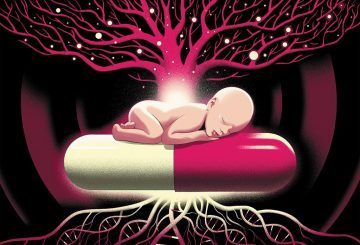 In the autumn of 1869, Charles Darwin was hard at work revising the fifth edition of On The Origin of Species and drafting his next book, The Descent of Man, to be published in 1871. As he finished chapters, Darwin sent them to his daughter, Henrietta, to edit — hoping she could help to head off the hostile responses to his debut, including objections to the implication that morality and ethics could have no basis in nature, because nature had no purpose.
That same year, Darwin’s cousin Francis Galton published Hereditary Genius, a book that recast natural selection as a question of social planning1. Galton argued that human abilities were differentially inherited, and introduced a statistical methodology to aid “improvement of the race”. Later, he coined the term ‘eugenics’ to advocate selective reproduction through application of the breeder’s guiding hand.
Darwin’s transformative theory inspired modern biology; Galton’s attempt to equate selection and social reform spawned eugenics. The ethical dilemmas engendered by these two late-nineteenth-century visions of biological control proliferate still. And, as older quandaries die out, they are replaced by more vigorous descendants. That there has never been a border between ethics and biology remains as apparent today as it was 150 years ago. The difference is that many of the issues, such as the remodelling of future generations or the surveillance of personal data, have become as everyday as they are vast in their implications. To work out how to move forward, it is worth looking at how we got here.
In the late nineteenth century, like today, society was in upheaval and science was on a roll.
More here.
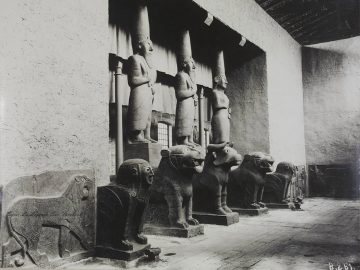 When Samuel Beckett visited the Tell Halaf Museum in Berlin’s Charlottenburg district on 21 December 1936, he had the place to himself. Though King Faisal of Iraq had visited the makeshift museum when it opened six years earlier and the Illustrated London News had run a cover story on the quirky institution, the museum was hardly a popular tourist destination. You had to be in the know. After Beckett rang for the key, he was left alone among colossal lions, scorpion-bird-men, griffons, and sphinxes. “Superbly daemonic, sinister + implacable,” the yet unknown Irish writer wrote in his diary.
 Late on election night, November 8, 2016, Paul Krugman wrote in the New York Times: “. . . people like me, and probably like most readers of The New York Times, truly didn’t understand the country we live in. We thought that our fellow citizens would not, in the end, vote for a candidate . . . so scary yet ludicrous.” About two and half years before that night, many liberals in India felt something similar at Narendra Modi’s massive victory—though one should say, Modi is scary but not ludicrous.
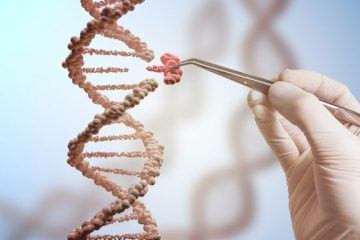 The gene-editing method CRISPR has transformed biology, giving scientists the ability to modify genes to treat or prevent genetic diseases by correcting dangerous mutations and to create a host of new genetically modified plants and animals. But the technique, which involves using an enzyme called a nuclease that acts as molecular scissors to “cut” DNA, can cause unintended effects. Making such double-stranded breaks in DNA can result in unwanted genetic material being inserted or deleted, which can have consequences including activating genes that cause cancer. Most mutations cannot be corrected easily without creating these undesirable genetic by-products.
 Perhaps the grandest tale of capitalist modernity is entitled ‘The Disenchantment of the World’. Crystallised in the work of Max Weber but eloquently anticipated by Karl Marx, the story goes something like this: before the advent of capitalism, people believed that the world was enchanted, pervaded by mysterious, incalculable forces that ruled and animated the cosmos. Gods, spirits and other supernatural beings infused the material world, anchoring the most sublime and ultimate values in the ontological architecture of the Universe. In premodern Europe, Catholic Christianity epitomised enchantment in its sacramental cosmology and rituals, in which matter could serve as a conduit or mediator of God’s immeasurable grace. But as Calvinism, science and especially capitalism eroded this sacramental worldview, matter became nothing more than dumb, inert and manipulable stuff, disenchanted raw material open to the discovery of scientists, the mastery of technicians, and the exploitation of merchants and industrialists. Discredited in the course of enlightenment, the enchanted cosmos either withered into historical oblivion or went into the exile of private belief in liberal democracies. As Marx put it, all that was solid melted into air, and the most heavenly ecstasies drowned in the icy water of egotistical calculation.
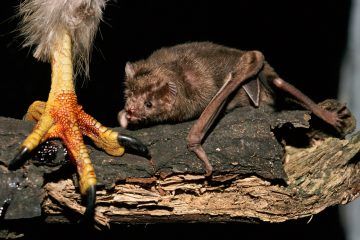 It has been a big year for leeches. A new species
 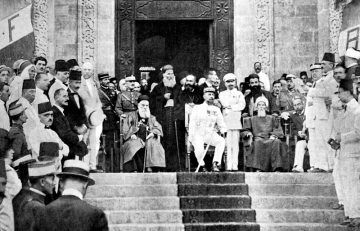 Throughout modern history, the weight of Western colonialism in the name of freedom and religious liberty has distorted the nature of the Middle East. It has transformed the political geography of the region by creating a series of small and dependent Middle Eastern states and emirates where once stood a large interconnected Ottoman sultanate. It introduced a new – and still unresolved – conflict between ‘Arab’ and ‘Jew’ in Palestine just when a new Arab identity that included Muslim, Christian and Jewish Arabs appeared most promising. This late – last – Western colonialism has obscured the fact that the shift from Ottoman imperial rule to post-Ottoman Arab national rule was neither natural nor inevitable. European colonialism abruptly interrupted and reshaped a vital anti-sectarian Arab cultural and political path that had begun to take shape during the last century of Ottoman rule. Despite European colonialism, the ecumenical ideal, and the dream of creating sovereign societies greater than the sum of their communal or sectarian parts, survived well into the 20th-century Arab world.
 The major cause of cancer-related deaths is the spread of cancer cells from their primary site to other parts of the body
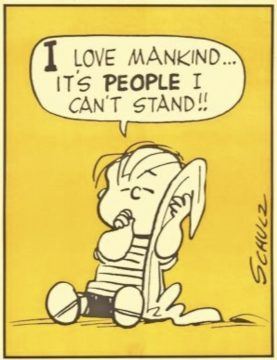 Here’s where it begins for me: a four-panel strip, Lucy and Linus, simplest narrative in the universe. As the sequence starts, we see Lucy skipping rope and, like an older sister, giving Linus a hard time. “You a doctor! Ha! That’s a big laugh!” she mocks. “You could never be a doctor! You know why?” Before he can respond, she turns away, as if to say she knows him better than he knows himself. “Because you don’t love mankind, that’s why!” she answers, seeking (as usual) the final word. Linus, however, he defies her, standing alone in the last frame, shouting his rejoinder out into the distance: “I love mankind . . . it’s people I can’t stand!!”
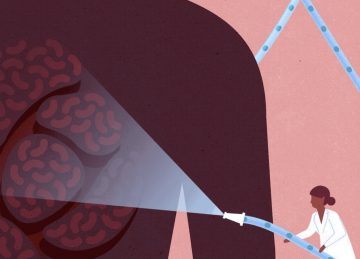 As a doctor who treats cancer, I think a lot about how to frame new treatments to my patients. I never want to give false hope. But the uncertainty inherent to my field also cautions me against closing the door on optimism prematurely. We take it as a point of pride that no field of medicine evolves as rapidly as cancer — the FDA approves dozens of new treatments a year. One of my biggest challenges is staying up to date on every development and teasing apart what should — and shouldn’t — change my practice. I am often a mediator for my patients, tempering theoretical promises with everyday realism. To accept a research finding into medical practice, I prefer slow steps showing me proof of concept, safety, and efficacy.
 I was raised as a Quaker, but around the age of 20 my faith faded. It would be easiest to say that this was because I took up philosophy – my lifelong occupation as a teacher and scholar. This is not true. More accurately, I joke that having had one headmaster in this life, I’ll be damned if I want another in the next. I was convinced back then that, by the age of 70, I would be getting back onside with the Powers That Be. But faith did not then return and, as I approach 80, is nowhere on the horizon. I feel more at peace with myself than ever before. It’s not that I don’t care about the meaning or purpose of life – I am a philosopher! Nor does my sense of peace mean that I am complacent or that I have delusions about my achievements and successes. Rather, I feel that deep contentment that religious people tell us is the gift or reward for proper living.
 Ptacin, the author of the memoir “Poor Your Soul,” herself hovers somewhere between curiosity and the edge of belief. As she tells us, she wants to believe, wishes she could see the ghosts that float so readily around the Maine mediums in this “enchanted hamlet.” But the hovering serves a purpose. She is on a quest to understand the peculiar nature of belief, the power of faith — pure, unquestioning and even unreasoning — to shape the way we see the world around us.
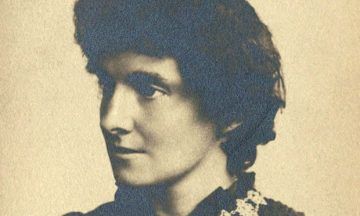 It’s not just that Nesbit’s books are brilliant: her life is also brilliant material for one. She was in person at once quite awe-inspiring and a bit of a nightmare, able to weather tragedy and yet a queen of melodrama, a self-supporting writer who opposed women’s suffrage. Vibrantly attractive and adored by her many proteges and readers, she was what they called in those days “advanced” – a committed socialist (she and her husband Hubert Bland were among the earliest members of
 Dimitrina Petrova in Dissent:
 Over at the Next System Project’s