“Democracy may not exist, but we’ll miss it when it’s gone” — or so suggests the title of Astra Taylor’s new book. We all know how democracy falls short, in practice, of its lofty ideals; but we can also appreciate how democratic values are crucial in the fight for a more just society. In this conversation, we dig into the nature of democracy, from its origins to the present day. We talk about who gets to participate, how economic inequality affects political inequality, and how democratic ideals manifest themselves in any number of real-world situations.
I’m against this. I understand concern about the growing power of the very rich. But I worry the movement against billionaire charity is on track to damage charity a whole lot more than it damages billionaires. Eleven points:
1. Is criticizing billionaire philanthropy a good way to protest billionaires having too much power in society?
Which got more criticism? Mark Zuckerberg giving $100 million to help low-income students? Or Mark Zuckerberg buying a $59 million dollar mansion in Lake Tahoe? Obviously it’s the low-income students. I’ve heard people criticizing Zuckerberg’s donation constantly for years, and I didn’t even know he had a $59 million Lake Tahoe mansion until I googled “things mark zuckerberg has spent ridiculous amounts of money on” in the process of writing this paragraph.
Which got more negative press? Jeff Bezos donating $2 billion for preschools for underprivileged children? Or Jeff Bezos spending $2 billion on whatever is going to come up when I Google “things jeff bezos has spent ridiculous amounts of money on?”.
Billionaires respond to incentives like everyone else. If donating to charity earns them negative publicity, and buying a private yacht earns them glowing articles about how cool their yacht is, they’re more likely to buy the yacht.
Journalists and intellectuals who criticize billionaires’ philanthropy but not their yachts, or who spend much more energy criticizing philanthropy than yachts, probably aren’t doing much to promote a world without billionaires. But they’re doing a lot to promote a world where billionaires just buy yachts instead of giving to charity.
This is the tale of a man who fled from desperate confinement, whirled into Polynesian dreamlands on a plank, sailed back to “civilization,” and then, his genius predictably unremunerated, had to tour the universe in a little room. His biographer calls him “an unfortunate fellow who had come to maturity penniless and poorly educated.” Unfortunate was likewise how he ended. Who could have predicted the greatness that lay before Herman Melville?
In 1841, the earnest young man sneaked out on his unpaid landlady and signed on with the New Bedford whaler Acushnet, bound for the South Seas. He was 21, eager and shockingly open-minded, yearning not just to see but to live. In Typee (1846) and Omoo (1847) and the other seafaring novels inspired by his exploits over the next three years, written in the half-decade before he commenced Moby-Dick, his word-voyage aboard the Pequod, Melville wrote with bighearted curiosity about fearsome “savages” and cultural otherness. To honor this prophet of empathy, this spring I set out for French Polynesia, to see some of the watery part of the world, and to view what I could of the place and its inhabitants, which formed in our novelist his moral conscience and gave unending sail to his language and his metaphors. Back in America, he had to learn to savor these gifts, for after tasting briefly of success he would not have much else to sustain him.
A Japanese stem-cell scientist is the first to receive government support to create animal embryos that contain human cells and transplant them into surrogate animals since a ban on the practice was overturned earlier this year. Hiromitsu Nakauchi, who leads teams at the University of Tokyo and Stanford University in California, plans to grow human cells in mouse and rat embryos and then transplant those embryos into surrogate animals. Nakauchi’s ultimate goal is to produce animals with organs made of human cells that can, eventually, be transplanted into people. Until March, Japan explicitly forbade the growth of animal embryos containing human cells beyond 14 days or the transplant of such embryos into a surrogate uterus. That month, Japan’s education and science ministry issued new guidelines allowing the creation of human–animal embryos that can be transplanted into surrogate animals and brought to term.
…But getting human cells to grow in another species is not easy. Nakauchi and colleagues announced at the 2018 American Association for the Advancement of Science meeting in Austin, Texas, that they had put human iPS cells into sheep embryos that had been engineered not to produce a pancreas. But the hybrid embryos, grown for 28 days, contained very few human cells, and nothing resembling organs. This is probably because of the genetic distance between humans and sheep, says Nakauchi.
Every green room of the forest planted: Trillium and quince, alder and salmonberry, … —Robert Sund
Go On
You could go on, I know— green room to green room, names scrolling off your tongue like bark from madrona trunks. Snowberry and salal, Douglas fir and elderberry. Have I told you cedars are my favorites? I see more rust-colored cedar boughs; “flagging,” a mutual friend explains. For me a new meaning. Things are changing, but this flagging— natural, this time of year. Nothing to worry about. Have I told you I’m feeling my age, am more prone to cliché? Natural, this time of life. Weakness and pain in my right arm is new to me. Go on. I’ll sit here and rest, with the old meaning— in this warming up, drying out rust-colored room. I’m sorry for harm I’ve caused. Why do you think I started walking, breathing in the ragged poison bouquet of particulates and exhaust? Here, spiderwebs are mostly intact and blackberries flourish. At the tip of my old hiking boot, holey, a beetle evades my attention, strolls under a leaf from a trailing blackberry vine, hides. For me a new beetle; no name scrolls from my tongue. I lift the leaf, only to say, Hi. I haven’t seen you before. You’re safe. I’m uninterested in causing further harm. Should I buy new hiking boots? It depends. Have I told you our time together has been holy, a benediction? Go on. There is nothing to fear. Don’t worry. Know I loved you. Go on.
Rushdie takes another journey into unexplored territory in Quichotte, which will be published by Random House in September and was recently long-listed for the Booker. Inspired by Cervantes’s Don Quixote, the novel portrays an elderly traveling salesman “deranged by reality television” who falls in love with the host of a daytime talk show whom he has never met. As Quichotte (the name he takes in letters to his beloved) travels across the country to meet Miss Salma R, a parallel plot concerns the writer who created him; these twin story lines eventually converge in a fantastical ending that tips its hat to some of the science fiction tales Rushdie loved as a boy.
“It comes from the literary tradition of the picaresque novel, combined with a certain kind of modernist playfulness,” Rushdie says. “There’s quite a lot of Joyce in it. This was a scary book for me to write, because I wasn’t sure I was going to be able to pull it off. There are these two narrative lines, which echo and mirror and talk to each other. I knew that the thing that would make the book work was if by the end they could merge, and I really wasn’t sure how to do that for a long time. I was quite nervous about it.”
Rushdie adds, “Normally I don’t show anyone a work in progress, but in this case when I had written 50 or 60 pages of the first draft, I actually asked Andrew Wylie [his agent] to read it. I said, ‘Look, this is very weird, but I need to know if it’s good weird or bad weird.’ And he said, ‘I don’t know where you’re going to go with this, because it could go in a lot of directions, but what I can say is that it’s the funniest thing of yours that I’ve read.’ That was comforting, and I’m pleased to see in the early responses that a lot of people have been finding it very funny.”
How do quantum probabilities coalesce into the sharp focus of the classical world?
Physicists sometimes talk about this changeover as the “quantum-classical transition.” But in fact there’s no reason to think that the large and the small have fundamentally different rules, or that there’s a sudden switch between them. Over the past several decades, researchers have achieved a greater understanding of how quantum mechanics inevitably becomes classical mechanics through an interaction between a particle or other microscopic system and its surrounding environment.
One of the most remarkable ideas in this theoretical framework is that the definite properties of objects that we associate with classical physics — position and speed, say — are selected from a menu of quantum possibilities in a process loosely analogous to natural selection in evolution: The properties that survive are in some sense the “fittest.” As in natural selection, the survivors are those that make the most copies of themselves. This means that many independent observers can make measurements of a quantum system and agree on the outcome — a hallmark of classical behavior.
This idea, called quantum Darwinism (QD), explains a lot about why we experience the world the way we do rather than in the peculiar way it manifests at the scale of atoms and fundamental particles.
Psychologists have lots of evidence that implicit social biases—our unconscious, knee-jerk attitudes associated with specific races, sexes and other categories—are widespread, and many assumed they do not evolve. The feelings are just too deep. But a new study finds that over roughly the past decade, both implicit and explicit, or conscious, attitudes toward several social groups have grown warmer.
The study used data from a standard test of implicit attitudes collected via a Web site called Project Implicit. Participants were asked to quickly press a certain computer key in response to positive words, such as “happy,” and a different key in response to negative words, such as “tragic,” that appeared on a screen. These words were interspersed with images or words that represented two categories of people, such as blacks and whites, and participants were asked to flag these using the same keys. Faster reactions when, for example, black rather than white faces shared a key with negative words suggested a racial bias.
Tessa Charlesworth and Mahzarin Banaji, psychologists at Harvard University, analyzed more than four million results collected over a 10-year period from U.S. adults who had taken implicit association tests for sexuality, race, skin tone (in which faces differ in color but not shape), age, disability and body weight.
Twenty years ago, in the preface to the 20th-anniversary edition of his classic book, Douglas Hofstadter marvelled at how misunderstood its thesis has been. A treatise on the nature of consciousness, it is often wildly misconstrued as an exploration of how ‘math, art, and music are really all the same’. But one likely source of the confusion is in the name – which is, at the same time, a big reason for the book’s lasting popularity: Gödel, Escher, Bach: An Eternal Golden Braid, or GEB for short, sounds like a promise of just such a dazzling, cosmic counterpoint. Another likely culprit is Hofstadter’s own musings about music. While M C Escher’s artwork elegantly (and literally) illustrates many of the book’s themes, Hofstadter’s attempts at justifying the inclusion of Bach are mostly banal and often badly off the mark.
There are good reasons for GEB’s fame besides the sexy and marketable title, though. In its attempt to build a grand theory of minds and meanings, the book discusses an eclectic range of topics and, at its best, does it in a genuinely enlightening way. It is obviously an inspired work, even if the fundamental case it sets out to make falls flat. Like most attempts at ‘explaining’ consciousness, GEB is rooted in a category mistake: it treats our phenomenological core as just another phenomenon, making the book an 800-page exercise in begging the question. But it’s a stimulating 800 pages, riffing on fractals, Zen koans, computer languages, quantum physics and much more.
Cute baby boy playing with mobile phone in the park, digital technologies in the hands of a child. Portrait of toddler with smartphone
A baby’s first word seems as if it ought to be universally fascinating. Laden with the promise of a new life, a first word is a new person’s first expression of self, even if it’s just to label the dog, ask for food, or say hi. First words are more than cute; they’re existentially profound. They represent the threshold where noise becomes signal, the moment that interiority breaks its confines to greet the outside world. And yet, for much of history, infant language wasn’t regarded as worthy of attention, and in many contemporary cultures it still isn’t. All babies, across time and space, transition from babbling to language at about twelve months of age, in spoken languages as well as signed ones, but not all parents and caregivers pay attention to that transition. That supposedly irresistible thing we call a “baby’s first word” is a romanticized milestone, shaped by social and economic circumstances, and it is surprisingly recent. The natural state of first words is to be disregarded, misheard, or entirely overlooked. Doting over them isn’t perverse—it’s just a modern, underappreciated luxury.
I was inspired to attempt a cultural history of “first words” by Germanist Karl Guthke, who wrote a definitive book about last words in the early nineties. He saw them as artifacts of each era’s conception of death. “There are styles of dying,” he noted, “so are there corresponding styles and fashions of last words?” In an aside, he dismissed first words, arguing they couldn’t tell us much about individual lives. They belong, he wrote, “with anecdotes of childhood, whose biographical value is inversely proportionate to their charm.” He had been musing on 1988 U.S. presidential candidate Michael Dukakis whose reputation as a cold fish technocrat seemed to have been predicted by his alleged first words, in Greek: monos mou, or “all by myself.”
I’m a theoretical physicist, but I’m going to be talking about the future of mind and intelligence. It’s not entirely inappropriate to do that because physical platforms are absolutely a fundamental consideration in the future of mind and intelligence. I would think it’s fair to say that the continued success of Moore’s law has been absolutely central to all of the developments in artificial intelligence and the evolution of machines and machine learning, at least as much as any cleverness in algorithms.
First I’ll talk about the in-principle advantages of artificial intelligence with existing engineering principles. Then I will talk about the enormous lead that natural intelligence in the world has, although there are obviously great motivations for having general-purpose artificial intelligence—servants, or soldiers, or other useful kinds of objects that are not out there. Then I’ll talk a little bit about the forces that will drive towards intelligence. Perhaps that’s superfluous here, but we’ve been talking about how improvements in intelligence are an end in themselves, but it’s worth at least saying why that’s going to happen. Finally, I’ll argue for an emphasis on a new form of engineering that is not being vigorously cultivated, and I’ll draw some consequences for what the future of intelligence will be.
The rivers of this country are sweet as a troubadour’s song, the heavy sun wanders westward on yellow circus wagons. Little village churches hold a fabric of silence so fine and old that even a breath could tear it. I love to swim in the sea, which keeps talking to itself in the monotone of a vagabond who no longer recalls exactly how long he’s been on the road. Swimming is like a prayer: palms join and part, join and part, almost without end. . by Adam Zagajewski from Without End: New and Selected Poems. Farrar, Straus & Giroux, 2002
I used to be pro-science myself. I only became an anti-science activist after I realized how much of my dream-interpretation-based worldview was incompatible with what I was reading in scientific journals. Since then, I have become a fierce activist. I make passionate arguments against the so-called “scientific method” (it’s just making guesses) and the value of peer-reviewed studies (excuse me for wanting to think for myself!). When my children ask me why the sky is blue, I tell them the truth. That there’s no way to find out.
I am only advocating that people do what’s right for them, and I’m doing that the best way I know how — by focusing on the examples that support my point of view and sharing them on Facebook. My work also includes an intense regimen of exposing fake research. I have become very adept at spotting fake research — the trick is to look for evidence that counters my argument in any way.
An authoritarian state can do many things to get rid of these democratic types — put them in jail, put them on trial — but ultimately the government must attack the institutions that produce and sustain them. Newspapers can be easy to buy. NGOs are easy to shut down. Universities are much harder to dismantle.
But this is what, through the great purge, President Recep Tayyip Erdogan and his allies sought to do. Thousands of academics lost their jobs, and many lost their right to travel, their passports canceled. They would not be able to work at public or private universities again. Legal proceedings would be opened against them — and drag on to this day, leaving the fired in limbo. Many who were abroad would not return. They feared being quoted in the press or even speaking to journalists. Some were sentenced to prison. At least one committed suicide. Around 90 of the purged academics came from Ankara University, and 36 came from Mulkiye alone, raising suspicions that the 160-year-old faculty of political science had become a particular target.
Quantum computers will never fully replace “classical” ones like the device you’re reading this article on. They won’t run web browsers, help with your taxes, or stream the latest video from Netflix.
What they will do—what’s long been hoped for, at least—will be to offer a fundamentally different way of performing certain calculations. They’ll be able to solve problems that would take a fast classical computer billions of years to perform. They’ll enable the simulation of complex quantum systems such as biological molecules, or offer a way to factor incredibly large numbers, thereby breaking long-standing forms of encryption.
The threshold where quantum computers cross from being interesting research projects to doing things that no classical computer can do is called “quantum supremacy.” Many people believe that Google’s quantum computing project will achieve it later this year. In anticipation of that event, we’ve created this guide for the quantum-computing curious. It provides the information you’ll need to understand what quantum supremacy means, and whether it’s really been achieved.

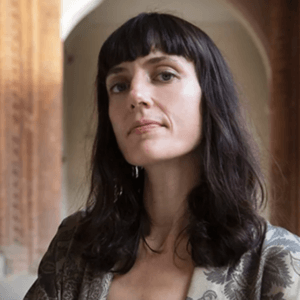 “Democracy may not exist, but we’ll miss it when it’s gone” — or so suggests the title of Astra Taylor’s new book. We all know how democracy falls short, in practice, of its lofty ideals; but we can also appreciate how democratic values are crucial in the fight for a more just society. In this conversation, we dig into the nature of democracy, from its origins to the present day. We talk about who gets to participate, how economic inequality affects political inequality, and how democratic ideals manifest themselves in any number of real-world situations.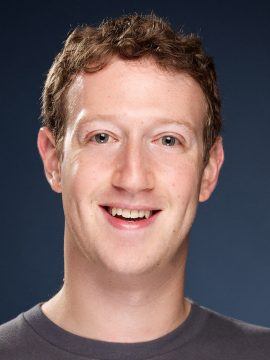
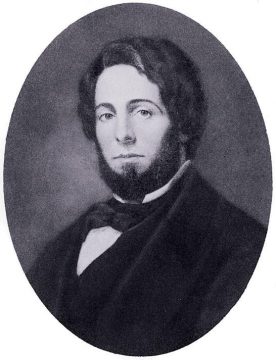 This is the tale of a man who fled from desperate confinement, whirled into Polynesian dreamlands on a plank, sailed back to “civilization,” and then, his genius predictably unremunerated, had to tour the universe in a little room. His biographer calls him “an unfortunate fellow who had come to maturity penniless and poorly educated.” Unfortunate was likewise how he ended. Who could have predicted the greatness that lay before Herman Melville?
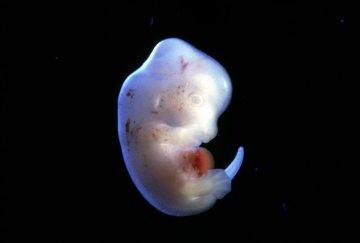 A Japanese stem-cell scientist is the first to receive government support to create animal embryos that contain human cells and transplant them into surrogate animals since a ban on the practice was overturned earlier this year. Hiromitsu Nakauchi, who leads teams at the University of Tokyo and Stanford University in California, plans to grow human cells in mouse and rat embryos and then transplant those embryos into surrogate animals. Nakauchi’s ultimate goal is to produce animals with organs made of human cells that can, eventually, be transplanted into people. Until March, Japan explicitly forbade the growth of animal embryos containing human cells beyond 14 days or the transplant of such embryos into a surrogate uterus. That month, Japan’s education and science ministry
 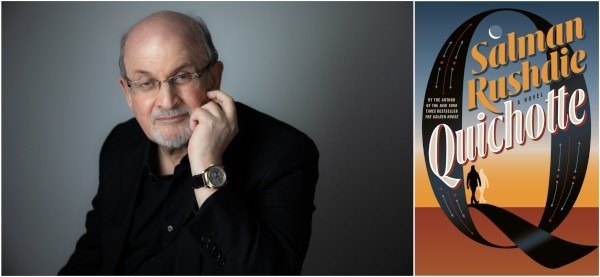 Rushdie takes another journey into unexplored territory in Quichotte, which will be published by Random House in September and was recently long-listed for the Booker. Inspired by Cervantes’s Don Quixote, the novel portrays an elderly traveling salesman “deranged by reality television” who falls in love with the host of a daytime talk show whom he has never met. As Quichotte (the name he takes in letters to his beloved) travels across the country to meet Miss Salma R, a parallel plot concerns the writer who created him; these twin story lines eventually converge in a fantastical ending that tips its hat to some of the science fiction tales Rushdie loved as a boy.
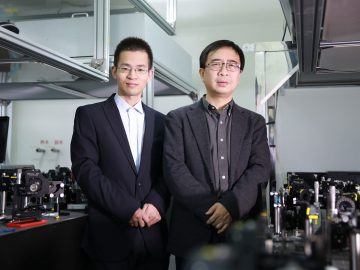 How do quantum probabilities coalesce into the sharp focus of the classical world?
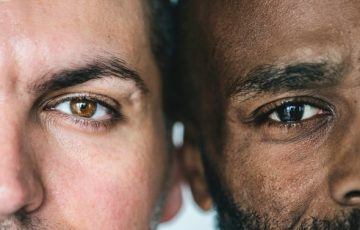 Psychologists have lots of evidence that implicit social biases—our unconscious, knee-jerk attitudes associated with specific races, sexes and other categories—are widespread, and many assumed they do not evolve. The feelings are just too deep. But a new study finds that over roughly the past decade, both implicit and explicit, or conscious, attitudes toward several social groups have grown warmer.
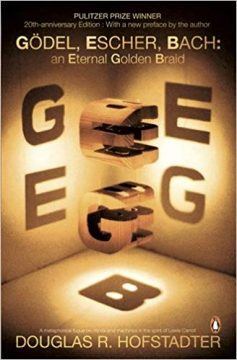 Twenty years ago, in the preface to the 20th-anniversary edition of his classic book, Douglas Hofstadter marvelled at how misunderstood its thesis has been. A treatise on the nature of consciousness, it is often wildly misconstrued as an exploration of how ‘math, art, and music are really all the same’. But one likely source of the confusion is in the name – which is, at the same time, a big reason for the book’s lasting popularity: Gödel, Escher, Bach: An Eternal Golden Braid, or GEB for short, sounds like a promise of just such a dazzling, cosmic counterpoint. Another likely culprit is Hofstadter’s own musings about music. While M C Escher’s artwork elegantly (and literally) illustrates many of the book’s themes, Hofstadter’s attempts at justifying the inclusion of Bach are mostly banal and often badly off the mark.
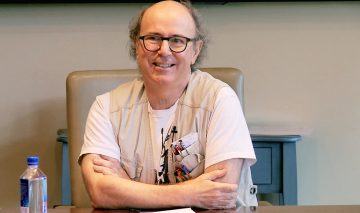 I’m a theoretical physicist, but I’m going to be talking about the future of mind and intelligence. It’s not entirely inappropriate to do that because physical platforms are absolutely a fundamental consideration in the future of mind and intelligence. I would think it’s fair to say that the continued success of Moore’s law has been absolutely central to all of the developments in artificial intelligence and the evolution of machines and machine learning, at least as much as any cleverness in algorithms.
 I used to be pro-science myself. I only became an anti-science activist after I realized how much of my dream-interpretation-based worldview was incompatible with what I was reading in scientific journals. Since then, I have become a fierce activist. I make passionate arguments against the so-called “scientific method” (it’s just making guesses) and the value of peer-reviewed studies (excuse me for wanting to think for myself!). When my children ask me why the sky is blue, I tell them the truth. That there’s no way to find out.
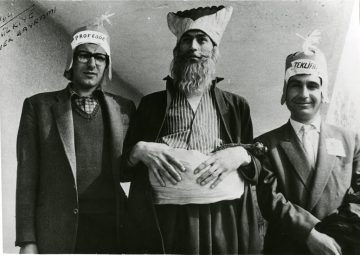 Suzy Hansen in the NYT Magazine:
 Kevin Hartnett in Nautilus: