
Scott Alexander in Slate Star Codex:
Thucydides predicted that future generations would underestimate the power of Sparta. It built no great temples, left no magnificent ruins. Absent any tangible signs of the sway it once held, memories of its past importance would sound like ridiculous exaggerations.
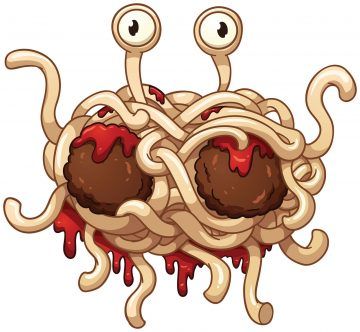
This is how I feel about New Atheism.
If I were to describe the power of New Atheism over online discourse to a teenager, they would never believe me. Why should they? Other intellectual movements have left indelible marks in the culture; the heyday of hippiedom may be long gone, but time travelers visiting 1969 would not be surprised by the extent of Woodstock. But I imagine the same travelers visiting 2005, logging on to the Internet, and holy @#$! that’s a lot of atheism-related discourse what is going on here?
My first forays onto the Internet were online bulletin boards about computer games. They would have a lot of little forums about various aspects of the games, plus two off-topic forums. One for discussion of atheism vs. religion. And the other for everything else. This was a common structure for websites in those days. You had to do it, or the atheism vs. religion discussions would take over everything. At the time, this seemed perfectly normal.
More here.
 Incarceration gave Hitler a chance to read more widely and gather his thoughts. One of his main preoccupations in Landsberg was the United States, which he was coming to regard as the model state and society, perhaps even more so than the British Empire. He “devoured” the memoirs of a returned German emigrant to the United States. “One should take America as a model,” he proclaimed.
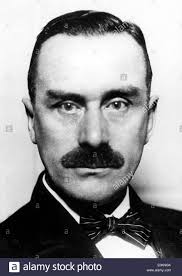 Thomas Mann’s reputation as a difficult, ponderous, heavyweight novelist, and the erudite allusions, serious subject matter, and philosophical themes of The Magic Mountain (1924) have led readers to ignore the comic and satiric tone that enlivens his morbid novel. His method is very different from the somber and solemn way most authors—like Tolstoy, Gide, and Solzhenitsyn—write about disease and death. Mann’s dark comedy, tinged with fear and disgust, takes place in the luxurious remote enclosed society of the International Sanatorium Berghof. He indicates the magic of the place with a witty game of recurring numbers. The young, naïve Hans Castorp, who leaves his ordinary life in Hamburg to visit his tubercular cousin Joachim Ziemssen, generates much of the comedy. Hans gradually progresses from incomprehension to knowledge and to eager acceptance of the distorted medical, social, and sexual customs on the magic mountain.

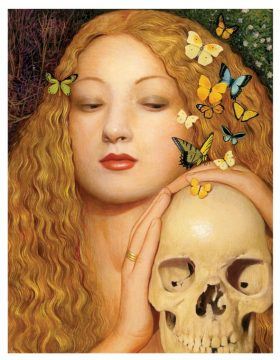 You will die, sooner or later. We all will. For everything that has a beginning has an end, an ineluctable consequence of the second law of thermodynamics. Few of us like to think about this troubling fact. But once birthed, the thought of oblivion can’t be completely erased. It lurks in the unconscious shadows, ready to burst forth. In my case, it was only as a mature man that I became fully mortal. I had wasted an entire evening playing an addictive, first-person shooter video game—running through subterranean halls, flooded corridors, nightmarishly turning tunnels, and empty plazas under a foreign sun, firing my weapons at hordes of aliens relentlessly pursuing me. I went to bed, easily falling asleep but awoke abruptly a few hours later. Abstract knowledge had turned to felt reality—I was going to die! Not right there and then but eventually.
 In the summer of 2016, James and Becca Reed, a lower-income couple living in Austin, Texas, decided it was time to save their lives. The Reeds, married more than twenty-five years, had become morbidly obese, diabetic, and depressed. They were taking a combined thirty-two medications. Only in their early fifties, they had arrived at this condition via a well-trod path: They ate their way into it. They did no more than consume what the American food industry not only offers in abundance—salt, starch, and sweetness—but also encourages us to eat.
 We haven’t talked about the socialization of intelligence very much. We talked a lot about intelligence as being individual human things, yet the thing that distinguishes humans from other animals is our possession of human language, which allows us both to think and communicate in ways that other animals don’t appear to be able to. This gives us a cooperative power as a global organism, which is causing lots of trouble. If I were another species, I’d be pretty damn pissed off right now. What makes human beings effective is not their individual intelligences, though there are many very intelligent people in this room, but their communal intelligence.
 To consider yourself well versed in contemporary literature without reading short stories is to visit the Eiffel Tower and say you’ve seen Europe. Not only would monumental writers be missing from your literary tour, but entire angles and moves and structures of which the novel, in its bulk, is incapable. The quirky neighborhood, the narrow cobblestone alley, the stray cats and small museums and the store that sells only butter.
 In the Oval Office, an annoyed President Trump ended an argument he was having with his aides. He reached into a drawer, took out his iPhone and threw it on top of the historic Resolute Desk:
 It is a good question, but I was a little surprised to see it as the title of a research paper in a medical journal: “How Happy Is Too Happy?” Yet there it was in a publication from 2012. The article was written by two Germans and an American, and they were grappling with the issue of how we should deal with the possibility of manipulating people’s moods and feeling of happiness through brain stimulation. If you have direct access to the reward system and can turn the feeling of euphoria up or down, who decides what the level should be? The doctors or the person whose brain is on the line?
 I
I Had she not died at 27 of an accidental heroin overdose, Janis Joplin would be 76 — two years younger than Paul Simon and four years younger than Mavis Staples. Singers with scorched voices sometimes settle more deeply into them. (Have you heard the most recent Marianne Faithfull album?) One wonders at the body of recordings Joplin might have made.
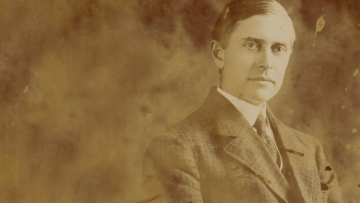 Farwell’s music would lose many of these Romantic characteristics after his first journey to the West, undertaken in the autumn of 1903. He explored pueblos and Indian reservations, gazing in wonder at the sublime beauty of the desert—to Farwell, a love of Native American cultures was inseparable from a veneration of the land. Indeed, his first sight of the Grand Canyon put him in a rapturous state: “I sat there watching the lights and shadows play and change over the strange distances and depths of this wonderworld,” he later recalled, “and heard the unwritten symphonies of the ages past and the ages to come.” (Half a century later, the Sonoran Desert would similarly inspire Elliott Carter, who came away from a year’s sojourn in Arizona with one of his first masterpieces, the String Quartet No. 1.)